


Listen to the article
US Deploys Ground Forces to Middle East as Iran Rejects Ceasefire Proposal
The United States has positioned ground-capable forces in the Middle East following Iran’s rejection of a ceasefire proposal on Wednesday, a strategic shift that provides Washington with new—albeit limited and high-risk—options for potential operations inside Iran.
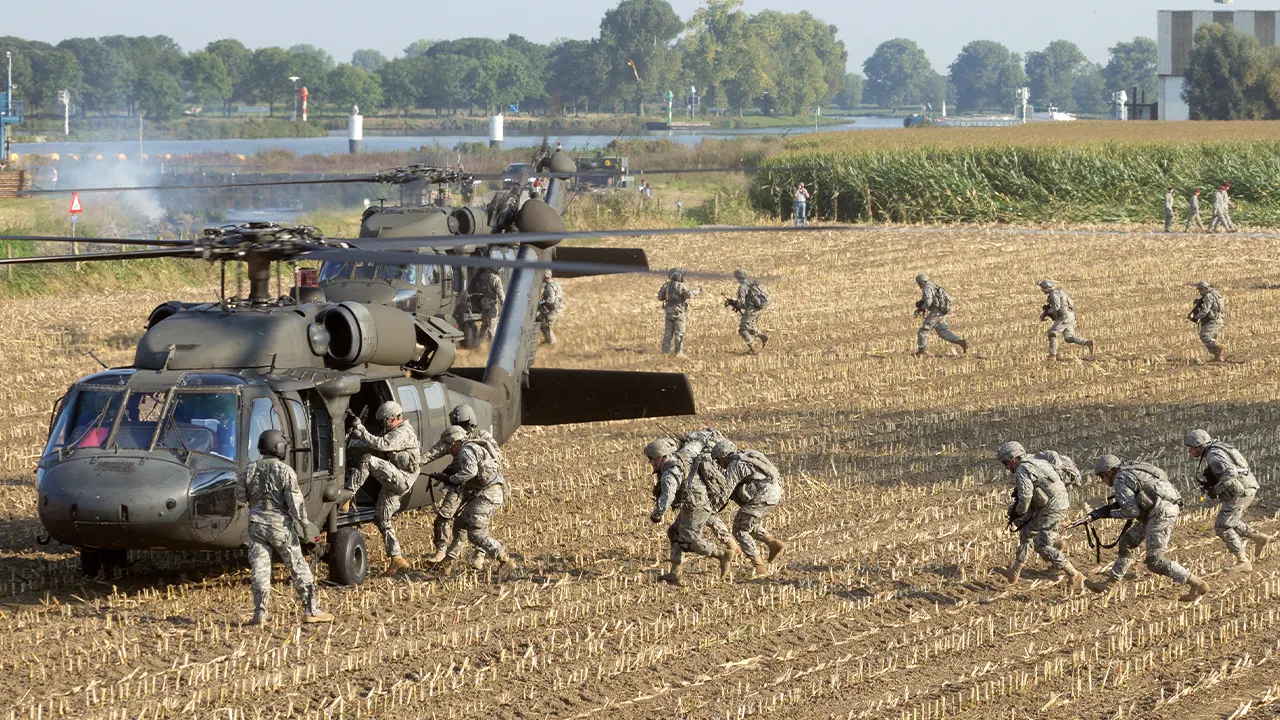
Pentagon officials have deployed approximately 1,000 paratroopers from the Army’s 82nd Airborne Division to the region, including the 1st Brigade Combat Team, a core component of the military’s Immediate Response Force designed for rapid deployment in crisis situations worldwide. Additionally, several thousand Marines and sailors assigned to the 31st Marine Expeditionary Unit and its Amphibious Ready Group have been deployed, led by the amphibious assault ship USS Tripoli.
Military experts emphasize that these deployments do not signal preparations for a large-scale invasion similar to the 2003 Iraq War but instead position the U.S. for targeted, short-duration missions. The Pentagon currently maintains approximately 40,000 to 50,000 troops across the Middle East, with recent deployments adding several thousand more specialized forces.
“It is not for the type of ground invasion that we saw in Iraq,” explained James Robbins, Institute of World Politics dean and former special assistant to Defense Secretary Donald Rumsfeld. “There simply aren’t enough troops.”
The White House has framed the deployments as maintaining strategic flexibility as regional tensions evolve. “The president likes to maintain options at his disposal,” press secretary Karoline Leavitt said Wednesday during a White House briefing. “It’s the Pentagon’s job to provide those options to the commander in chief.”
However, some lawmakers have expressed frustration over what they perceive as insufficient information from the administration. Following a classified briefing on Iran, House Armed Services Chairman Rep. Mike Rogers (R-Ala.) told reporters, “We want to know more about what’s going on, what the options are and why they’re being considered. We’re just not getting enough answers.”
Potential Limited Ground Operations
Military analysts suggest that any U.S. ground operations inside Iran would likely focus on specific objectives rather than holding territory. One priority could be securing positions along Iran’s southern coast near the Strait of Hormuz, a critical global shipping chokepoint through which approximately 20% of the world’s oil supply passes.
“The most logical step is to try to secure the straits by taking some key positions inside Iran,” said Ehud Eilam, a former official with Israel’s Ministry of Defense.
For Marines, operations would likely focus “somewhere along the Iranian side of the Persian Gulf, around the straits or nearby to establish a base of operations,” according to Robbins.
Special operations forces could also conduct targeted missions to strike military infrastructure or capture key personnel. “They may come and capture a certain objective, destroy some Iranian radar or some Iranian facility, take some generals into captivity,” Eilam explained.
Securing Iran’s nuclear infrastructure represents another potential objective that would require ground forces. Iran is believed to possess approximately 970 pounds of uranium enriched to near weapons-grade levels, though international inspectors can no longer verify the size or location of that stockpile. Nuclear experts have emphasized that securing such material cannot be accomplished through airstrikes alone.
Strategic Limitations and Challenges
Experts caution against more aggressive scenarios like seizing Iran’s key oil export hub at Kharg Island, despite its strategic importance. While such a move could potentially cut off a major source of revenue for Iran, similar effects could be achieved through less exposed means.
“You could achieve that desired outcome just by constraining the flow that comes out of Kharg after it gets outside the Gulf,” said Admiral Kevin Donegan, former commander of the U.S. Navy’s Fifth Fleet.
Occupying territory would expose U.S. forces as fixed targets while creating significant logistical challenges, requiring continuous resupply under the threat of Iranian missile and drone attacks. “Occupying territory creates a vulnerability, because you now become a target,” Donegan warned.
Meanwhile, Iran appears to be preparing for all contingencies. Iranian officials dismissed recent diplomatic overtures as “psychological warfare,” with Iranian Lt. Col. Ebrahim Zolfaghari mocking U.S. attempts at a ceasefire deal, asking, “Have your internal conflicts reached the point where you are negotiating with yourselves?”
Intelligence sources indicate Iran has been reinforcing Kharg Island’s defenses for weeks, moving additional forces and air defense systems to the area in preparation for a potential U.S. operation. Beyond the island itself, Iranian forces have increased military readiness across the region, repositioning missile units, expanding air defense activities, and increasing naval patrols in the Strait of Hormuz.
As diplomatic options narrow, the Pentagon’s recent force deployments signal a shift in posture that gives the U.S. additional flexibility to respond to the evolving situation in the Middle East, even as significant risks remain for any direct military engagement with Iran.
Fact Checker
Verify the accuracy of this article using The Disinformation Commission analysis and real-time sources.

9 Comments
The U.S. troop movements seem intended to deter further Iranian aggression, but the danger of miscalculation remains. All sides should work to de-escalate tensions through dialogue and restraint, as the alternative could be catastrophic.
While the U.S. may feel compelled to respond, a ground campaign against Iran would be fraught with high risks and uncertain outcomes. Diplomacy, sanctions, and targeted strikes may be more prudent options to consider at this stage.
The U.S. is walking a fine line, seeking to maintain deterrence without sparking a full-blown war. Iran’s refusal of a ceasefire is concerning, but both sides must exercise caution to prevent the conflict from spiraling out of control.
The U.S. troop deployments seem measured, aiming for limited operations rather than a major invasion. Still, the risk of miscalculation or unintended escalation is high. Careful, restrained diplomacy will be crucial to defusing this tense situation.
Agreed. Containing the conflict and avoiding a wider conflagration should be the top priority for all parties involved.
Concerning escalation in the Middle East. While targeted military action may be needed, a full-scale ground war would be disastrous. Diplomacy and de-escalation should remain the priority to avoid further conflict.
This is a worrying development. Iran has proven itself willing to escalate in the face of external pressure. The U.S. and its allies must tread carefully to prevent a full-blown regional war that would have devastating humanitarian and economic consequences.
Worrying developments indeed. The U.S. must be extremely careful in its use of force, as even limited military operations could provoke a harsh response from Iran. Diplomacy and de-escalation should be the top priorities to prevent further escalation.
This is a volatile situation that requires a delicate, nuanced response. Unilateral military action by the U.S. could backfire and draw Iran and its proxies into a wider conflict. A coordinated, diplomatic solution may be the best path forward.