


Listen to the article
From Army Secretary to Peace Negotiator: Dan Driscoll’s Unexpected Diplomatic Role
In a surprising diplomatic pivot, Army Secretary Dan Driscoll has emerged as a key figure in the Trump administration’s efforts to broker peace between Russia and Ukraine. The 38-year-old Iraq War veteran, who only months ago was focused on military modernization and recruitment challenges, now finds himself at the center of high-stakes international negotiations.
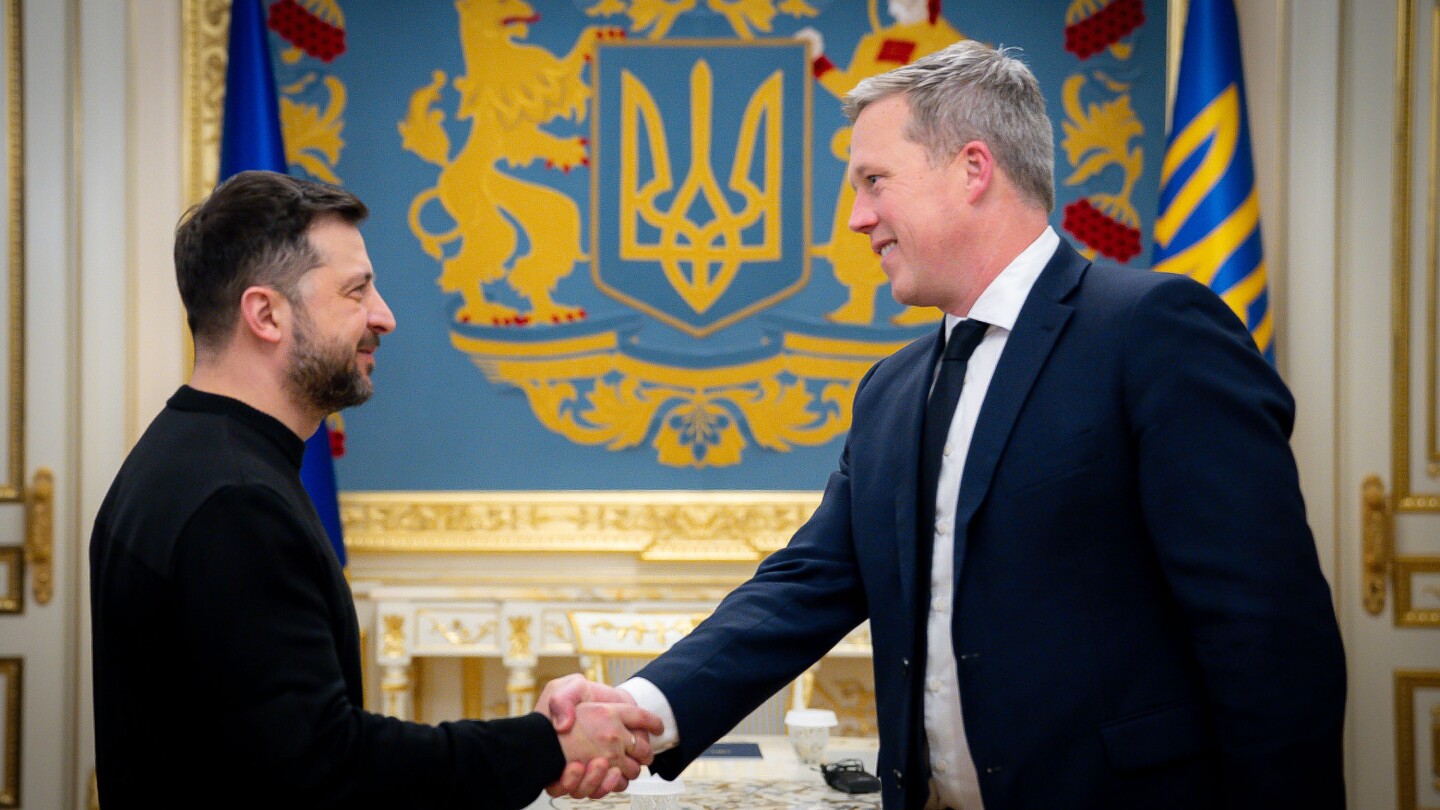
Driscoll learned of his new role as a special representative just one week before meeting with Ukrainian President Volodymyr Zelenskyy, according to a U.S. official who spoke on condition of anonymity. What was initially planned as a fact-finding mission about Ukraine’s drone warfare tactics transformed into a diplomatic mission of the highest order.
President Donald Trump appears pleased with Driscoll’s performance, writing on social media that his team has made “tremendous progress” toward peace. Trump has directed real estate developer Steve Witkoff to meet with Russian President Vladimir Putin in Moscow while Driscoll continues discussions with Ukrainian officials.
During his meeting with Zelenskyy last week, Driscoll expressed admiration for Ukrainian soldiers, noting that even battle-hardened American troops “never had to defend their homeland.” The Ukrainian leader reported an hour-long discussion with Vice President JD Vance and Driscoll about the peace proposal.
Following the Kyiv visit, Driscoll joined Secretary of State Marco Rubio, Witkoff, and other negotiators in Geneva to refine the plan with Ukrainian officials before traveling to Abu Dhabi for talks with Russian representatives on Monday and Tuesday.
Driscoll’s unexpected diplomatic role has raised eyebrows among foreign policy experts. Max Bergmann, director of the Europe, Russia and Eurasia Program at the Center for Strategic and International Studies, acknowledged the Trump administration’s willingness to try unconventional approaches but noted Driscoll’s absence from previous Ukraine-Russia discussions.
“I had not heard of Dan Driscoll, to be frank, in Ukraine-Russia conversations at all,” Bergmann said.
What Driscoll lacks in diplomatic experience, he may compensate for with direct access to the administration’s inner circle. His close relationship with Vance, dating back to their time together at Yale Law School, gives him a direct line to the White House during negotiations.
“There is something to be said about having someone who is probably texting with the vice president and therefore has that political juice,” said Bergmann, who served in the State Department during the Obama administration.
Daniel Fried, an Atlantic Council fellow and former U.S. ambassador to Poland, emphasized that Driscoll’s trusted status within the administration is a significant asset in negotiations of this magnitude. “You don’t want to have someone who reaches a handshake deal with the Ukrainians or Russians and doesn’t have the confidence of the upper reaches of the Trump administration,” Fried explained.
Before his current role, Driscoll followed a path that blended military service, business, and politics. A self-described “middle-class public school kid from the mountains of North Carolina,” he comes from a military family with his father having served as an Army infantryman in Vietnam and his grandfather as an Army decoder in World War II.
After graduating from the University of North Carolina at Chapel Hill’s business school in just three years, Driscoll served in the Army as an armor officer, reaching the rank of first lieutenant and deploying to Iraq from 2009 to 2010. Following his military service, he attended Yale Law School before working in venture capital.
In 2020, Driscoll tested political waters with an unsuccessful run in the Republican primary for a North Carolina congressional seat, capturing about 8% of the vote in a crowded field.
As Army Secretary, Driscoll has tackled complex issues, including negotiations over the Army’s continued use of Hawaii’s only large-scale live-fire training range for ground forces. This matter has generated significant opposition from Native Hawaiians and environmental activists concerned about the military’s environmental impact on the land.
Whether Driscoll’s unconventional diplomatic assignment will yield the peace breakthrough the Trump administration seeks remains to be seen. But his rapid elevation from military bureaucrat to international peace envoy highlights the administration’s willingness to depart from traditional diplomatic channels in pursuit of foreign policy goals.
Fact Checker
Verify the accuracy of this article using The Disinformation Commission analysis and real-time sources.

16 Comments
The Army Secretary’s unexpected role as a key negotiator highlights the complexity and importance of resolving the Russia-Ukraine conflict. His military background could offer valuable insights, but it remains to be seen how effective he will be in this diplomatic arena.
That’s a fair assessment. Driscoll’s success will depend on his ability to translate his military expertise into effective diplomatic strategies and negotiations.
The Trump administration seems keen to leverage all available resources, even in unlikely places, to push for a resolution to this long-running conflict. It will be fascinating to see how Driscoll’s involvement unfolds.
Yes, this underscores the administration’s determination to find a diplomatic solution, despite the challenges involved.
While it’s an unconventional choice, Driscoll’s involvement could inject a fresh dynamic into the Russia-Ukraine negotiations. His hands-on experience with modern warfare tactics may lend valuable insights.
That’s a fair assessment. Bringing in a military leader could help bridge the gap between the military and diplomatic fronts of this conflict.
I’m curious to learn more about Driscoll’s specific approach and strategy as he engages with Ukrainian and Russian officials. His military background could provide a unique perspective on the negotiation process.
Good point. His ability to navigate military and political dynamics will be crucial in these high-stakes talks.
The Trump administration’s decision to involve the Army Secretary in these peace talks signals a desire to leverage all available resources and expertise. It will be interesting to see how Driscoll’s role evolves.
Absolutely. Driscoll’s unique background could provide a fresh perspective and potentially unlock new avenues for progress in the negotiations.
It’s an unconventional move, but the stakes are high, and the administration seems willing to think outside the box. Driscoll’s involvement could bring a new dimension to the Russia-Ukraine conflict resolution efforts.
Agreed. This unorthodox approach could pay dividends if Driscoll is able to leverage his military expertise to advance the diplomatic process.
This is certainly an unorthodox move, but the administration’s willingness to think creatively and draw from a diverse set of resources is noteworthy. Driscoll’s involvement could provide a unique perspective in the push for peace between Russia and Ukraine.
Agreed. It will be interesting to see how Driscoll’s military background and experience inform his diplomatic approach and the overall negotiation process.
Interesting to see the Army Secretary take on this high-profile diplomatic role. His military background could lend some unique perspectives to the Russia-Ukraine peace negotiations.
Agreed. His experience navigating complex military and political dynamics may prove valuable in these delicate talks.