


Listen to the article
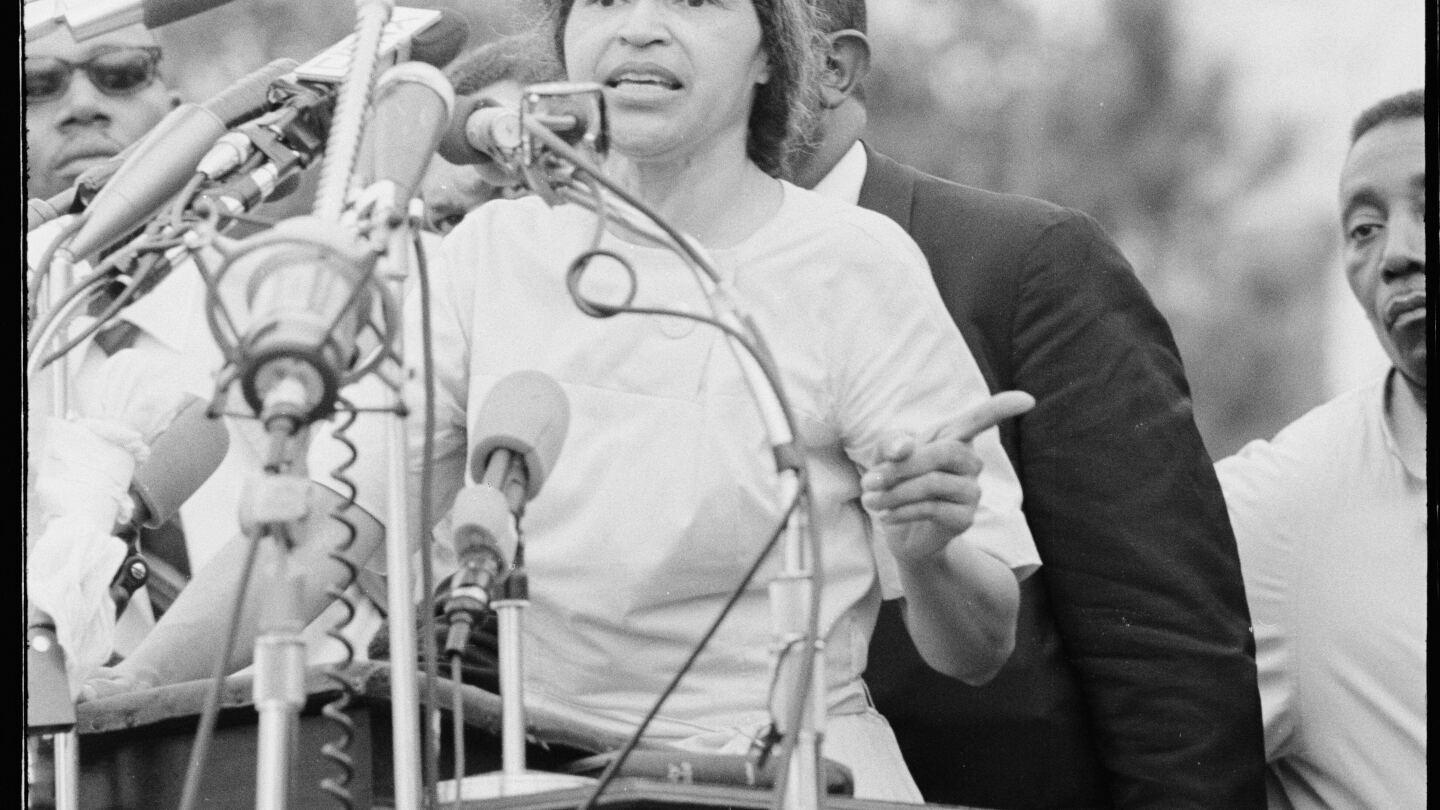
Seven decades after Rosa Parks refused to give up her bus seat in Montgomery, Alabama, newly discovered photographs reveal a lesser-known chapter of the civil rights icon’s activism, showcasing her participation in the historic 1965 Selma to Montgomery march.
The photographs, taken by renowned civil rights photographer Matt Herron, depict Parks among the thousands who completed the pivotal 54-mile journey that helped galvanize support for the Voting Rights Act of 1965. These images, released to the Rosa Parks Museum in Montgomery on Thursday, had never before been seen by the public.
“This is showing who Ms. Parks was, both as a person and as an activist,” said Donna Beisel, director of the Rosa Parks Museum. The photos emerge as a timely reminder that Parks’ commitment to civil rights extended far beyond her famous December 1, 1955 act of defiance that sparked the 381-day Montgomery Bus Boycott.
The photographs were discovered on a contact sheet housed at Stanford University. According to Jeannine Herron, the photographer’s 88-year-old widow, these particular images weren’t selected for print at the time because they were slightly blurry or featured less prominent figures. In the newly released photos, Parks can be seen sitting among the crowd, her gaze directed away from the camera.
Matt Herron, who died in 2020, moved to Mississippi with his family in 1963 following the assassination of civil rights leader Medgar Evers. Over the next two years, his camera captured not only famous civil rights leaders but also the everyday people who formed the backbone of the movement. Now, his widow is collaborating with historians and surviving activists to reunite these powerful images with the communities they depict.
“It’s so important to get that information from history into local people’s understanding of what their families did,” Jeannine Herron explained.
Among Herron’s frequent subjects during the Selma march was Doris Wilson, then a 20-year-old from Marion, Alabama. Though the photographer often expressed his desire to reconnect with Wilson before his death, that wish remained unfulfilled. However, on Thursday, the now 80-year-old Wilson attended a special gathering in Marion, where she viewed many of Herron’s photographs for the first time.
One particularly moving image shows Wilson receiving medical treatment for severe blisters after walking more than 10 miles daily during the march. In an emotional moment, Wilson reunited with June Finer, the 90-year-old doctor who had treated her feet six decades earlier. The two women embraced, with Wilson asking, “Are you the one who rubbed my feet?”
Wilson’s eldest son, Robert, 62, expressed amazement at seeing the photographic evidence of his mother’s courage. “I’m so stunned. She always said she was in the march, but I never knew she was strong like that,” he remarked.
The collection also includes photographs of private properties where marchers camped during their journey. Cheryl Gardner Davis, who was just four years old when her family hosted marchers on the third night of the trek, found validation in finally seeing images of the campsite at her childhood home in rural Lowndes County.
Davis recalled how her family faced serious repercussions for their support, including threats to her mother’s teaching job, power cutoffs, and intimidation from armed neighbors. For years, she had searched for photographic evidence of this chapter in her family’s history.
“It’s, in a sense, validation. This actually happened, and people were there,” Davis said.
The photographs’ release coincides with commemorations marking 70 years since the Montgomery Bus Boycott. On Friday, surviving boycott participants and descendants of organizers gathered to honor the 381-day struggle that overthrew racial segregation on public transportation and captured national attention.
These rediscovered images serve as powerful historical artifacts, illuminating the contributions of both celebrated figures like Parks and the countless unnamed individuals whose collective courage and sacrifice propelled the civil rights movement forward.
Fact Checker
Verify the accuracy of this article using The Disinformation Commission analysis and real-time sources.

16 Comments
The release of these Selma march photos is a welcome addition to the historical record, shedding light on Rosa Parks’ lifelong activism. Her courage and determination continue to inspire the fight for equality.
The Rosa Parks Museum’s decision to showcase these previously unseen images is commendable, as it allows us to more fully appreciate the breadth of her civil rights work.
These newly released photos from the Selma to Montgomery march are a powerful reminder of Rosa Parks’ courage and determination in the fight for voting rights. It’s important we continue to honor her legacy.
The fact that these images went unseen for so long underscores how much work remains to fully document and recognize the contributions of civil rights pioneers like Rosa Parks.
These newly discovered Selma march photos add important nuance to the story of Rosa Parks, revealing the depth of her commitment to civil rights beyond the famous bus incident. It’s vital we honor this legacy.
The fact that these images went unnoticed for so long underscores the ongoing work needed to properly document and celebrate the contributions of civil rights pioneers like Rosa Parks.
The release of these Selma march photos is a valuable contribution to our understanding of Rosa Parks’ activism. It’s crucial we continue to uncover and preserve the rich history of the civil rights movement.
The Rosa Parks Museum’s decision to share these previously unseen images is commendable, as it allows us to more fully appreciate the breadth of her lifelong dedication to the cause of justice.
While the famous bus incident rightly receives much attention, it’s important to recognize the breadth of Rosa Parks’ civil rights work, as evidenced by these newly surfaced Selma march photos.
These images help paint a fuller portrait of Rosa Parks as a tireless advocate, not just a singular act of defiance. Her legacy continues to inspire the fight for equality.
The Rosa Parks Museum is right to highlight these photos as they reveal a lesser-known aspect of her activism. It’s valuable to have a more complete picture of this iconic figure’s lifelong fight for justice.
The discovery of these Selma march photos is a timely reminder of the ongoing struggle for racial equality and the need to preserve the historical record of the civil rights movement.
These newly discovered Selma march photos offer a valuable glimpse into Rosa Parks’ extensive civil rights activism, beyond the iconic bus incident. It’s important we continue to uncover and preserve this history.
The fact that these photos were overlooked for so long underscores the ongoing need to ensure the contributions of civil rights pioneers like Rosa Parks are fully recognized and celebrated.
It’s remarkable to see these unseen photos of Rosa Parks’ activism beyond the famous bus incident. These images provide a deeper understanding of her lifelong commitment to civil rights.
The discovery of these photos is a valuable addition to the historical record, allowing us to better appreciate Parks’ influential role in the Selma to Montgomery march.