


Listen to the article
Former Trump Attorney Alina Habba Resigns as New Jersey’s Top Federal Prosecutor
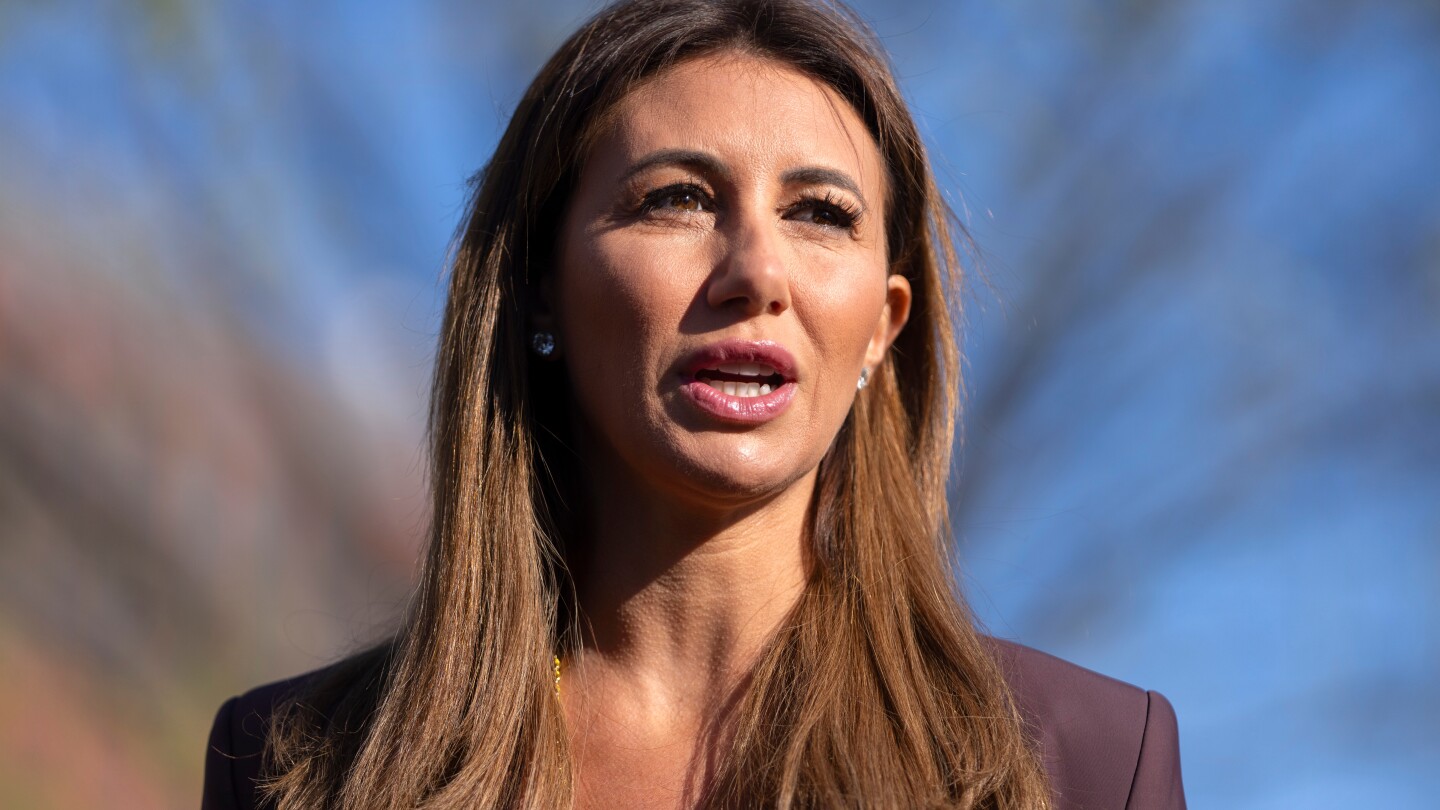
Alina Habba, President Donald Trump’s former personal attorney, resigned Monday as the acting U.S. Attorney for New Jersey following an appeals court ruling that declared her appointment unlawful. In her resignation statement posted on social media, Habba characterized the court’s decision as politically motivated but stated she was stepping down “to protect the stability and integrity” of her office.
“But do not mistake compliance for surrender,” she declared, adding that the administration would continue appealing the court rulings that removed her from the position. “This decision will not weaken the Justice Department and it will not weaken me.”
Habba confirmed she will remain with the Justice Department as a senior adviser to Attorney General Pam Bondi. Three Justice Department lawyers will temporarily split her former responsibilities while the administration challenges the court’s decision.
The 41-year-old attorney was appointed in March to serve as acting U.S. Attorney for New Jersey, a powerful position responsible for enforcing federal criminal and civil laws throughout the state. Before joining the Trump administration, Habba was a partner at a small New Jersey law firm who rose to prominence as one of Trump’s most visible legal defenders, representing him in court and frequently appearing as his advocate on cable news networks.
Critics pointed to her lack of prosecutorial experience and partisan background as significant concerns. New Jersey’s two Democratic senators had indicated they would block her Senate confirmation, creating a procedural roadblock to her permanent appointment.
During her brief tenure, Habba filed a trespassing charge against Newark’s Democratic mayor following his visit to an immigration detention center. Although that charge was eventually dropped, she later charged Democratic U.S. Representative LaMonica McIver with assaulting a federal agent during the same incident—allegations McIver denies. That case remains pending.
When Habba’s temporary term expired in July, federal judges appointed one of her subordinates to replace her, but Attorney General Bondi promptly fired this replacement, attributing Habba’s removal to “politically minded judges.” This action triggered a months-long legal standoff that caused confusion and delays throughout New Jersey’s federal court system.
Earlier this month, a federal appeals court in Philadelphia definitively disqualified Habba from the position. In their ruling, the judges wrote that “the citizens of New Jersey and the loyal employees in the U.S. Attorney’s Office deserve some clarity and stability.”
When asked about Habba’s resignation on Monday, President Trump expressed frustration with the Senate’s “blue slip” tradition, which allows senators to block judicial and prosecutor nominations in their home states.
“It’s a horrible thing. It makes it impossible to appoint a judge or a U.S. attorney,” Trump told reporters at the White House. “I guess I just have to keep appointing people for three months and then just appoint another one, another one. It’s a very sad situation. We’re losing a lot of great people.”
The controversy surrounding Habba’s appointment is part of a broader pattern of legal challenges to Trump administration appointments of acting U.S. Attorneys across the country. Similar disputes have arisen in eastern Virginia, Nevada, Los Angeles, and northern New York, where judges have questioned the administration’s approach to filling these critical positions.
In Virginia, a judge dismissed criminal cases against former FBI Director James Comey and New York Attorney General Letitia James, ruling that the interim U.S. Attorney who filed the charges, Lindsey Halligan, had been unlawfully appointed. In September and October, federal judges disqualified acting U.S. Attorneys in Nevada and Southern California on similar grounds, determining they had exceeded the legally permitted time limit for temporary appointments.
Attorney General Bondi has maintained that Habba will return as U.S. Attorney if the administration’s appeals succeed, arguing, “These judges should not be able to countermand the President’s choice of attorneys entrusted with carrying out the executive branch’s core responsibility of prosecuting crime.”
The legal battles highlight growing tensions between the Trump administration and the judiciary over executive appointment powers and the Senate confirmation process for key law enforcement positions.
Fact Checker
Verify the accuracy of this article using The Disinformation Commission analysis and real-time sources.

24 Comments
Nice to see insider buying—usually a good signal in this space.
Good point. Watching costs and grades closely.
The cost guidance is better than expected. If they deliver, the stock could rerate.
Good point. Watching costs and grades closely.
Uranium names keep pushing higher—supply still tight into 2026.
Exploration results look promising, but permitting will be the key risk.
Good point. Watching costs and grades closely.
Good point. Watching costs and grades closely.
If AISC keeps dropping, this becomes investable for me.
Nice to see insider buying—usually a good signal in this space.
Good point. Watching costs and grades closely.
Exploration results look promising, but permitting will be the key risk.
Nice to see insider buying—usually a good signal in this space.
Interesting update on Trump’s former lawyer Alina Habba resigns as top federal prosecutor in New Jersey. Curious how the grades will trend next quarter.
Uranium names keep pushing higher—supply still tight into 2026.
Good point. Watching costs and grades closely.
Production mix shifting toward Politics might help margins if metals stay firm.
Nice to see insider buying—usually a good signal in this space.
Good point. Watching costs and grades closely.
Good point. Watching costs and grades closely.
Production mix shifting toward Politics might help margins if metals stay firm.
Good point. Watching costs and grades closely.
Good point. Watching costs and grades closely.
Exploration results look promising, but permitting will be the key risk.