


Listen to the article
Trump’s Dyslexia Comments Spark Outrage Across Political Lines
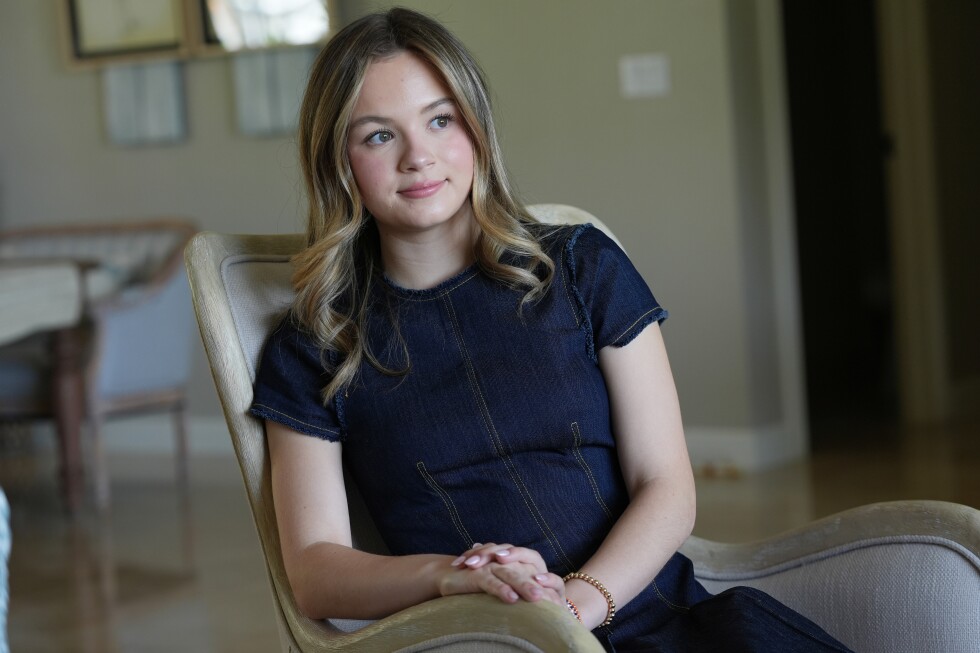
Lauryn Muller was scrolling through social media when she came across a clip of President Donald Trump mocking California Governor Gavin Newsom for having dyslexia. For the 18-year-old Auburn University student, who was diagnosed with dyslexia as a child, Trump’s words struck a deeply personal chord.
“We’ve had to overcome so many deficits, and for someone to, on a national stage, say, yeah, they will never be like us — that definitely came as an emotional sting to me,” Muller said.
Trump called Newsom “stupid,” “low IQ,” “mentally disabled” and unfit to become president. While the comments were clearly part of a political feud between the Republican former president and the Democratic governor, Trump’s remarks maligned tens of millions of Americans who live with dyslexia and undermined years of progress fighting stigma around the learning disability.
The backlash has cut across political lines, with both supporters and critics of Trump expressing dismay at his characterization of dyslexia. Even Muller’s mother Marilyn, who has voted for Trump three times and maintains support for his politics, was deeply troubled by his comments.
“It works against everything I do on a daily basis,” said Marilyn Muller, a literacy advocate in Florida. “It was probably one of the more ignorant comments I have ever heard come from his mouth.”
The Science Contradicts Trump’s Claims
Trump’s comments stand in stark contrast to scientific consensus about dyslexia. Research consistently shows no correlation between dyslexia and intelligence. Dyslexia affects the connection between the brain and printed language, making reading difficult for those affected. It’s estimated to impact up to 20% of the world population.
“All of a sudden, you’re not doing so well in school and then people will tell you, oh, you’re not trying, you’re not smart or whatever, and none of that’s accurate. You just have this difference in that bridge from language to print,” explained John Gabrieli, a neuroscientist at the Massachusetts Institute of Technology.
Newsom has been open about his dyslexia for years, including publishing a children’s book about it in 2021 and discussing his experiences in a recent memoir. He describes memorizing speeches because he cannot read them aloud and has characterized dyslexia as both a struggle and a gift that forced him to develop other skills.
Trump seized on Newsom’s disclosures during a Cabinet meeting in March, saying: “He can’t read a speech, he can’t do almost anything. He’s actually a very stupid person.” Trump added: “I think a president should not have learning disabilities,” a comment he repeated multiple times despite acknowledging its controversial nature.
Ripple Effects in the Dyslexia Community
For people living with dyslexia, Trump’s comments have triggered a range of emotions from anger to dismay. Lia Beatty, a 27-year-old with dyslexia who runs a university neurology lab in Utah, worries about the subtle impacts of such high-profile disparagement.
“The harm isn’t necessarily in the headline. It’s what happens quietly,” Beatty said. “It’s the student in the classroom who stops raising their hand, the college applicant who hides how they learn, the employee who doesn’t pursue a promotion that they’re more than qualified for.”
After hearing Trump’s remarks, Beatty publicly announced her acceptance to a doctoral neurology program at Dartmouth College. “I think it’s important to acknowledge that, yeah, the rooms — they weren’t made for us, but we’re still getting in them,” she said.
Limited Political Response
Despite a strong history of bipartisan support for dyslexia initiatives on Capitol Hill, including a dedicated House caucus, there has been surprisingly little Republican pushback against Trump’s comments.
Senator Bill Cassidy (R-La.), whose daughter has dyslexia and whose wife runs a school for children with dyslexia, declined to respond directly to Trump’s remarks at a congressional roundtable on dyslexia. He told The Associated Press, “All I can say is that a child with dyslexia will grow to be, often times, a very talented adult.”
Notably, there has been no comment from Representative Bruce Westerman (R-Ark.), co-chair of the dyslexia caucus.
Historical Context and Future Concerns
Advocates point out that some past presidents likely had dyslexia, including Woodrow Wilson, who wrote about his difficulty learning to read and became an early adopter of the typewriter as a workaround. Even in Trump’s own circles, Gary Cohn, who helped architect Trump’s signature tax bill during his first term, has spoken extensively about struggling with dyslexia before becoming president of Goldman Sachs.
Advocacy organizations worry that Trump’s comments could undo years of progress in dismantling harmful stereotypes. His remarks also raise questions about his administration’s commitment to protecting students with disabilities, particularly as Trump has vowed to dismantle the Department of Education, which oversees the Individuals with Disabilities Education Act.
Jacqueline Rodriguez, CEO of the National Center for Learning Disabilities, expressed concern: “It will be hard for families to trust Trump’s education appointees when their boss is making these really stigmatizing and really inaccurate statements.”
In Decatur, Georgia, Meagan Swingle discussed Trump’s comments with her 15-year-old son Enrique, who has dyslexia. While her son brushed off the remarks, Swingle remains troubled by the president’s willingness to attack Americans with learning differences.
“I don’t know that he remembers a time like I do when, whether you were a Democrat or a Republican or an independent, you could expect a higher standard from the president of the United States,” she reflected. “We build people up, we don’t tear them down.”
Fact Checker
Verify the accuracy of this article using The Disinformation Commission analysis and real-time sources.

8 Comments
Dyslexia is a common learning difference, not a ‘deficit’ or ‘disability.’ I’m disappointed to see someone in a position of power perpetuate such stigma. This should be a chance to promote acceptance and highlight the unique strengths of those with dyslexia.
While Trump’s comments were politically charged, they risk perpetuating harmful stereotypes about dyslexia. As someone with personal experience, I hope this helps raise awareness and understanding for the challenges faced by those with learning disabilities.
Trump’s remarks were misguided and hurtful. Dyslexia is a complex neurological condition, not a sign of stupidity or low intelligence. I hope this sparks more constructive dialogue about supporting those with learning differences, rather than resorting to insults.
Trump’s comments reflect a troubling lack of understanding about dyslexia. While politically charged, this is an important opportunity to educate the public and challenge harmful stereotypes. I hope it leads to more empathy and support for those with learning differences.
As someone with dyslexia, I find Trump’s comments both hurtful and uninformed. Dyslexia is a complex neurological condition, not a sign of low intelligence. I hope this backlash leads to greater awareness and understanding of learning differences.
Disappointing to see Trump make such disparaging remarks about dyslexia. Dyslexia is a neurological difference, not a deficiency. I hope this incident encourages more open and nuanced conversations about supporting those with learning disabilities.
Dyslexia is a complex learning difference that affects millions. Rather than resorting to insults, I wish our political leaders would take the time to educate themselves and promote acceptance. This is an opportunity for thoughtful discussion, not division.
Well said. Dismissing dyslexia as a ‘deficit’ or ‘disability’ is counterproductive. With the right support, those with dyslexia can thrive. I hope this sparks more empathy and constructive dialogue around learning differences.