


Listen to the article
Chicago Mayor Links Restaurant Industry to Slavery While Defending Tipped Wage Elimination
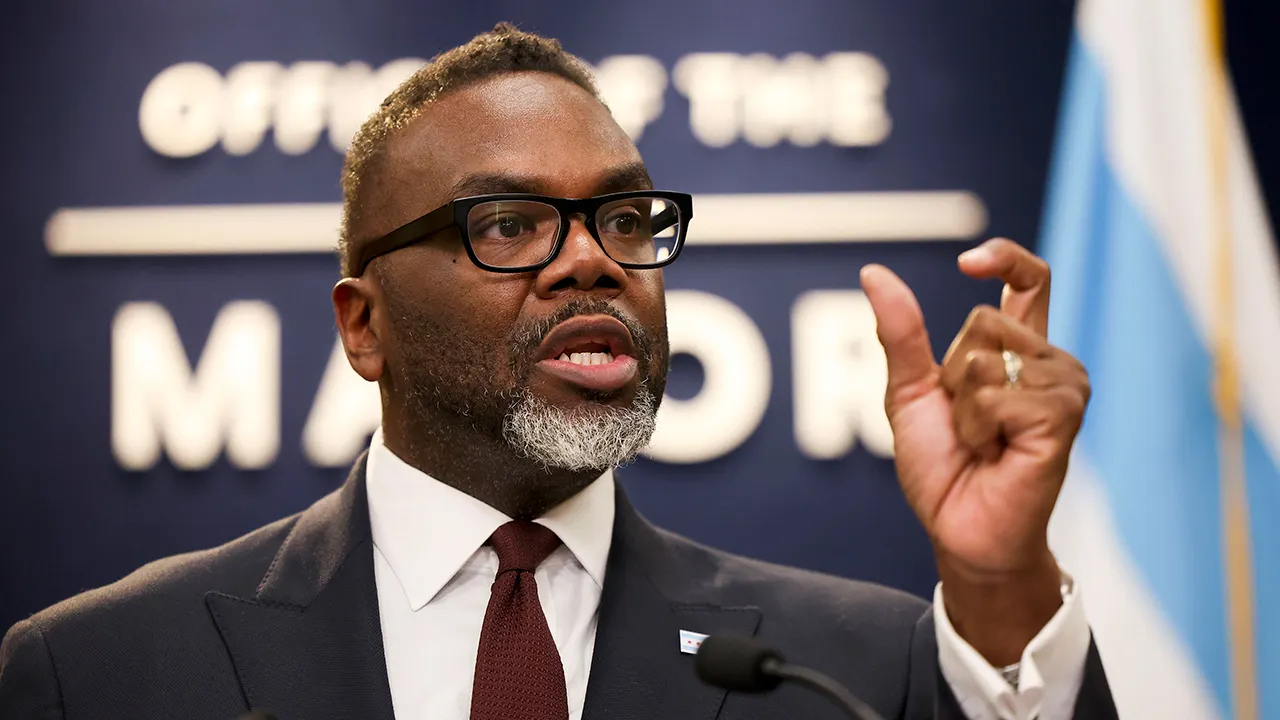
Chicago Mayor Brandon Johnson has ignited controversy by connecting the restaurant industry to slavery while defending his administration’s policy to phase out the tipped minimum wage in the city.
Speaking after the Chicago City Council failed to override his veto of a measure that would have halted the policy, Johnson made the provocative statement that the restaurant industry “has its ties to slavery.” The mayor’s comments came as he defended his plan to gradually raise the base pay for tipped workers to match the full minimum wage by 2028.
“You just watched the entire city council, in transparency, try to take wages away from the very people who are part of an industry that has its ties to slavery,” Johnson said at a press conference. He argued that most service industry workers who rely on tips are minorities, framing the wage issue as a matter of racial justice.
Johnson linked his position on tipped wages to his broader agenda on racial equity, stating, “I’m a Black man in America calling for the reparations of Black people. There is no hiding or escaping that. I’m taking a bold statement here.” In 2024, Johnson allocated $500,000 to a Reparations Task Force as part of his administration’s initiatives.
The mayor’s office later elaborated on Johnson’s remarks, explaining that the practice of tipping became common among “white employers in the South” following Emancipation. “Today, many Black workers, particularly women, continue to rely on tips and subminimum wages to support themselves and their families,” a spokesperson said in a statement.
The contentious tipped wage policy has created sharp divisions between restaurant owners and labor advocates. Restaurant industry representatives have pushed back strongly against the phaseout, warning that eliminating the tipped wage system will drastically impact their already narrow profit margins. Many restaurateurs predict the change will force them to raise prices, cut jobs, or fundamentally alter the dining experience to remain viable.
Currently, the City Council has failed to gather the 34 votes required to overturn Johnson’s veto, meaning the phaseout will continue as planned. The policy will gradually increase base wages for tipped workers until they reach parity with Chicago’s full minimum wage by 2028.
The debate occurs against the backdrop of growing national scrutiny of tipping culture. Recent surveys indicate that nearly 90% of Americans believe tipping practices have become “completely out of control,” reflecting wider frustrations with the expanding expectations for gratuities across various service sectors.
On Thursday, Johnson’s administration launched a “Repair Chicago” community engagement initiative, which included a bus tour designed to explore the “impacts of systemic harm faced by Black Chicagoans.” This effort forms part of the mayor’s broader agenda addressing racial equity and historical injustice in the city.
The controversy highlights the complex intersection of labor policy, racial equity, and business interests in one of America’s largest cities. As Chicago moves forward with the tipped wage phaseout, both supporters and opponents are closely watching to see how the policy will affect workers’ total earnings, restaurant operations, and the broader hospitality industry in a city renowned for its dining scene.
Johnson’s administration maintains that the policy change represents a necessary step toward ensuring “working people across the country receive the dignity and respect they deserve in the workplace,” while critics worry about unintended economic consequences in an industry already navigating post-pandemic challenges.
Fact Checker
Verify the accuracy of this article using The Disinformation Commission analysis and real-time sources.

6 Comments
The mayor raises valid concerns about the industry’s origins and the need to address income inequality. However, eliminating the tipped wage model could have unintended consequences that merit further consideration.
It’s important to find solutions that empower and protect vulnerable workers without unduly disrupting the broader business environment.
This is a complex issue with reasonable arguments on both sides. I’m curious to see the data and analysis that informs the mayor’s position and the proposed policy changes.
Constructive dialogue between all stakeholders – workers, employers, policymakers – will be crucial to developing an equitable and sustainable approach.
This is a complex and sensitive issue. While the restaurant industry has a troubled history, the details and solutions around tipped wages require nuanced discussion to balance worker interests and economic realities.
I appreciate the mayor’s focus on racial equity, but the implications and impacts of this policy change warrant careful analysis beyond inflammatory rhetoric.