


Listen to the article
President Donald Trump announced Friday that he is invalidating all documents allegedly signed by former President Joe Biden using an autopen, claiming that 92% of documents during Biden’s presidency were signed with the device rather than personally by the president.
“The Autopen is not allowed to be used if approval is not specifically given by the President of the United States,” Trump wrote in a statement posted to Truth Social. “The Radical Left Lunatics circling Biden around the beautiful Resolute Desk in the Oval Office took the Presidency away from him.”
Trump declared he is canceling all executive orders and “anything else that was not directly signed by Crooked Joe Biden, because the people who operated the Autopen did so illegally.” He went further by threatening to charge Biden with perjury if the former president claims he was involved in the autopen process.
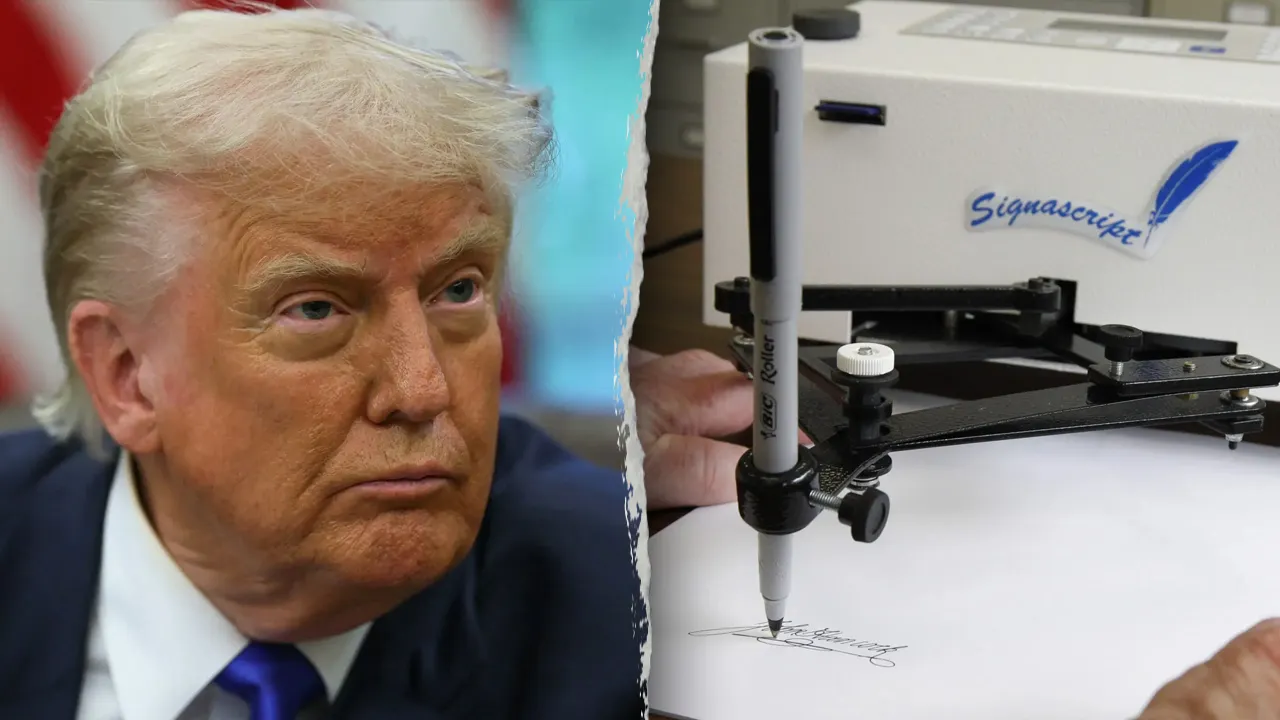
The autopen is a mechanical device that reproduces a person’s signature. It has been used by presidents for decades, particularly for signing routine documents when they are traveling or otherwise unable to sign in person. The practice became increasingly common in the digital age.
Legal experts note that the Presidential Records Act and other administrative laws govern the use of autopen signatures, though specific protocols about authorization requirements remain somewhat unclear in public discourse. While autopens can be legitimately used with proper authorization, Trump’s claim centers on whether Biden personally authorized each use.
The controversy adds to ongoing tensions between the current and former administrations. Trump’s decision to nullify his predecessor’s signatures raises significant questions about the continuity of government policies and the status of regulations, executive orders, and international agreements that may have been signed during Biden’s term.
Political analysts suggest this move could potentially impact numerous policy areas, from environmental regulations to international treaties, depending on how broadly Trump’s order is interpreted and implemented across federal agencies. The practical implications remain unclear, as does the mechanism for determining which signatures were manual versus machine-generated.
White House officials from the Biden administration have not yet publicly responded to Trump’s allegations regarding the extent of autopen usage. During Biden’s presidency, there were occasional media reports questioning whether certain documents had been signed by autopen, but the administration generally maintained that proper protocols were followed.
The use of autopens by presidents has occasionally sparked controversy in the past. Former President Barack Obama notably used an autopen to sign an extension of the Patriot Act in 2011 while he was traveling overseas, which prompted some legal debates at the time.
Government accountability groups are likely to closely monitor how this declaration is implemented. Questions remain about the verification process for determining which signatures were authentic and which were produced by autopens, as Trump did not specify who would validate the signatures or how the process would work.
The situation may lead to legal challenges, particularly if stakeholders affected by the nullification of certain documents choose to contest Trump’s authority to retroactively invalidate properly executed governmental actions from a previous administration.
As the story develops, attention will focus on which specific documents Trump targets for invalidation and whether federal agencies receive formal directives on how to proceed with this unprecedented review of a previous administration’s signatures.
Fact Checker
Verify the accuracy of this article using The Disinformation Commission analysis and real-time sources.

7 Comments
While I understand the concerns around executive power, the autopen has been a standard practice for a long time. I’m not convinced there’s much legal basis for these claims, and it feels more like political theater than a substantive issue.
I’m not sure I buy the argument about the autopen being used improperly. It’s a well-established practice, and I doubt there’s much legal standing here. This feels more like political theater than a substantive issue.
This feels like more political posturing than a serious legal challenge. The autopen has been used by presidents for decades, so I doubt there’s much substance here. We’ll have to see if anything comes of these threats.
Interesting development, though I’m skeptical of the claims around the autopen usage. Seems like a political tactic rather than a substantive issue. I’d want to see hard evidence before drawing any conclusions.
The autopen has been used by presidents for a long time, so I’m not convinced this is a real legal issue. Seems more like an attempt to undermine the previous administration. I’ll be interested to see if anything substantial comes of these threats.
While I understand the concerns around presidential powers and signatures, this seems like a stretch. The autopen has been standard practice for routine documents. I’m curious to see how this plays out, but I’m skeptical of the claims.
The autopen has been used by presidents for routine documents for a long time, so I’m not sure these claims have much legal merit. Seems more like an attempt to undermine the previous administration than a serious legal challenge.