


Listen to the article
President Trump’s anti-immigrant rhetoric reached new heights Tuesday when he repeatedly referred to Somali immigrants in the United States as “garbage” during a Cabinet meeting, sparking widespread condemnation and reigniting debates about American identity.
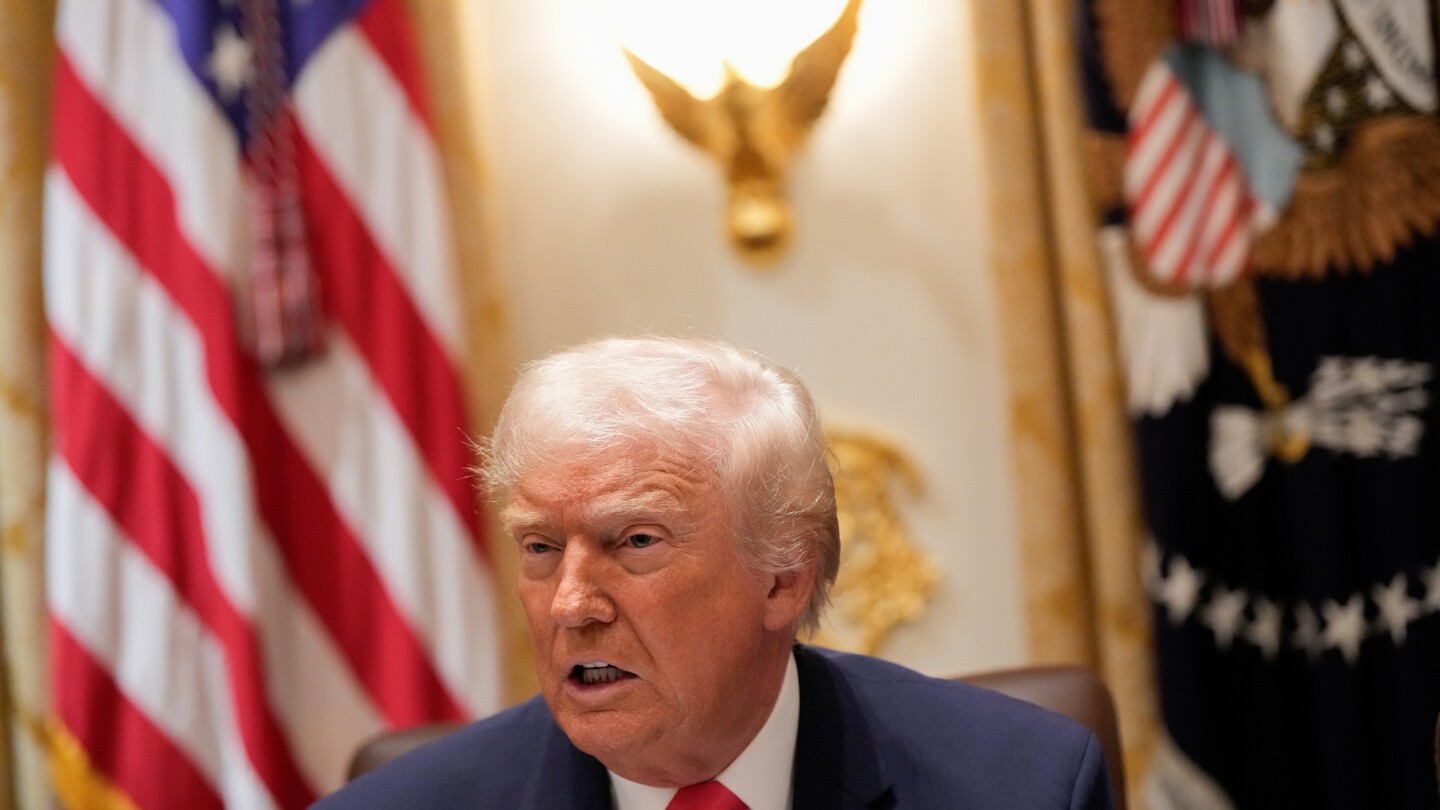
The president made the inflammatory remarks during a two-hour Cabinet meeting, stating four times in seven seconds that Somali immigrants are “garbage.” He continued his tirade by claiming that the nation’s 260,000 people of Somali descent “come from hell,” “contribute nothing,” and “do nothing but bitch.”
“We don’t want ’em in our country,” Trump repeated five times, adding, “Let ’em go back to where they came from and fix it.” His comments drew applause from assembled Cabinet members, with Vice President JD Vance visibly pumping his fist and Defense Secretary Pete Hegseth telling Trump, “Well said.”
These remarks represent an escalation of Trump’s long history of controversial statements about immigrants. Since announcing his first presidential campaign a decade ago—when he claimed Mexico was sending “rapists” across the border—Trump has made immigration a cornerstone of his political identity. He has previously referred to African nations as “shithole countries” and used rhetoric that some historians have compared to that of Adolf Hitler.
Carl Bon Tempo, a history professor at the State University of New York at Albany, notes that Trump has normalized this type of language. “He’s, in a way, legitimated this type of language that, for many Americans for a long time, was seen as outside the bounds,” Bon Tempo said.
Trump’s comments about Somali Americans included specific attacks on Representative Ilhan Omar, D-Minnesota, calling her and her friends “garbage.” Omar responded by calling Trump’s “obsession” with her and Somali-Americans “creepy and unhealthy,” adding, “We are not, and I am not, someone to be intimidated, and we are not gonna be scapegoated.”
The impact of Trump’s words reverberated internationally. Ibrahim Hassan Hajji, a resident of Somalia’s capital Mogadishu, told The Associated Press, “My view of the U.S. and living there has changed dramatically. I never thought a president, especially in his second term, would speak so harshly. Because of this, I have no plans to travel to the U.S.”
Since returning to office, Trump has implemented a comprehensive approach to limit immigration. His administration has frozen the country’s asylum system, drastically reduced refugee admissions, and this week halted immigration applications for migrants from 19 travel-ban nations. The Supreme Court is also considering his order to end birthright citizenship for children born to parents who are in the United States illegally or temporarily.
César Cuauhtémoc García Hernández, a civil rights law professor at Ohio State University, explains Trump’s influence: “Trump specializes in pushing the boundaries of what others have done before. He is far from the first politician to embrace race-baiting xenophobia. But as president of the United States, he has more impact than most.”
According to a November AP-NORC poll, approximately 42% of adults approved of how the president is handling immigration, slightly higher than his overall job approval but down from about 50% in March.
Research published in the Proceedings of the National Academy of Sciences analyzed 200,000 congressional speeches and 5,000 presidential communications on immigration between 1880 and 2020. The study concluded that Trump is “the first president in modern American history to express sentiment toward immigration that is more negative than the average member of his own party.”
Trump’s anti-immigrant rhetoric may be influencing global politics as well. In Britain, attitudes toward migrants have hardened since Brexit, while France’s National Rally party has actually softened its rhetoric to gain broader support. Paris lawyer Arié Alimi noted that in France, Trump’s comments would likely violate hate speech laws if made by anyone other than a head of state.
“Comments saying that a population stinks—coming from a foreign head of state, a top world military and economic power—that’s never happened before,” Alimi said. “So here we are really crossing a very, very, very important threshold in terms of expressing racist comments.”
Trump dismissed concerns about political correctness during his Cabinet meeting remarks, stating bluntly about Somali immigrants: “I don’t care. I don’t want them.”
Fact Checker
Verify the accuracy of this article using The Disinformation Commission analysis and real-time sources.

10 Comments
The President’s comments about Somali immigrants are deeply troubling and go against American values of diversity and inclusion. I hope he and his administration will reconsider this divisive approach.
Immigrants, regardless of their country of origin, deserve to be treated with dignity. I hope our leaders can find ways to address immigration issues that bring people together rather than divide them.
While I understand the complexities around immigration, the President’s use of derogatory language is unacceptable. We should expect more from our elected officials, even on controversial topics.
While immigration is a complex and sensitive issue, resorting to name-calling and xenophobic rhetoric is counterproductive. I hope our leaders can find ways to address concerns that respect the dignity of all people.
I agree. We need to have thoughtful, nuanced discussions about immigration policy that don’t demonize entire groups of people.
The President’s comments about Somali immigrants are deeply troubling and reflect a concerning pattern of xenophobic rhetoric. We must hold our leaders accountable and demand a more compassionate approach to these issues.
This type of hateful language from the President is disappointing and concerning. Immigrants make valuable contributions to our country, and we should treat all people with respect and compassion.
The President’s comments about Somali immigrants are highly problematic and go against the principles of a free and open society. We should strive for policies that are fair, humane, and bring out the best in our country.
I agree. Dehumanizing rhetoric from our leaders only serves to further polarize the public on this important issue.
Disappointing to see the President use such inflammatory and dehumanizing language about immigrants. Regardless of one’s political views, this kind of rhetoric is unacceptable and only serves to divide rather than unite the country.