


Listen to the article
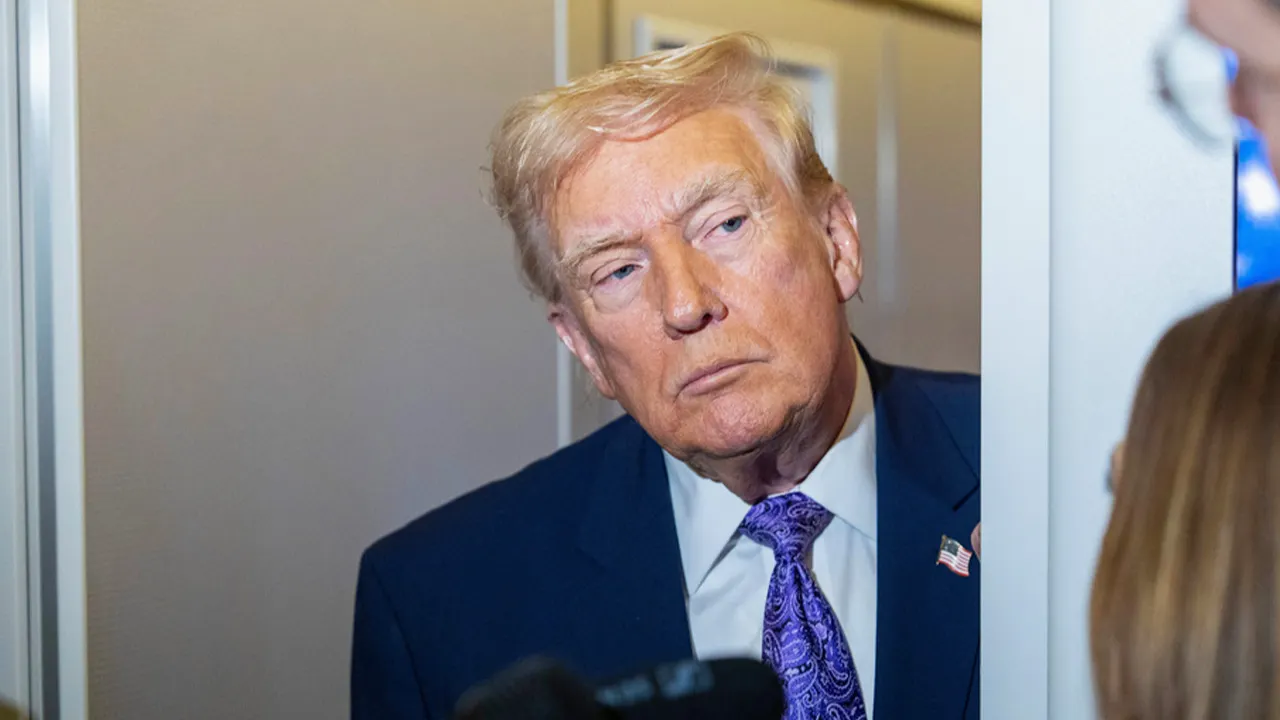
President Trump signaled on Sunday that his administration’s recent freeze on asylum processing could extend indefinitely following the shooting of two National Guard members near the White House. Speaking to reporters aboard Air Force One, Trump suggested the restrictions, initially framed as an emergency response, might become a long-term policy approach.
“We have enough problems. We don’t want those people,” Trump said, indicating there was no predetermined time limit on the moratorium. “It could last a long time.”
The president also floated the possibility of revoking citizenship from naturalized immigrants with criminal histories, though he acknowledged uncertainty about his legal authority to do so. “We have criminals that came into our country and they were naturalized,” Trump stated. “If I have the power to do it – I’m not sure that I do, but if I do – I would de-naturalize. Absolutely.”
The shooting that prompted the asylum freeze occurred Wednesday when Rahmanullah Lakanwal, a 29-year-old Afghan national, allegedly opened fire on two West Virginia National Guard members just blocks from the White House. U.S. Army Specialist Sarah Beckstrom, 20, was killed in the attack, while U.S. Air Force Staff Sergeant Andrew Wolfe, 24, remains in critical condition.
Both Guard members had been deployed to Washington, D.C., as part of Trump’s initiative to federalize the district’s police force in an effort to combat crime. Following the shooting, the administration not only halted asylum decisions but also paused visa issuance for travelers with Afghan passports.
Trump said he has invited the families of both Guard members to the White House. “I said, ‘When you’re ready, because that’s a tough thing, come to the White House. We’re going to honor Sarah,'” Trump told reporters, adding that Wolfe would also be honored regardless of whether he recovers from his injuries.
Lakanwal now faces serious charges: one count of first-degree murder and two counts of assault with intent to kill while armed. The incident has intensified the administration’s focus on immigration enforcement, with Trump clarifying his recent use of the term “reverse migration” as meaning the removal of people already inside the United States.
“Get people out that are in our country – get them out of here,” he explained.
The president specifically mentioned 19 countries he characterized as “crime-ridden” in connection with the asylum freeze, though he did not name them specifically. Immigration policy experts note this represents a significant hardening of the administration’s already tough stance on immigration.
The move comes amid broader efforts by the administration to restrict various forms of immigration. Critics argue the indefinite suspension of asylum processing could violate U.S. obligations under international refugee law, while supporters contend it’s necessary for national security.
Legal experts point out that denaturalization – the process of revoking citizenship – is currently limited to specific circumstances, such as fraud during the naturalization process or membership in subversive groups within five years of naturalization. Expanding this power would likely face substantial legal challenges.
The incident has rekindled debates about the vetting process for immigrants and refugees, particularly those from Afghanistan who entered the U.S. following the 2021 withdrawal of American forces from that country. Defense Department officials have emphasized that the vast majority of Afghan evacuees have integrated peacefully into American society.
As the criminal case against Lakanwal proceeds, the policy implications of the shooting continue to reverberate through Washington, with immigration advocates expressing concern about the broader impact on asylum seekers fleeing persecution who may now face additional barriers to protection in the United States.
Fact Checker
Verify the accuracy of this article using The Disinformation Commission analysis and real-time sources.

10 Comments
The idea of revoking citizenship for naturalized immigrants with criminal histories raises a lot of questions about due process and human rights. Any such policy would need to be very narrowly tailored and have robust legal justification.
Agreed, the legal and ethical implications of citizenship revocation must be thoroughly examined. It’s a complex issue without easy solutions.
While protecting public safety is important, revoking citizenship raises significant human rights concerns. We should be cautious about setting a precedent that could be abused or disproportionately impact vulnerable populations.
I share your reservations. Any policies in this area would require extremely careful consideration to balance legitimate security needs with fundamental civil liberties.
The president’s suggestion about revoking citizenship for naturalized criminals is concerning and likely to face legal challenges. We should focus on evidence-based policies that uphold the rule of law and due process.
Agreed, a balanced and lawful approach is critical here. Citizenship revocation is an extreme measure that should only be considered with the utmost care and justification.
Revoking citizenship for naturalized criminals is a controversial and complex issue. While public safety is important, we must balance it with due process and human rights. This will likely face legal challenges if pursued.
I agree, any policy changes would need to be carefully considered and stand up to legal scrutiny. Citizenship revocation is a serious matter that shouldn’t be taken lightly.
The shooting near the White House is a tragic and concerning incident. My condolences go out to the family of the National Guard member who was killed. We need to get all the facts before drawing conclusions about the motivations behind this attack.
Absolutely, a full investigation is warranted to understand what happened and why. Preserving public safety while upholding civil liberties is a delicate balance.