


Listen to the article
President Trump and New York Mayor-elect Mamdani Forge Unexpected Alliance After History of Public Hostility
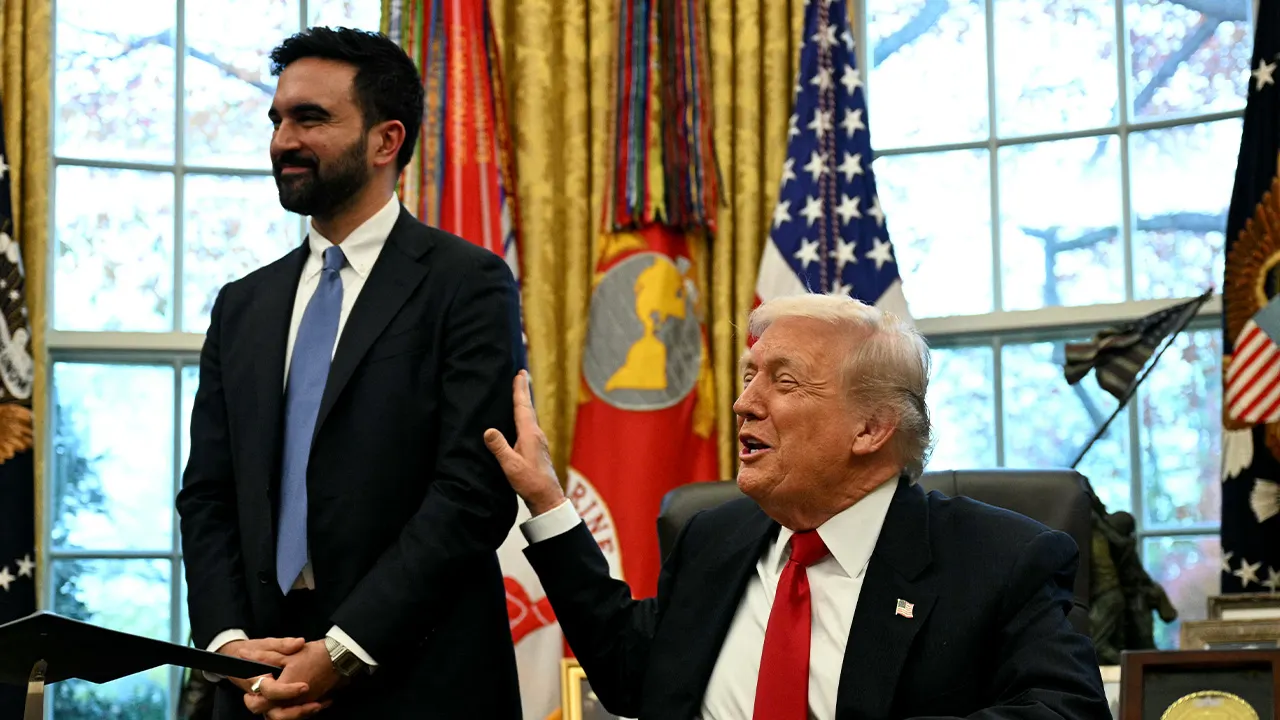
President Donald Trump and New York City Mayor-elect Zohran Mamdani presented a united front during their White House meeting Friday, marking a striking departure from their history of trading sharp personal attacks. The cordial Oval Office huddle suggests a potential thaw in what had been one of the most contentious political relationships in American politics.
The meeting, closely watched by political observers, appeared to establish a foundation for cooperation between the Republican president and the democratic socialist mayor of America’s largest city, despite fundamental ideological differences that previously led to heated rhetoric from both sides.
“I expect to be helping him, not hurting him — a big help,” Trump told reporters after the meeting, signaling a willingness to support Mamdani’s administration despite their differing political views.
The conciliatory tone stands in stark contrast to Trump’s previous characterizations of Mamdani. Just months ago, Trump called the mayor-elect “terrible” and “not very smart,” while questioning his intellect and criticizing his appearance. In June, after Mamdani secured the Democratic nomination, Trump took to social media to mock Mamdani’s voice as “grating.”
Trump has repeatedly labeled Mamdani a “communist,” a characterization Mamdani rejects, identifying himself instead as a democratic socialist. The president’s rhetoric escalated to threats in July, when he suggested arresting Mamdani over the mayor-elect’s stance against federal immigration enforcement in New York City.
“Look, we don’t need a communist in this country, but if we have one, I’m going to be watching over them very carefully on behalf of the nation,” Trump told reporters in July, responding to Mamdani’s pledge to obstruct “masked” Immigration and Customs Enforcement (ICE) officials from conducting deportations in the city.
Mamdani, for his part, has been equally unsparing in his criticism. During his November 4 victory speech, he characterized Trump as a “despot” and positioned New York City as a bulwark against Trumpism. “If anyone can show a nation betrayed by Donald Trump how to defeat him, it is the city that gave rise to him,” Mamdani declared on election night.
The mayor-elect further antagonized Trump the day after his victory by announcing plans to “Trump-proof” New York to protect vulnerable residents from federal policies. He framed his administration as a shield for “those with the least from the consequences of a man with the most power in this country.”
The contentious relationship has had broader political implications. Following Mamdani’s victory, Republican New Hampshire Governor Kelly Ayotte’s campaign deployed vans through Manhattan urging businesses to relocate north for “no Communism, less red tape, and lower taxes” – a move that highlighted how Mamdani’s democratic socialist platform was being weaponized by Republicans nationwide.
However, Friday’s meeting appeared to mark a turning point. Trump acknowledged the “despot” comment but dismissed it, saying, “I’ve been called much worse than a ‘despot,’ so it’s not that insulting. I think he’ll change his mind after we get to working together.”
The president surprisingly admitted that he and Mamdani share more common ground than anticipated, particularly regarding affordability issues and improving conditions in New York City. “I’m going to be cheering for him,” Trump said, suggesting a pragmatic approach to the relationship moving forward.
Political analysts suggest the apparent détente may reflect political realities for both men. Trump needs to demonstrate governance abilities beyond his base, while Mamdani requires federal cooperation to address New York’s complex challenges, including housing affordability, infrastructure needs, and public safety concerns.
Whether this unexpected alliance will endure remains uncertain, but the meeting demonstrates how political necessities can sometimes transcend even the most bitter personal animosities in American politics.
Fact Checker
Verify the accuracy of this article using The Disinformation Commission analysis and real-time sources.

13 Comments
I’m cautiously optimistic about this new alliance. While they have clashed in the past, if they can find ways to work together on key issues, it could be a win-win for New Yorkers.
Agreed. Bridging the partisan divide is crucial these days. Let’s see if they can turn their past tensions into productive policy solutions.
I’m quite surprised by this turnaround in their relationship. It will be interesting to see if they can maintain this newfound cooperation or if old tensions resurface.
It’s refreshing to see political rivals put aside their differences and work together for the greater good. Hopefully this sets a positive example for others.
Agreed. Bipartisan collaboration is key to addressing the complex challenges facing our country. This could be a model for future political cooperation.
This is an unexpected and rather intriguing political development. I wonder what prompted the shift in Trump’s stance toward Mamdani. Curious to see how this relationship evolves.
This is an intriguing development. I wonder what led to this shift in Trump’s stance and if it will lead to meaningful policy changes or just political theater.
Interesting to see Trump and Mamdani putting aside their differences and finding common ground. This could lead to some productive collaboration, despite their ideological divides.
Absolutely, cooperation between political rivals can yield positive results for constituents. Hopefully they can set aside past hostility and work together pragmatically.
It’s encouraging to see Trump and Mamdani putting aside their personal animosity to focus on the needs of New Yorkers. Hopefully this signals a new era of pragmatic governance.
Absolutely. Putting aside partisan differences to serve the greater good is exactly what we need more of in politics today.
Kudos to both leaders for setting aside their differences and finding common ground. Bipartisanship is sorely needed, so this is a promising sign.
Absolutely. Compromise and collaboration are essential for effective governance, even between ideological opposites.