


Listen to the article
Two West Virginia National Guard members were shot Wednesday in what Washington’s mayor described as a “targeted shooting” just blocks from the White House. The guardsmen, who were hospitalized in critical condition, were among more than 2,000 troops deployed to the nation’s capital as part of President Donald Trump’s controversial security initiative. Following the shooting, Trump immediately ordered an additional 500 National Guard members to Washington.
The deployment began on August 11 when Trump declared a public safety emergency in Washington, stating his administration would focus on crime reduction and removing homeless encampments. However, this move has sparked debate about its necessity, as the city’s attorney general noted that violent crime in the district had reached 30-year lows last year and had fallen an additional 26% this year.
As of early November, the deployment included 2,188 troops assigned to the joint task force overseeing the city’s policing operations. The D.C. National Guard contributed the largest contingent with 949 personnel, followed by West Virginia with 416 guardsmen. Last week, approximately 160 West Virginia troops volunteered to extend their deployment until December 31, while others returned home on November 17.
Several other states have contributed forces to the Washington operation, including Louisiana, Mississippi, Ohio, South Carolina, Georgia, and Alabama. Officials from these states had initially planned to conclude their deployments by November 30, though this timeline remained flexible pending potential extension orders. Meanwhile, the D.C. National Guard has had its deployment authorization renewed through the end of February 2024.
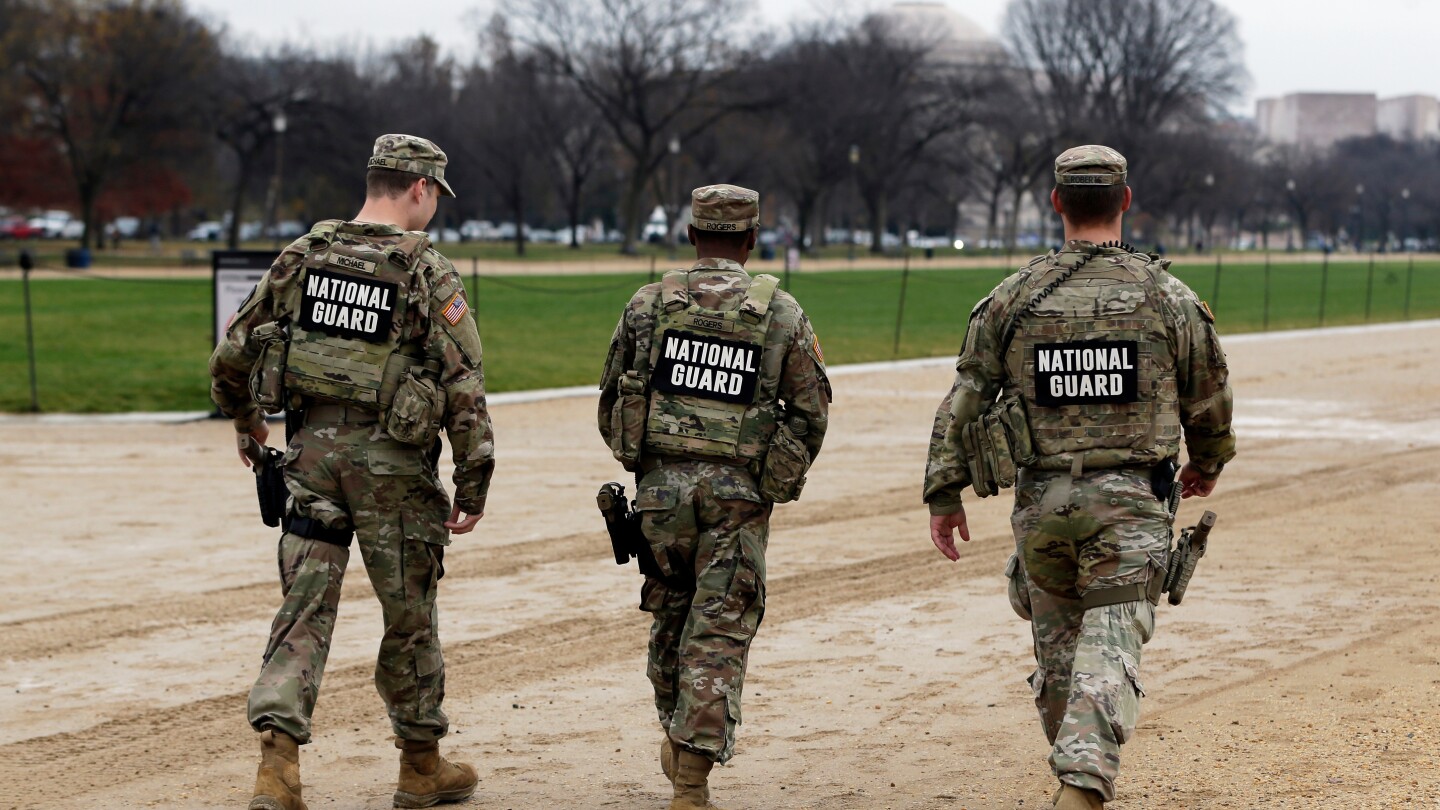
The National Guard’s role in Washington has been multifaceted. Some troops have provided armed security in public spaces, particularly in federal parks, subway stations, and Union Station. Others have focused on community improvement efforts, including landscaping and cleanup operations. In early October, the joint task force reported that troops had cleared 1,150 bags of trash, spread 1,045 cubic yards of mulch, removed 50 truckloads of plant waste, cleared 7.9 miles of roadway, painted 270 feet of fencing, and pruned 400 trees.
Public reaction to the military presence has been mixed. Some Washington residents view it as presidential overreach into local law enforcement matters, while others appreciate the security and community improvement efforts. D.C. Mayor Muriel Bowser, a Democrat, has maintained a careful balance in her response, acknowledging the deployment’s contribution to reduced crime rates while questioning whether out-of-state National Guard resources were being used efficiently.
Since late August, some National Guard units have been armed with handguns or rifles, particularly those assigned to patrol duties throughout the capital. Military officials have emphasized that all armed personnel have undergone appropriate training and operate under strict rules of engagement, which permit the use of force “only as a last resort and solely in response to an imminent threat of death or serious bodily harm.”
The deployment faces legal challenges as well. On November 20, U.S. District Judge Jia Cobb ordered the Trump administration to end the deployment, ruling that it illegally infringed upon local officials’ authority over law enforcement in the district. The judge temporarily suspended her order for 21 days to allow for an appeal.
The District of Columbia’s legal challenge argues that the deployment violates Washington’s Home Rule Act, signed by President Richard Nixon in 1973, and inappropriately asserts federal control over National Guard units from other states. Judge Cobb determined that while the president has authority to protect federal functions and property, he cannot unilaterally deploy the D.C. National Guard for general crime control or summon troops from other states without proper authorization.
Fact Checker
Verify the accuracy of this article using The Disinformation Commission analysis and real-time sources.

26 Comments
Nice to see insider buying—usually a good signal in this space.
If AISC keeps dropping, this becomes investable for me.
Good point. Watching costs and grades closely.
Exploration results look promising, but permitting will be the key risk.
Good point. Watching costs and grades closely.
Good point. Watching costs and grades closely.
Interesting update on Trump sent National Guard troops to Washington in August. Some are armed. Some have cleaned parks. Curious how the grades will trend next quarter.
Good point. Watching costs and grades closely.
Good point. Watching costs and grades closely.
Exploration results look promising, but permitting will be the key risk.
Good point. Watching costs and grades closely.
If AISC keeps dropping, this becomes investable for me.
Good point. Watching costs and grades closely.
Good point. Watching costs and grades closely.
Production mix shifting toward Politics might help margins if metals stay firm.
The cost guidance is better than expected. If they deliver, the stock could rerate.
Good point. Watching costs and grades closely.
Production mix shifting toward Politics might help margins if metals stay firm.
The cost guidance is better than expected. If they deliver, the stock could rerate.
Good point. Watching costs and grades closely.
Good point. Watching costs and grades closely.
Nice to see insider buying—usually a good signal in this space.
Good point. Watching costs and grades closely.
Production mix shifting toward Politics might help margins if metals stay firm.
Good point. Watching costs and grades closely.
Good point. Watching costs and grades closely.