


Listen to the article
President Trump declared on Saturday that the airspace “above and surrounding” Venezuela should be considered “closed in its entirety,” a statement that has intensified questions about U.S. strategy toward the Maduro regime. The declaration, posted on Trump’s Truth Social platform, left many international observers puzzled about whether it signaled a formal policy shift or merely reinforced existing pressure tactics.
The White House has not provided clarification on Trump’s statement, which was directed at “Airlines, Pilots, Drug Dealers, and Human Traffickers” rather than directly addressing Venezuelan President Nicolás Maduro. This announcement comes amid an already tense situation, with several international airlines canceling flights to Venezuela following cautionary advisories from the Federal Aviation Administration (FAA) about heightened military activity in the region.
The FAA had previously issued warnings to pilots about the dangers of flying near Venezuela, though the agency’s jurisdiction typically extends only to U.S. territories. For international airspace matters, the FAA coordinates with the International Civil Aviation Organization (ICAO) and other nations’ aviation authorities. Neither organization has publicly responded to Trump’s declaration.
Trump’s administration has systematically increased pressure on Maduro’s government in recent weeks. U.S. naval forces have conducted multiple strikes against vessels in the Caribbean Sea and eastern Pacific Ocean accused of drug trafficking, resulting in more than 80 casualties since early September. These operations represent part of a broader campaign to isolate the Maduro regime, which the U.S. government does not recognize as Venezuela’s legitimate leadership.
The military buildup in the region has reached historic proportions. The deployment of the USS Gerald R. Ford, America’s most advanced aircraft carrier, has brought the total U.S. naval presence to nearly a dozen ships with approximately 12,000 sailors and Marines as part of “Operation Southern Spear.” The carrier’s arrival complements recent bomber flights near Venezuelan territory, creating the largest concentration of American military power in the region in generations.
Venezuela, once among Latin America’s wealthiest nations due to its vast oil reserves, has experienced severe economic decline under Maduro’s leadership. The country continues to grapple with hyperinflation, widespread poverty, and critical shortages of essential goods. The humanitarian crisis has driven millions of Venezuelans to flee their homeland in recent years, creating significant migration challenges throughout the Western Hemisphere.
The Trump administration’s approach to Venezuela has reportedly included consideration of various intervention strategies, including potential covert operations coordinated by the CIA. Despite the aggressive military posture, Trump has publicly suggested openness to direct dialogue with Maduro. The New York Times reported on Friday that the two leaders have spoken, though White House officials declined to confirm or provide details about any such conversation.
This apparent dual-track approach of military pressure and potential diplomatic engagement has created confusion about U.S. intentions in Venezuela. Regional experts have expressed concern that mixed messaging could undermine either strategy.
The Venezuelan government has condemned U.S. actions as violations of its sovereignty, while Russia and China, Maduro’s key international backers, have criticized what they characterize as American interventionism in Latin America.
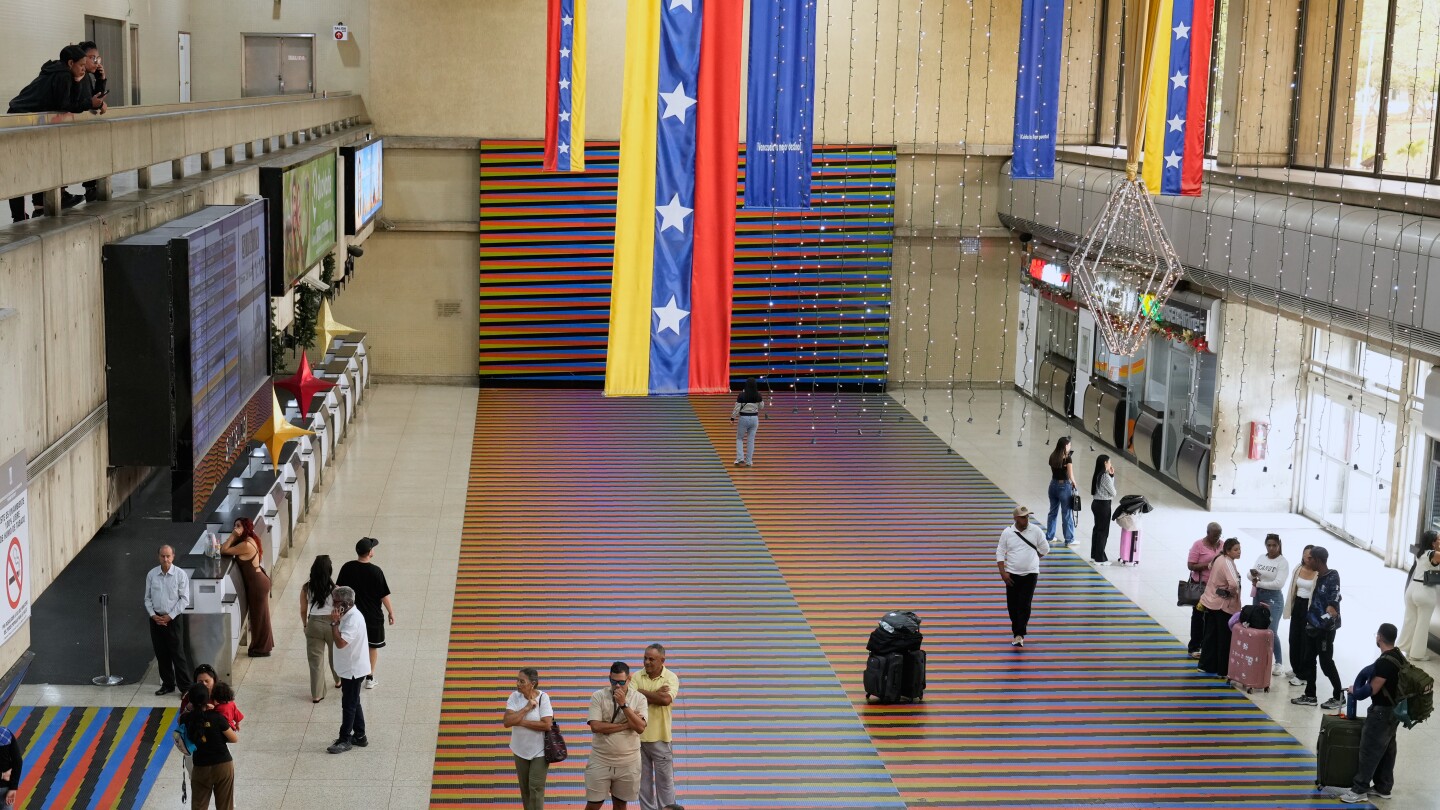
For commercial aviation, Trump’s declaration poses significant practical questions. Without formal mechanisms to enforce an airspace closure or clarity on what penalties might apply to violations, international carriers face uncertainty about operations in or near Venezuelan territory.
As tensions continue to escalate, neighboring countries including Colombia, Brazil, and Caribbean nations are closely monitoring developments, concerned about potential regional destabilization and the humanitarian implications of further conflict.
Fact Checker
Verify the accuracy of this article using The Disinformation Commission analysis and real-time sources.

12 Comments
Airspace closures can have significant economic and humanitarian impacts. I hope any US actions are carefully considered and coordinated with international aviation authorities to minimize unintended consequences.
Unilateral declarations of airspace closures are highly unusual. This move seems to lack the backing of established international protocols.
Closing Venezuelan airspace seems like a provocative step that could raise the risk of military confrontation. I hope cooler heads prevail and diplomacy remains the priority.
The lack of clarity from the US government is worrying. They need to provide a clear rationale and consult with international partners.
As an aviation enthusiast, I’m concerned about the potential safety and logistical implications of closing Venezuelan airspace. Clear communication and coordination will be crucial.
The regional aviation industry is already grappling with challenges. This move could further disrupt flight schedules and connectivity.
This announcement is quite vague and puzzling. I’m curious to see if it leads to any concrete changes in aviation routes and operations in the region.
Unilateral airspace closures typically require coordination through ICAO. It’s unclear if that process has been followed here.
This seems like a concerning escalation in tensions between the US and Venezuela. I’m curious to see how the international community responds and what the practical implications might be for flights and trade in the region.
It’s unclear if this is just rhetoric or a formal policy shift. The White House’s lack of clarification is adding to the confusion.
As an energy/commodity investor, I’m concerned about how this could affect Venezuela’s oil and mineral exports. Disruptions to regional aviation could have ripple effects across global supply chains.
Venezuela’s economic woes are already severe. Further isolating the country could exacerbate the humanitarian crisis there.