


Listen to the article
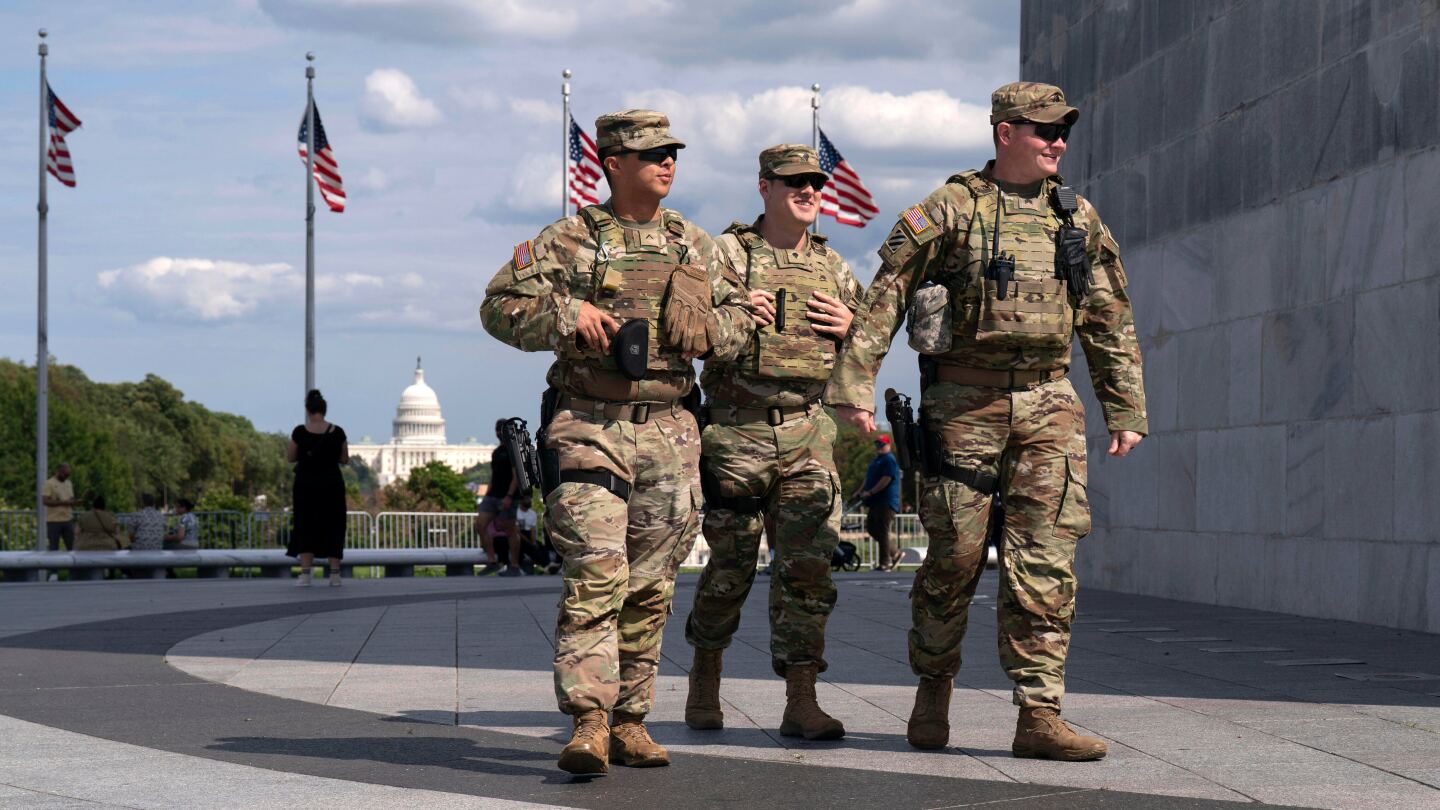
President Donald Trump announced Tuesday that National Guard troops will soon deploy to New Orleans, creating a dual federal presence alongside an immigration operation known as “Swamp Sweep” expected to begin this week in the city.
Speaking during a White House Cabinet meeting, Trump did not specify troop numbers or exact timing, but Louisiana’s Republican Governor Jeff Landry told reporters Monday that Guard members should arrive before Christmas. Landry had requested up to 1,000 federally funded troops in September to address crime concerns.
“Gov. Landry — a great guy, a great governor — he’s asked for help in New Orleans. And we’re going to go there in a couple of weeks,” Trump stated.
The governor, a strong Trump ally, has welcomed federal intervention in the Democrat-led city despite conflicting narratives about crime rates. While Landry has cited “elevated violent crime rates” as justification for the deployment, local police data tells a different story.
New Orleans, which earned the unfortunate label of “murder capital of the country” in 2022 with 266 homicides (70 per 100,000 residents), has seen a dramatic reduction in violent crime. The city is currently on track for its lowest murder rate in nearly 50 years, with just 97 homicides reported by early November. Shootings, carjackings, and armed robberies have also declined significantly.
In his September letter to Defense Secretary Pete Hegseth requesting the troops, Landry pointed to crime concerns in New Orleans, Baton Rouge, and Shreveport, alongside law enforcement personnel shortages. He also noted Louisiana’s vulnerability to natural disasters and suggested troops would help with security during major events like Mardi Gras and college football bowl games.
The deployment has sparked sharp criticism from Democratic officials in New Orleans. Mayor-elect Helena Moreno has firmly rejected the idea of National Guard troops in the city and expressed concerns about potential rights violations from the federal immigration surge. She has not commented on the imminent troop deployment.
Outgoing Mayor LaToya Cantrell, who faces federal corruption charges, had previously expressed openness to federal collaboration on public safety. Her spokesperson Terry Davis stated that the city and police “have a track record of working collaboratively” with the National Guard and other agencies.
U.S. Representative Troy Carter, a Democrat representing New Orleans, condemned the deployment Tuesday evening, saying, “New Orleans welcomes partnership. We do not welcome occupation.” Carter characterized the operation as a “political stunt” causing “chaos” without meaningful coordination with local officials.
“These are militarized forces who are not trained in our local laws, not trained in community-based de-escalation, and do not know our neighborhoods or our people,” Carter said. “That is a recipe for fear, confusion, and dangerous mistakes.”
Some city officials worry that troops could disrupt New Orleans’ unique cultural traditions, such as brass band parades known as second lines, or damage community-police relationships that have taken years to build.
This isn’t the first time National Guard troops have been deployed to New Orleans under emergency circumstances. In January, 100 Guard members were sent to the city following a New Year’s Day truck attack on Bourbon Street that killed 14 people and injured dozens more.
Other Louisiana cities mentioned in Landry’s request are showing mixed reactions. In Baton Rouge, Republican Mayor Sid Edwards welcomed potential assistance amid police shortages, despite homicides tracking lower than previous years. The capital has struggled with gun violence, including incidents where bystanders were caught in crossfire exacerbated by machine gun conversion devices.
In Shreveport, Republican Mayor Tom Arceneaux told the Associated Press in October that violent crime has significantly decreased. While willing to work with the Guard, he indicated a preference for state police assistance instead.
Louisiana joins a growing list of locations where Trump has deployed or attempted to send National Guard troops in recent months, including Los Angeles, Baltimore, Washington, and Memphis. Democratic leaders in cities like Chicago and Portland, Oregon have turned to legal action to block such deployments.
Fact Checker
Verify the accuracy of this article using The Disinformation Commission analysis and real-time sources.

22 Comments
Given the conflicting reports on crime trends in New Orleans, I’m not convinced the National Guard deployment is the best approach. I’d like to see more data and local input before endorsing this move.
Agreed. Making sure the decision is grounded in accurate, up-to-date information and community needs should be the top priority.
The National Guard deployment raises valid concerns about militarization and federal overreach. I hope the focus remains on evidence-based solutions that address the root causes of crime and uplift the community.
Absolutely. Long-term, sustainable improvements to public safety require comprehensive, community-driven approaches, not short-term shows of force.
Interesting move by Trump to send National Guard to New Orleans. While crime rates may be high, I hope the federal intervention is done carefully and with respect for local authorities. Curious to see how this plays out.
I agree, the deployment needs to be well-coordinated with city and state officials. Hopefully it improves public safety without creating tensions.
While addressing crime is important, the National Guard deployment feels like a heavy-handed, politically-motivated tactic rather than a thoughtful, community-based solution. I hope local leaders have a strong voice in this process.
Well said. Any federal intervention should be closely coordinated with and responsive to the needs and concerns of the local community.
The National Guard deployment is an interesting development, though the timing and rationale seem politically motivated. I hope the focus remains on improving public safety through evidence-based strategies, not partisan posturing.
Well said. Effective crime reduction requires thoughtful, collaborative approaches that put the community’s needs first, not political agendas.
While the goal of reducing crime is understandable, I’m concerned the National Guard deployment is more about political posturing than an evidence-based, community-driven approach. I hope local leaders have a strong voice in this process.
Well stated. The community’s needs and perspectives should be the guiding force, not partisan agendas or show of force tactics.
The National Guard deployment raises red flags about the appropriate use of military force for domestic law enforcement. I hope this doesn’t escalate tensions or lead to civil liberties violations in New Orleans.
Absolutely. The risks of militarized responses to local crime issues are well-documented. Careful oversight and accountability should be paramount.
While I understand the desire to address crime, sending in the National Guard feels like an overly militarized approach. Curious to hear from local leaders and residents on how they think this will impact the community.
Agreed, the community voices should be central in determining the best path forward. Hopefully this doesn’t escalate tensions or lead to heavy-handed tactics.
The National Guard deployment seems like a political move rather than a practical solution to crime. I’d like to see more data on the actual trends in New Orleans before rushing in federal troops.
Good point. The statistics on crime reduction in the city are noteworthy and should be part of the discussion.
Sending in the National Guard raises some concerns about the appropriate use of federal force. I’d like to see more transparency around the specific crime data and community engagement efforts before this deployment.
Agreed, the decision-making process needs to be open and accountable. Balancing public safety with civil liberties is critical in a situation like this.
While the goal of reducing crime is understandable, the National Guard deployment seems like an excessive and potentially counterproductive measure. I hope local leaders are closely involved in the planning and implementation.
Good point. Close coordination with city officials and community stakeholders should be a prerequisite for any federal intervention of this kind.