


Listen to the article
President Trump has banned South Africa from next year’s G20 summit in Miami and cut all U.S. subsidies to the nation following a diplomatic row over South Africa’s treatment of a U.S. representative at this year’s global meeting.
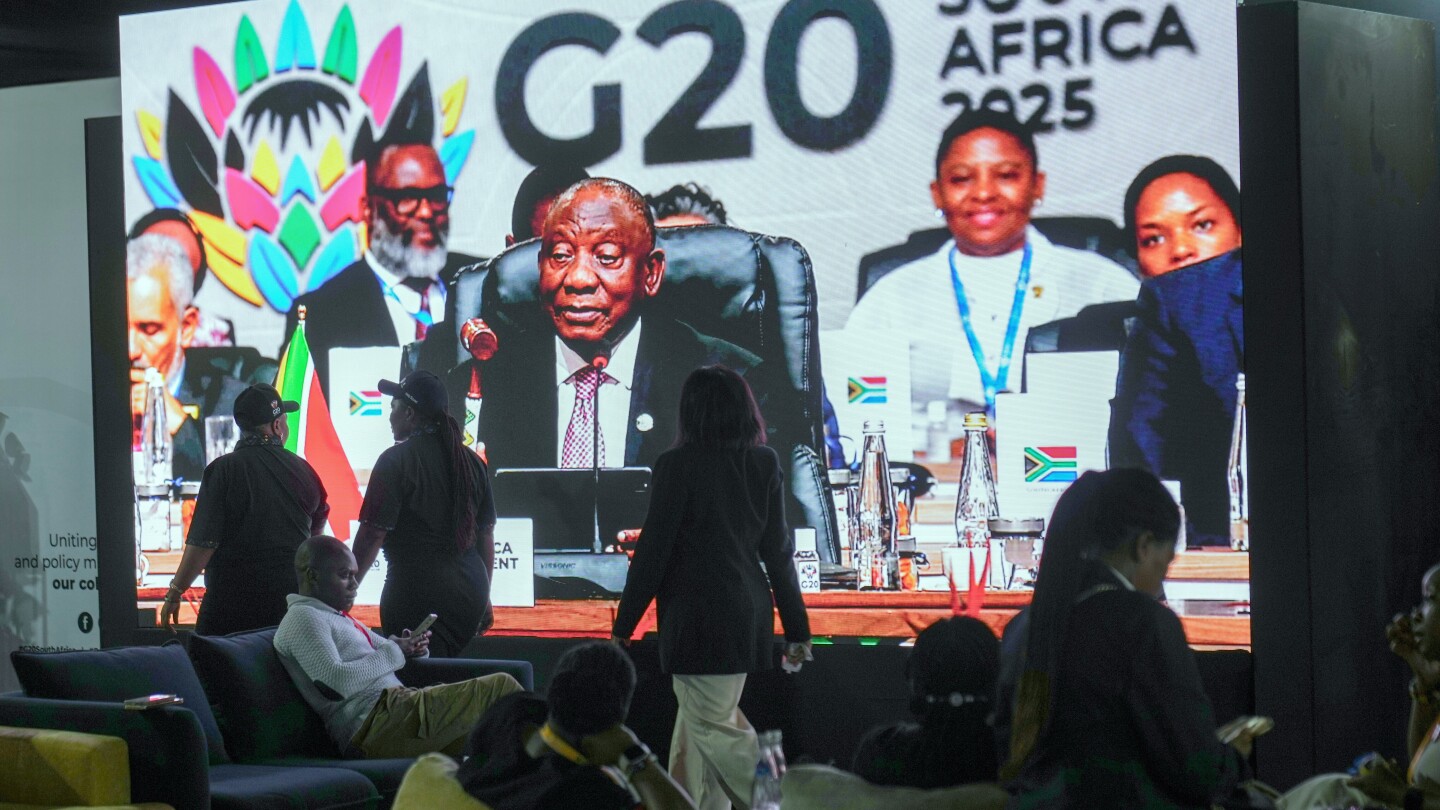
The dispute erupted when South Africa hosted the G20 summit in Johannesburg, the first ever held on the African continent. Trump announced Wednesday that he is barring South Africa from participating in the 2026 G20 summit, which will be held at his Doral golf resort in Florida.
“South Africa has demonstrated to the World they are not a country worthy of Membership anywhere,” Trump declared on Truth Social, adding that his administration would “stop all payments and subsidies to them, effective immediately.”
The escalation stems from Trump’s decision not to send an official U.S. delegation to the Johannesburg summit. Instead, the administration attempted to appoint a local embassy official for the traditional G20 handover ceremony, a move South African officials viewed as an insult.
South African President Cyril Ramaphosa’s office called Trump’s statement “regrettable” and noted that the handover ceremony was conducted at the country’s Foreign Ministry building after the summit concluded “as the United States was not present at the summit.”
This dispute marks the latest development in increasingly strained U.S.-South Africa relations under the Trump administration. The president has repeatedly claimed that white Afrikaner farmers in South Africa are being violently persecuted and having their land seized. South African officials strongly reject these assertions as “misinformation and distortions,” noting that such claims have been widely debunked.
“Trump continues to apply punitive measures against South Africa based on misinformation and distortions about our country,” Ramaphosa’s office stated.
Afrikaners, who number approximately 2.7 million in South Africa’s population of 62 million, are descendants of Dutch, French, and German colonial settlers who arrived in the 17th century. They were central to the apartheid system of white minority rule that governed South Africa from 1948 until 1994.
The U.S. boycott of this year’s summit had significant consequences. The meeting’s declaration, which emphasized issues affecting developing countries, went unsigned by Washington. The Trump administration specifically objected to South Africa’s agenda, particularly regarding climate change initiatives.
The United States has now assumed the rotating presidency of the G20, casting uncertainty over the long-term impact of the South African declaration and the group’s future direction on global development issues.
This diplomatic spat occurs within a broader context of shifting U.S. foreign policy. The Trump administration has characterized South Africa as anti-American due to its diplomatic ties with China, Russia, and Iran. These allegations reflect growing tensions between Western powers and the BRICS alliance, which includes South Africa alongside Brazil, Russia, India, and China.
Last month, the Trump administration announced it would restrict the annual U.S. refugee admission to 7,500, with most spots reserved for white South Africans. Since Trump suspended the refugee program upon taking office in January, only a small number of refugees have entered the U.S., predominantly white South Africans. In May, the administration welcomed a group of 59 white South Africans as refugees.
The exclusion of a G20 founding member from next year’s summit represents an unprecedented diplomatic action with potential ramifications for international cooperation on economic and development issues. As the U.S. prepares to host the 2026 summit at Trump’s Miami-area club, questions remain about how this decision will impact global economic governance and America’s standing among developing nations.
Fact Checker
Verify the accuracy of this article using The Disinformation Commission analysis and real-time sources.

8 Comments
This seems like an escalation of tensions between the US and South Africa over the G20 summit. While the US has the right to choose its representatives, barring South Africa from future G20 meetings could undermine global cooperation on important issues.
Agreed, this move appears heavy-handed and risks further damaging US-South Africa relations. Diplomacy and constructive dialogue would be a better approach.
The G20 is meant to bring the world’s major economies together to address global issues. Excluding South Africa, a key African nation, undermines the inclusive nature of the forum. I hope pragmatism and diplomacy can prevail over political posturing.
Agreed. The G20 should be focused on cooperation, not confrontation. Excluding members sets a dangerous precedent and weakens the group’s ability to tackle shared challenges effectively.
This dispute seems to be more about personal and political egos than substantive policy differences. The G20 needs to rise above such petty squabbles and maintain its role as a platform for constructive dialogue on global economic issues.
It’s concerning to see this kind of tit-for-tat between two major economies. The G20 should be a forum for productive dialogue, not political squabbles. I hope cooler heads can prevail and find a way to move forward constructively.
Absolutely. The G20 is too important for geopolitical games. Both sides need to de-escalate and focus on the global challenges that require coordinated action.
This dispute highlights the challenges of managing international relationships, especially when egos and national pride are involved. While I don’t condone South Africa’s actions, barring them from the G20 seems like an overreaction that could backfire.