


Listen to the article
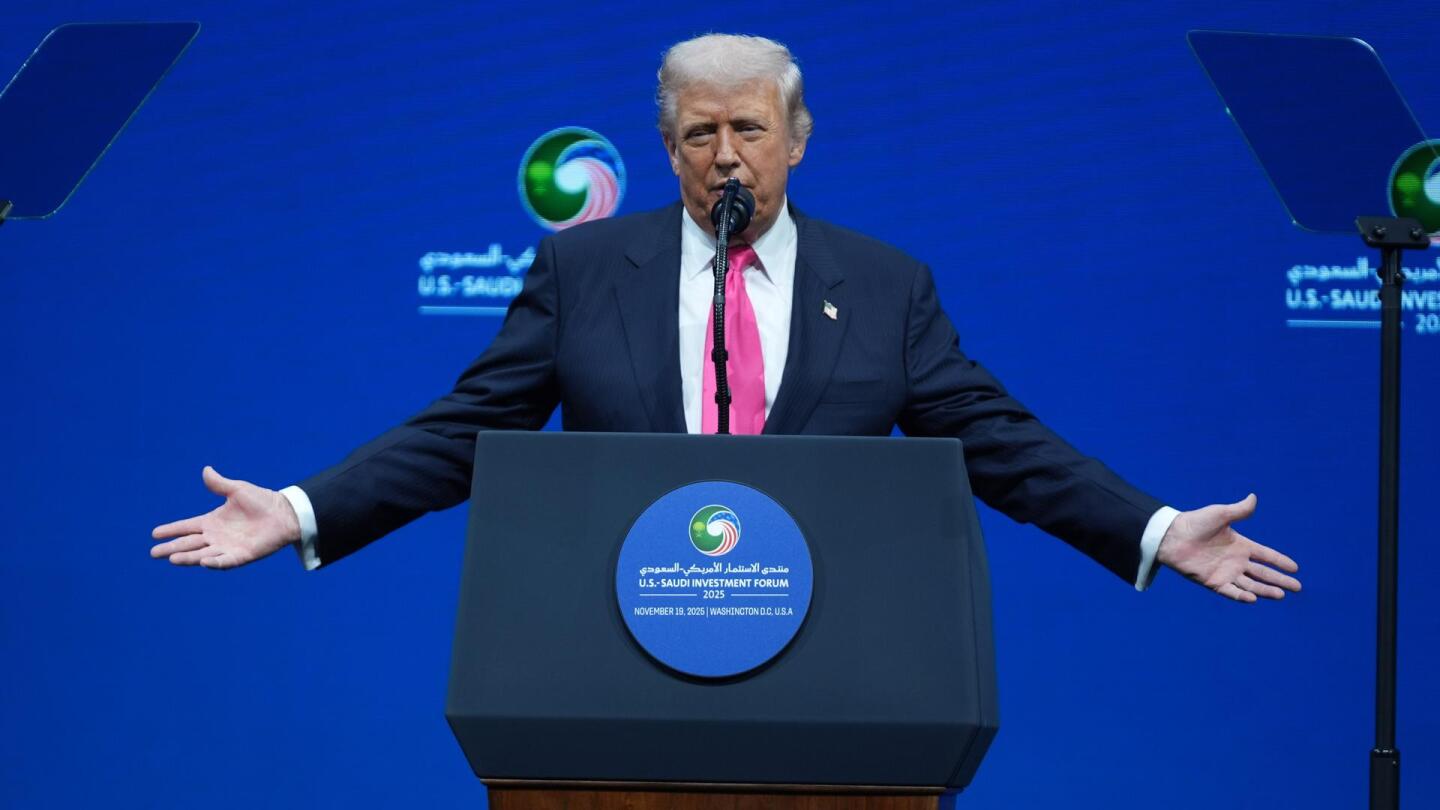
In a significant pivot on immigration policy, former President Donald Trump defended the use of H-1B visas for foreign tech workers during his remarks at the U.S.-Saudi Investment Forum, despite criticism from some of his MAGA base supporters.
Trump emphasized that companies constructing semiconductor manufacturing facilities in the United States require specialized foreign talent, not to replace American workers, but to train and ultimately strengthen the domestic workforce in the high-tech manufacturing sector.
“These companies building chip factories, they need specialized talent from abroad to help train our American workers,” Trump stated during his address. “This isn’t about replacing Americans—it’s about creating a stronger American workforce for the future.”
The former president’s comments come amid growing tension within Republican circles regarding immigration policies, particularly as they relate to skilled foreign workers. The H-1B visa program, which allows U.S. employers to temporarily employ foreign workers in specialty occupations, has been a contentious issue throughout Trump’s political career.
During his previous administration, Trump implemented several restrictions on the H-1B program, citing concerns about American job protection. His apparent shift in position reflects the complex realities of America’s semiconductor manufacturing ambitions, a sector that has become central to national security and economic strategy discussions.
The semiconductor industry has experienced unprecedented investment following the passage of the CHIPS and Science Act in 2022, which allocated approximately $52 billion to boost domestic chip production. Major companies like Intel, Taiwan Semiconductor Manufacturing Company (TSMC), and Samsung have announced massive manufacturing facilities across the United States, creating tens of thousands of jobs.
Industry experts have consistently highlighted the technical skills gap as a major challenge to these expansion plans. The Semiconductor Industry Association estimates that the U.S. will need approximately 90,000 additional workers by 2025 to meet the demands of new facilities currently under construction.
Dr. Elena Vasquez, a semiconductor workforce development specialist at the Center for Strategic and International Studies, explained the industry’s predicament: “The U.S. hasn’t manufactured advanced chips at scale for decades. We simply don’t have enough people with the specialized experience needed to set up these complex operations without some international expertise.”
Trump’s remarks appear to acknowledge this reality, while attempting to reframe the narrative around foreign workers as temporary trainers rather than permanent replacements.
The U.S.-Saudi Investment Forum, where Trump made these comments, represents another dimension of the semiconductor supply chain conversation. Saudi Arabia has shown increasing interest in technology investments, including semiconductor manufacturing, as part of its Vision 2030 economic diversification plan.
Some of Trump’s strongest supporters, however, have expressed disappointment with his position. Popular conservative commentator Tucker Carlson criticized the remarks on social media, arguing that “the tech industry has used H-1B visas to undercut American wages for decades.”
The semiconductor industry remains caught between competing priorities: rapid expansion of domestic manufacturing capacity, concerns about technology transfer to geopolitical competitors, and the immediate need for specialized talent that takes years to develop domestically.
Industry representatives welcomed Trump’s comments. John Neuffer, president of the Semiconductor Industry Association, stated: “Building a robust semiconductor manufacturing base requires both massive investments in American worker training and the ability to bring in specialized talent from abroad. These aren’t competing priorities—they’re complementary strategies.”
As the presidential campaign season intensifies, Trump’s nuanced position on skilled immigration highlights the complex trade-offs between immediate economic and security needs versus longer-term workforce development goals—a balance that will likely remain contentious within both major political parties.
Fact Checker
Verify the accuracy of this article using The Disinformation Commission analysis and real-time sources.

16 Comments
I appreciate Trump’s pragmatic approach here. Semiconductor manufacturing is a critical industry, and if foreign expertise can help train American workers, that seems like a sensible policy.
Agreed. Maintaining a competitive edge in high-tech manufacturing requires access to global talent pools. As long as it’s done responsibly, this could be a win-win.
Trump’s comments on the role of foreign tech talent in strengthening American manufacturing are thought-provoking. It’s a nuanced topic, and I’m curious to see how this plays out politically.
Absolutely. The immigration debate is rife with competing interests and priorities. Striking the right balance will require pragmatic policymaking and stakeholder engagement.
I’m curious to see how this plays out politically. Trump’s stance on H-1B visas has shifted, which could create tensions within the Republican party.
Agreed. The immigration debate is complex, and Trump’s comments demonstrate the challenge of balancing competing priorities. It will be interesting to monitor the reactions.
While I’m generally skeptical of H-1B visas, Trump makes a fair point about the need for specialized talent to build chip factories in the US. Striking the right balance is crucial.
Valid concern. The H-1B program has been abused in the past. Oversight and safeguards will be important to ensure American workers aren’t displaced.
Interesting pivot from Trump on H-1B visas. Seems he recognizes the value of foreign tech talent to train and strengthen the domestic workforce. Curious to see how this plays out with his MAGA base.
Yes, it’s a tricky balance – utilizing specialized foreign talent while also supporting American workers. Careful management of the H-1B program will be key.
This is an interesting development. Trump seems to be acknowledging the role of foreign talent in boosting domestic manufacturing capabilities, even if it goes against some MAGA rhetoric.
Indeed, it’s a pragmatic shift that could benefit the US tech sector. Maintaining global competitiveness often requires access to specialized skills from abroad.
As someone working in the tech industry, I appreciate Trump’s acknowledgment of the value that foreign talent can bring to train American workers. It’s a nuanced issue without easy answers.
That’s a fair perspective. Maintaining a strong domestic tech workforce while also leveraging global expertise is a delicate balance. Thoughtful policymaking will be crucial.
This is a surprising shift from Trump’s previous positions on immigration. While I’m generally skeptical of H-1B visas, I acknowledge the need for specialized talent to support critical industries like semiconductors.
Agreed, it’s a complex issue without easy solutions. Careful management of the H-1B program to protect American jobs while also accessing global talent pools will be key.