


Listen to the article
Trump Intensifies Pressure on Indiana Republicans to Redraw Congressional Maps
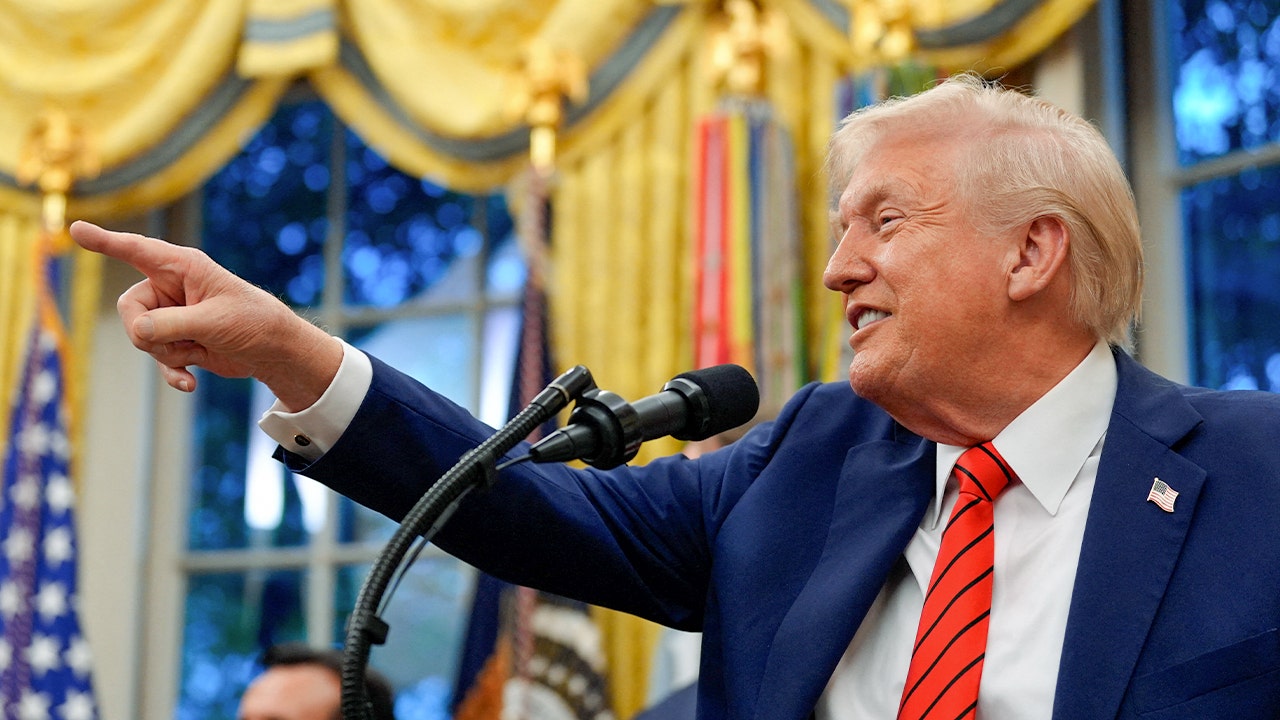
President Donald Trump and allied conservative groups have escalated their campaign to pressure Indiana Republican state senators who oppose his congressional redistricting push in the solidly red Midwestern state.
The Indiana Senate reconvened Monday to consider a new congressional map passed by the state House last Friday on a 57-41 vote, with a dozen Republican lawmakers voting against the measure. The map, championed by Trump, would create two more right-leaning congressional districts in Indiana, where Republicans already control seven of the state’s nine U.S. House seats.
Indiana Senate Republican leader Rodric Bray has previously expressed skepticism about the redistricting effort, noting insufficient support in the chamber. The Senate split 19-19 in a proxy vote last month on the issue, highlighting the internal Republican division. A final vote is expected Thursday.
Trump has taken direct aim at Bray on social media, calling him a “RINO State Senator” and threatening that Bray would soon “have a Primary Problem, as will any other politician who supports him in this stupidity.” The president has also named nine state Senate Republicans who have yet to announce their positions, saying they “need encouragement to make the right decision.”
The battle in Indiana represents the latest front in Trump’s aggressive national campaign to reshape congressional districts ahead of the 2026 midterm elections. Last week, the Supreme Court cleared the way for Texas to use its newly redrawn map, which creates five more right-leaning House seats, delivering a significant victory to Trump and Republicans after two federal judges had initially ruled against the map.
“We must keep the Majority at all costs,” Trump wrote recently, underscoring the GOP’s concern about holding onto their narrow House majority. Historically, the party in power tends to lose congressional seats during midterm elections, a fate Trump is determined to avoid during his second term.
The president has personally called state lawmakers in Indiana to press for the redistricting. Vice President JD Vance has visited the state twice this fall to discuss the issue. Trump has also publicly pressured Indiana Governor Mike Braun, warning that Braun “must produce on this, or he will be the only Governor, Republican or Democrat, who didn’t.”
Braun, however, has expressed support for the redistricting effort, stating he is “committed to standing with him on the critical issue of passing fair maps in Indiana to ensure the MAGA agenda is successful in Congress.”
Conservative organizations have joined Trump’s push. The Club for Growth Action and other aligned groups have invested heavily in advertising campaigns supporting redistricting in Indiana. Club for Growth President David McIntosh issued a “FINAL WARNING” to Bray, threatening that “failure to get this done means you and any other opposition will be defeated and removed from office in your next election.”
Turning Point Action held a rally at the state Capitol on Friday, with Governor Braun in attendance, to increase pressure on Republican state senators to support the redistricting plan.
The redistricting battle extends well beyond Indiana. Several Republican-controlled states, including Texas, Missouri, North Carolina, and Ohio, have already drawn new maps as part of Trump’s nationwide push. Florida lawmakers this week took initial steps toward passing a redistricting measure, and Kansas is also considering redrawing its map.
Democrats have responded with their own redistricting efforts. California voters overwhelmingly passed Proposition 50 last month, which temporarily bypasses the state’s nonpartisan redistricting commission and returns map-drawing power to the Democrat-controlled legislature. This is expected to create five more Democratic-leaning congressional districts, effectively countering the Texas redistricting plan.
California Governor Gavin Newsom, widely viewed as a potential 2028 Democratic presidential contender, has spearheaded his state’s redistricting initiative. Meanwhile, Illinois, Maryland, and Virginia—where Democrats control the legislature—are either taking steps or seriously considering redistricting to create more Democratic-friendly districts.
In a setback for Republicans, a Utah district judge last month rejected a congressional district map drawn by the state’s GOP-dominated legislature, instead approving an alternate map that will create a Democratic-leaning district ahead of the 2026 midterms.
As both parties jockey for advantage through redistricting, the stakes for control of the House in 2026 continue to grow, with Indiana emerging as a critical battleground in this nationwide power struggle.
Fact Checker
Verify the accuracy of this article using The Disinformation Commission analysis and real-time sources.

7 Comments
Redistricting is always a tricky and contentious issue. It’s important to balance fairness, competitiveness, and representation. I’m curious to see how this plays out in Indiana and if the final maps reflect the will of the people.
Redistricting is a complex issue with no easy answers. I’m interested to see how this plays out in Indiana and whether the final maps will withstand legal challenges. Transparency and bipartisanship are key for maintaining public trust.
Trump’s pressure tactics on state Republicans seem heavy-handed. Elected officials should be able to vote their conscience without fear of primary challenges. Hopefully, the final maps will be drawn in a transparent and nonpartisan manner.
I agree, strong-arming state legislators is not the right way to go about redistricting. The process should be fair and independent, not subject to partisan whims.
Redistricting is a complex and often politicized process. I’m curious to see how this plays out in Indiana and whether the final maps will reflect the will of the people rather than partisan interests.
Redistricting is always a contentious issue, but Trump’s tactics seem heavy-handed. Elected officials should be able to vote their conscience without fear of primary challenges. I hope the final maps in Indiana will be drawn in a fair and balanced way.
I share your concerns about the partisan nature of this redistricting process. It’s important that maps are drawn in a transparent and nonpartisan manner to ensure fair representation.