


Listen to the article
Trump Postpones Xi Meeting Amid Iran Conflict, Creating Energy Market Ripples
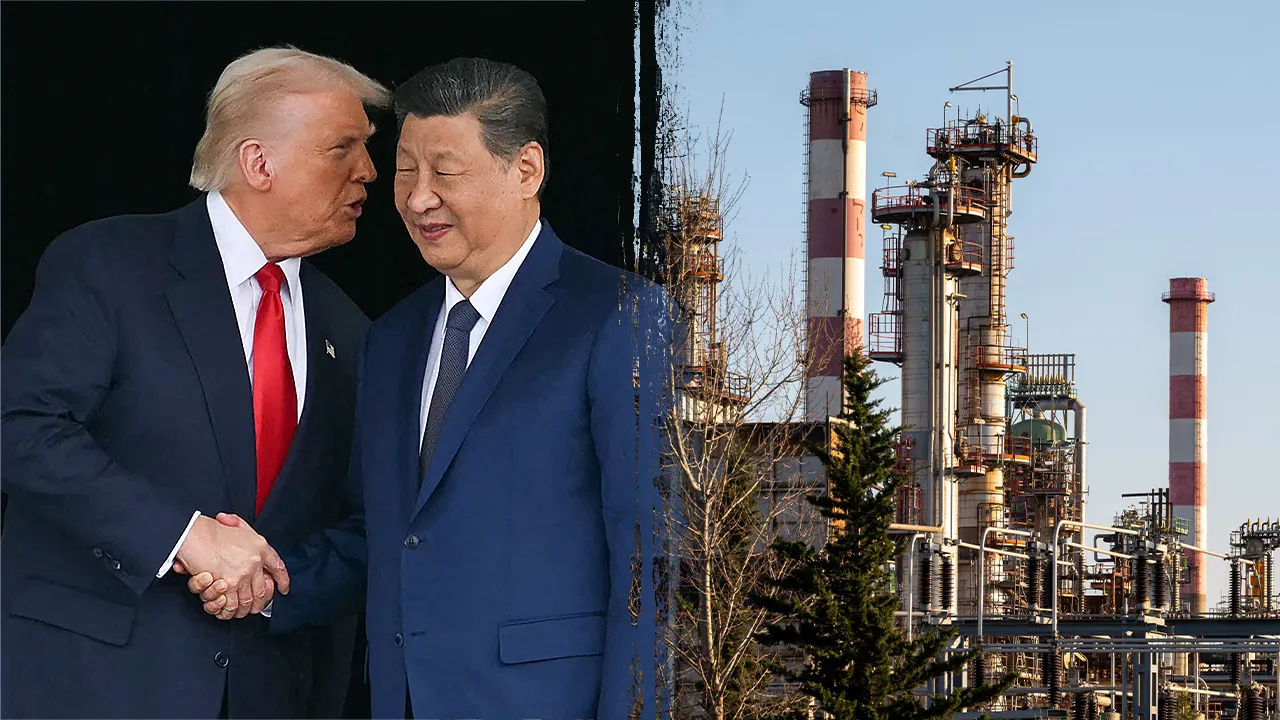
President Donald Trump’s decision to delay his scheduled summit with Chinese President Xi Jinping has raised questions in Washington about whether disruptions to global oil flows could provide the U.S. with additional leverage in its complex relationship with Beijing.
The meeting, originally planned for March 31 to April 2, will now take place “in about five or six weeks,” according to Trump, who explained his reasoning plainly: “We got a war going on. I think it’s important that I be here.” White House press secretary Karoline Leavitt added that the president has domestic matters requiring his attention in May.
This postponement comes as U.S. military actions against Iran – a key Chinese oil supplier – are causing significant disruptions to energy markets and shipping routes critical to China’s economy.
While Chinese officials reportedly accepted the delay without objection, the timing coincides with increasing pressure on Beijing’s energy supply chains. The conflict has complicated China’s access to discounted Iranian crude oil, which has become a cornerstone of its energy strategy.
China’s Vulnerable Energy Lifeline
China remains Iran’s largest oil customer, purchasing an estimated 80-90% of Iran’s crude exports. This relationship has withstood years of international sanctions, with China developing sophisticated networks to maintain the flow of discounted Iranian oil – often $8-10 cheaper per barrel than market rates.
These oil shipments represent roughly 13% of China’s total crude imports, providing critical fuel for its manufacturing-based economy. Most transactions are handled by smaller independent “teapot” refineries rather than state-owned giants, allowing Beijing to maintain plausible deniability regarding sanctions violations.
“One of China’s long-term objectives is challenging the supremacy of the dollar,” said Piero Tozzi of the America First Policy Institute, noting that many of these transactions occur in yuan rather than dollars.
The current conflict has not completely severed this supply line, but it has substantially increased costs, risks, and logistical challenges. Shipping through the Strait of Hormuz – through which approximately half of China’s seaborne oil imports pass – has dropped sharply and become increasingly volatile.
Strategic Implications Beyond Oil
The timing of the summit delay adds another dimension to an already complex geopolitical picture. In 2023, China helped broker a diplomatic breakthrough between Saudi Arabia and Iran, a move widely interpreted as evidence of Beijing’s growing influence in the Middle East. That détente is now under severe strain as regional tensions escalate.
“It is very much connected,” said Brent Sadler of the Heritage Foundation. “It’s all connected to China at the end of it.”
However, experts caution against viewing the Iran conflict solely through the lens of U.S.-China competition. “It’s not all about China,” Tozzi emphasized. “It’s primarily about Iran” and longstanding tensions over its nuclear program, missile capabilities, and support for regional proxies.
Nevertheless, the situation has exposed limitations in China’s diplomatic reach. Despite its economic influence, Beijing has appeared unwilling or unable to shield its partners once military conflict erupts.
U.S. Energy Market Maneuvers
The Trump administration has taken some unusual steps regarding energy markets during the conflict, including temporarily easing sanctions on Iranian oil already loaded on tankers. This short-term waiver, covering an estimated 140 million barrels, aims to stabilize global supply disruptions.
However, this move also has strategic implications for China. By allowing these barrels to enter the global market rather than flowing primarily to China, it increases competition for crude that Beijing had previously secured at favorable rates.
Similar adjustments to Russian oil restrictions in recent weeks have further reshaped global energy flows, forcing China to compete more directly for supplies rather than relying on its privileged access to sanctioned crude.
Military Implications and Resource Constraints
The ongoing operations are providing U.S. forces with valuable real-world combat experience that cannot be replicated in training environments. Different military branches are gaining practical knowledge operating together under live conditions.
“We are refining our capabilities in a massive way,” Sadler noted. However, these gains come with significant costs, including the depletion of critical munitions stockpiles that would be essential in any potential Indo-Pacific conflict.
As of late 2025, the U.S. had approximately 414 SM-3 interceptors and 534 Terminal High Altitude Area Defense (THAAD) interceptors – systems that have been used heavily in Middle East operations and would be crucial in any confrontation with China.
“We don’t produce munitions at the speed and capacity that we should be,” Sadler warned, suggesting that at current production rates, inventories could last “maybe a week or two” in a high-intensity conflict.
For now, China has maintained diplomatic distance from the conflict, expressing “high concern” while avoiding direct involvement. This cautious approach reflects Beijing’s calculated risk assessment – unwilling to jeopardize its economic interests for geopolitical positioning.
As the rescheduled Trump-Xi meeting approaches in the coming weeks, both leaders will navigate a strategic landscape transformed by these intersecting energy, security, and diplomatic challenges.
Fact Checker
Verify the accuracy of this article using The Disinformation Commission analysis and real-time sources.

10 Comments
The postponement of the Trump-Xi meeting is a curious move. Tying it to the US conflict with Iran suggests the administration is looking to gain an upper hand in its trade negotiations with China. This could get messy.
China’s reliance on Iranian oil is certainly a vulnerability that the US appears intent on exploiting. It remains to be seen how Beijing will respond to these disruptions to its energy supply.
This is a complex geopolitical situation. The US seems to be using the Iran conflict as leverage over China’s oil supply, which could give it an advantage in the ongoing trade dispute. It will be interesting to see how China responds.
You’re right, the energy market ripples from this conflict are likely a strategic consideration for the US. China’s access to discounted Iranian crude is an important factor in their economic calculus.
Interesting move by Trump to delay the Xi meeting. Tensions with Iran could certainly give the US some leverage over China’s oil supply. I wonder how this will play out diplomatically between the two nations.
The Iran conflict does seem to be complicating China’s energy strategy. It will be important to see how Beijing responds to this disruption to its oil imports.
The timing of this postponement is quite strategic. With the US taking action against Iran, a key Chinese oil supplier, it puts pressure on China’s energy security. This could give the US an edge in trade negotiations.
China’s reliance on Iranian crude oil has become a significant part of its energy plans. Disruptions to this supply chain could force Beijing to make concessions to the US.
It’s an intriguing development that the Trump administration is delaying the meeting with Xi amid the Iran tensions. Disrupting China’s access to Iranian crude oil could give the US significant leverage in the ongoing trade dispute. This bears close watching.
You make a good point. The US seems to be maneuvering to use its actions against Iran as a bargaining chip in the broader economic and geopolitical rivalry with China. It’s a high-stakes game.