


Listen to the article
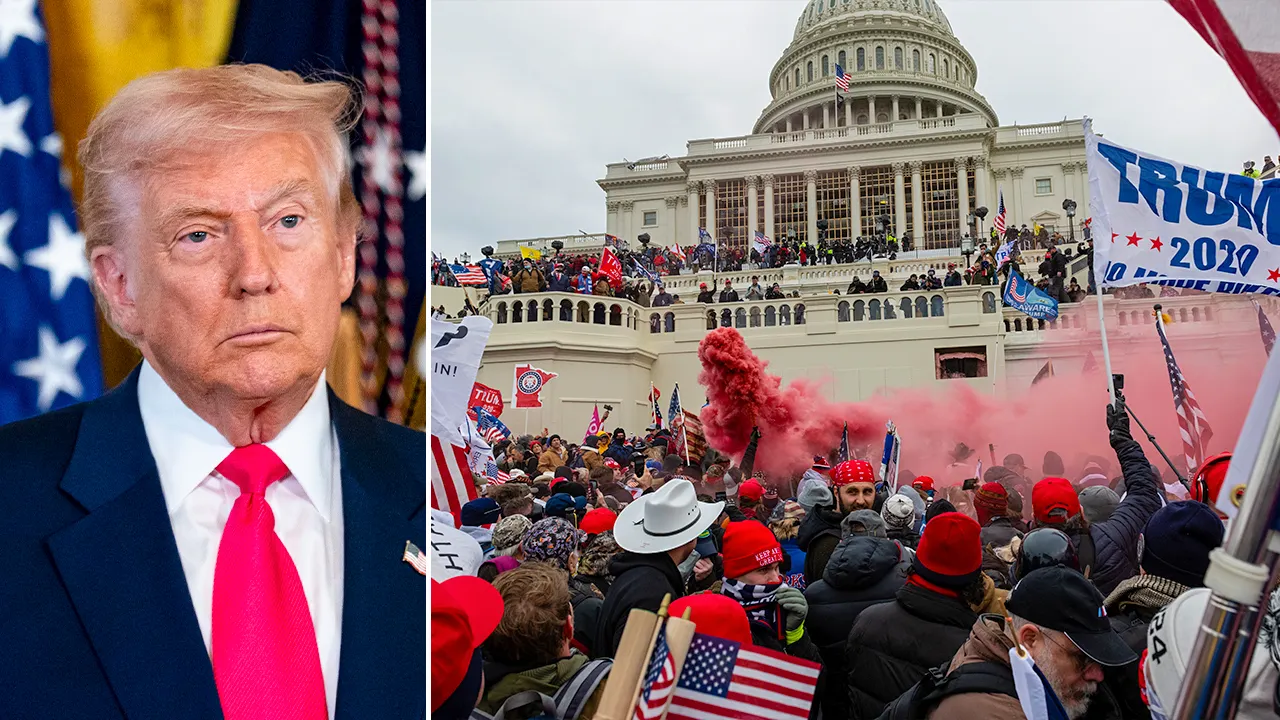
President Trump has issued fresh pardons to two January 6 defendants facing additional charges unrelated to the Capitol riot, marking another step in his campaign promise to absolve those connected to the events of January 6, 2021.
Suzanne Kaye, one of the pardoned individuals, had been sentenced to 18 months in prison for allegedly threatening to shoot FBI agents in social media posts. According to the Department of Justice under the Biden administration, Kaye posted videos on January 31, 2021—one day before she was scheduled to meet with FBI agents regarding her possible presence at the Capitol riot—where she stated she would “shoot” FBI agents if they came to her home. The FBI discovered these posts on February 8, 2021, leading to her arrest at her Florida residence nine days later.
A White House official told Fox News Digital that Kaye suffers from stress-induced seizures and experienced one when the jury delivered its verdict in 2023. The official characterized her case as one involving politically disfavored speech that should have been protected under the First Amendment.
U.S. Special Attorney Ed Martin celebrated the pardon on social media, writing: “The Biden DOJ targeted Suzanne Kaye for social media posts — and she was sentenced to 18 months in federal lock up. President Trump is unwinding the damage done by Biden’s DOJ weaponization, so the healing can begin.”
The second pardon recipient, Daniel Wilson, had remained incarcerated despite Trump’s sweeping January 20 pardon of Capitol riot participants. While his January 6-related offenses were covered by the initial pardon, Wilson had also pleaded guilty to firearms charges, including possession of a firearm by a prohibited person and possession of an unregistered firearm, which initially kept him behind bars.
According to White House officials, Trump decided to grant Wilson an additional pardon because the firearms were discovered during a search of his home related to the Capitol riot investigation. Without this new pardon, Wilson had been set for release in 2028.
The case highlights the legal complexities surrounding Trump’s pardons. Initially, the Trump administration’s Justice Department stated that Wilson’s firearm charges fell outside the scope of the January 6 pardon, but later reversed its position citing “further clarity” without providing specific details about the shift in interpretation.
U.S. District Judge Dabney Friedrich, a Trump appointee who presided over Wilson’s case, had rejected efforts to expand the definition of what Trump’s original pardon covered. In her opinion, Friedrich criticized attempts to broadly interpret the phrase “related to” from Trump’s pardon, writing that it “denotes a specific factual relationship between the conduct underlying a given offense and what took place at the U.S. Capitol on January 6, 2021.” An appeals court supported her position, ruling that Wilson had to remain imprisoned during the appeal process.
Wilson reportedly identified himself as a member of the Oath Keepers and the Gray Ghost Partisan Rangers militia. His attorneys, George Pallas and Carol Stewart, expressed gratitude for the pardon in a statement to Politico: “Dan Wilson is a good man. After more than 7 months of unjustified imprisonment, he is relieved to be home with his loved ones. This act of mercy not only restores his freedom but also shines a light on the overreach that has divided this nation.”
These pardons represent the latest development in Trump’s broader effort to address what he and his supporters view as politically motivated prosecutions stemming from the January 6 Capitol riot. On his first day back in office, Trump issued a sweeping pardon for individuals convicted of offenses related to the events at the Capitol, citing his constitutional authority under Article II, Section 2.
The pardons have sparked debate about the scope of presidential pardon power and its application to cases that may be tangentially related to specific events. As the administration continues to review cases connected to January 6, further pardons may be forthcoming.
Fact Checker
Verify the accuracy of this article using The Disinformation Commission analysis and real-time sources.

8 Comments
Pardon decisions like this really highlight the complexities around the January 6 cases. While I can understand the desire for leniency in some instances, threats against federal agents are very serious. The details here will be crucial in evaluating this particular pardon.
This pardon certainly raises eyebrows. While I respect the administration’s rationale, the threat of violence against the FBI is deeply concerning, especially in the context of the January 6 events. I hope the implications of this decision are carefully considered.
Interesting that the White House is characterizing this as ‘politically disfavored speech.’ While I understand the desire for leniency, making threats against federal agents is a serious offense. The details here will be important in evaluating the merits of the pardon.
This pardon is sure to stir up controversy. While freedom of speech is important, threatening federal agents is a serious matter that raises concerns. It will be interesting to see how this case plays out and what the implications are for January 6 defendants.
The pardoning of January 6 defendants continues to be a divisive and politically charged issue. On one hand, freedom of speech must be protected. But making threats against law enforcement crosses a line and undermines the rule of law. A nuanced approach is needed here.
The Trump administration’s continued efforts to pardon January 6 defendants is concerning. Even if the specific threats in this case were questionable, it sets a worrying precedent of absolving potential crimes related to that day’s events. We need to uphold the rule of law impartially.
I agree, it’s a complex issue. On one hand, free speech protections are vital. But threats against law enforcement cross a line and undermine public safety. Hopefully this case will be reviewed thoroughly to balance those competing interests.
This pardon adds another layer of controversy to the ongoing January 6 saga. I appreciate the administration’s perspective, but threats of violence against law enforcement are a bridge too far in my view. The precedent this sets is quite troubling.