


Listen to the article
Trump Faces Limited Options in Venezuelan Standoff as Military Tensions Rise
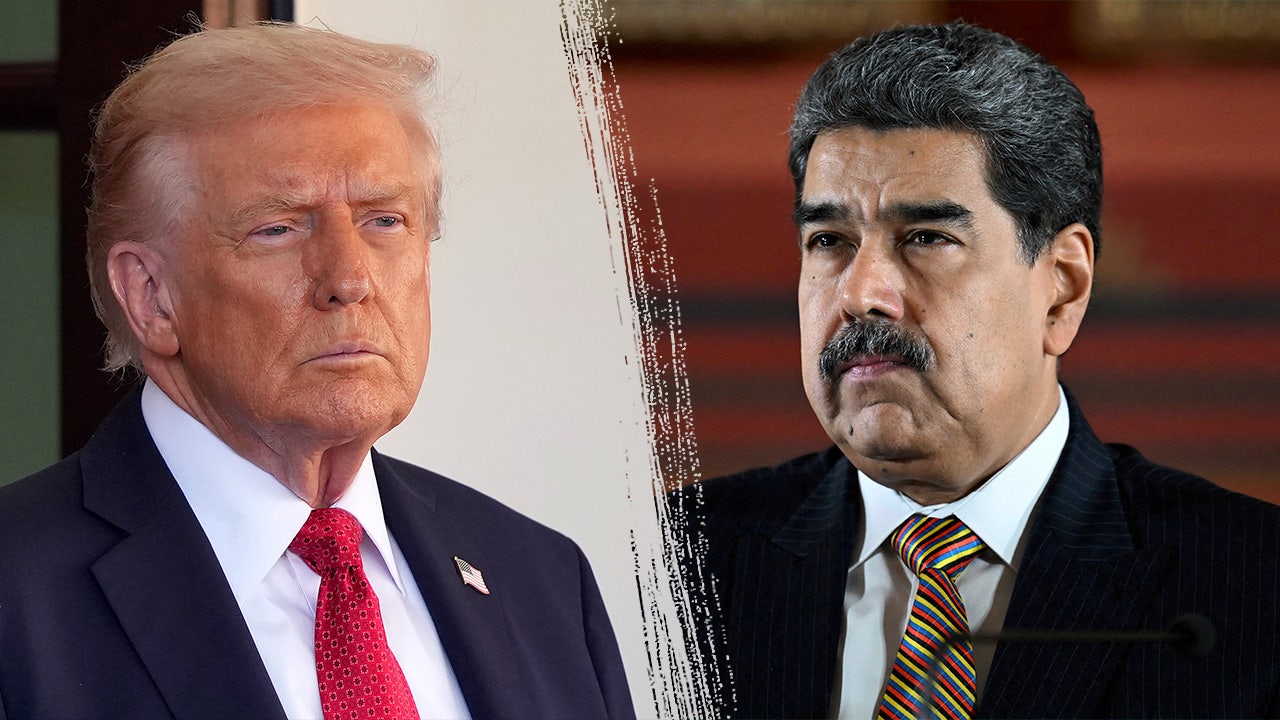
President Donald Trump is running out of non-military options in his escalating standoff with Venezuelan President Nicolás Maduro, according to defense and foreign policy experts. Despite imposing sanctions, offering a $50 million bounty, and conducting strikes against alleged drug traffickers near Venezuelan waters, the Trump administration has been unable to force Maduro from power.
The impasse has created a delicate strategic situation in the Western Hemisphere. The Trump administration has assembled an unprecedented military buildup in the Caribbean, including deploying the USS Gerald R. Ford, the world’s largest aircraft carrier, to the region. This show of force, however, diverts military resources from other global theaters at a time of heightened international tensions.
“It does not seem like there is — outside of the military option — anything new on the table that hasn’t really been tried,” said Katherine Thompson, a senior fellow at the Cato Institute. Thompson noted that previous efforts during Trump’s first term, including sanctions and backing opposition leader Juan Guaidó, proved unsuccessful in ousting Maduro.
While the White House has not explicitly stated it seeks regime change, media reports indicate direct communications between Trump and Maduro regarding the Venezuelan leader’s potential departure. The Miami Herald reported that Trump gave Maduro an ultimatum, offering safety for him and his family if he resigned immediately.
Experts question whether military action would ultimately prove successful. “If the offer on the table from the Trump administration is we’re going to potentially execute an invasion unless you talk to us, perhaps that’s a strong enough diplomatic, strategic move that gets Maduro to capitulate,” Thompson said. “But it just doesn’t seem like we’re picking up that many signals from the Maduro regime that that is going to be palatable.”
Limited International Support for Maduro
Despite Venezuela’s strategic alliances with Russia and China, analysts believe Maduro would find himself largely isolated if Trump launched military strikes. Russia, consumed by its war in Ukraine, is unlikely to offer anything beyond verbal condemnations of U.S. action.
“Moscow opposes unilateral U.S. military intervention, especially when aimed at toppling a friendly authoritarian regime. That said, Russia lacks the will and ability to stop U.S. intervention in this part of the world should Trump decide to go that route,” explained John Hardie, a Russian military analyst at the Foundation for Defense of Democracies.
China, despite years of deep economic engagement with Caracas, is also expected to stop well short of military involvement. Jack Burnham, a China analyst at FDD, pointed to Beijing’s behavior during recent conflicts: “If Maduro is expecting support from China, he should have had his expectations corrected by Tehran’s recent experience under fire. Despite China providing key war-related materials to Iran prior to the 12-Day War, once the conflict escalated, Beijing stood down.”
Trump’s Anti-Drug Campaign
The Trump administration has framed its actions against Venezuela within a broader anti-narcotics campaign. In February, the administration designated several drug cartel groups, including Tren de Aragua and Sinaloa, as foreign terrorist organizations. The U.S. government does not recognize Maduro as a legitimate head of state but instead labels him “one of the largest narco-traffickers in the world.”
The administration has conducted more than 20 strikes against alleged drug boats in Latin American waters, actions that have come under increased scrutiny. The Washington Post reported that Secretary of War Pete Hegseth verbally ordered everyone on board an alleged drug boat to be killed in a September 2 operation, with a second strike conducted to eliminate survivors.
The White House confirmed a second strike occurred but disputed that Hegseth gave an order to ensure everyone was killed. Officials stated that Admiral Frank “Mitch” Bradley, then commander of Joint Special Operations Command, ordered and directed the second strike.
Hegseth defended the operation on Tuesday: “Admiral Bradley made the correct decision to ultimately sink the boat and eliminate the threat.” He added that while there has been a pause in strikes because drug boats are becoming harder to find, the campaign will continue. “We’ve only just begun striking narco-boats and putting narco-terrorists at the bottom of the ocean because they’ve been poisoning the American people.”
As tensions continue to escalate, the Trump administration maintains that all options remain on the table. White House spokesperson Anna Kelly stated, “President Trump has been clear in his message to Maduro: stop sending drugs and criminals to our country. The President is prepared to use every element of American power to stop drugs from flooding into our country.”
Fact Checker
Verify the accuracy of this article using The Disinformation Commission analysis and real-time sources.

14 Comments
The standoff between Trump and Maduro over Venezuela is a complex and delicate situation. It’s concerning to see the military buildup in the region, as this could escalate tensions further. I hope the two sides can find a peaceful diplomatic resolution.
Agreed, a military confrontation would be disastrous for the region. Both sides need to exercise restraint and focus on finding a political solution that addresses the humanitarian crisis in Venezuela.
The Trump-Maduro standoff is a complex geopolitical issue with no easy solutions. While Maduro’s authoritarian rule is problematic, a military confrontation could have devastating consequences for the Venezuelan people. I hope the US can work with regional partners to find a diplomatic path forward that prioritizes stability and humanitarian concerns.
Well said. Any military action would likely draw strong condemnation from US allies in Latin America, complicating diplomatic efforts. A multilateral, nuanced approach that avoids escalation while addressing the humanitarian crisis seems the wisest path forward.
This is a concerning development. The Trump administration has few good options left to pressure Maduro, and a military intervention could spark a broader regional conflict. I hope they can work with allies to find a diplomatic solution that prioritizes the well-being of the Venezuelan people, even if it means accepting a less than ideal outcome.
Agreed. A military confrontation would be extremely risky and could have severe humanitarian consequences. Maintaining regional stability should be the top priority, even if it means compromising on the ideal political outcome in Venezuela.
This is a concerning development. The Trump administration’s efforts to oust Maduro have clearly stalled, and a military confrontation could have severe humanitarian consequences. I hope cooler heads prevail and the two sides can find a way to de-escalate the situation through diplomatic channels.
Absolutely. A military intervention in Venezuela would be extremely risky and could spark a broader regional conflict. It’s crucial that the US works closely with its Latin American partners to find a negotiated solution, even if it means accepting a less than ideal outcome.
The US and Venezuela have a long history of tension, but a military confrontation would be catastrophic. I’m curious to hear more analysis on what non-military options the Trump administration still has to pressure Maduro. Sanctions and aid to the opposition have had limited impact so far.
That’s a good question. It seems the Trump team has exhausted many of the typical non-military tools. Perhaps regional diplomatic efforts, coordinated with allies, could yield new avenues for pressure on Maduro without resorting to force.
This is a concerning development. While Maduro’s regime has been a major source of instability, a military intervention could make the situation even worse. I hope the Trump administration can work with regional partners to find a diplomatic solution that prioritizes the wellbeing of the Venezuelan people.
You raise a good point. Any military action should be an absolute last resort. Diplomacy and economic pressure may be the best path forward to restore democracy and alleviate the suffering of Venezuelans.
The geopolitical dynamics at play in this situation are very complex. While Maduro’s authoritarian rule is deeply concerning, a US military intervention could have far-reaching consequences throughout Latin America. I hope both sides can find a peaceful path forward that prioritizes the wellbeing of the Venezuelan people.
Well said. Maintaining regional stability should be a key priority. Any military action would likely draw strong condemnation from US allies in the region, complicating diplomatic efforts. A more nuanced, multilateral approach may be needed to resolve this crisis.