


Listen to the article
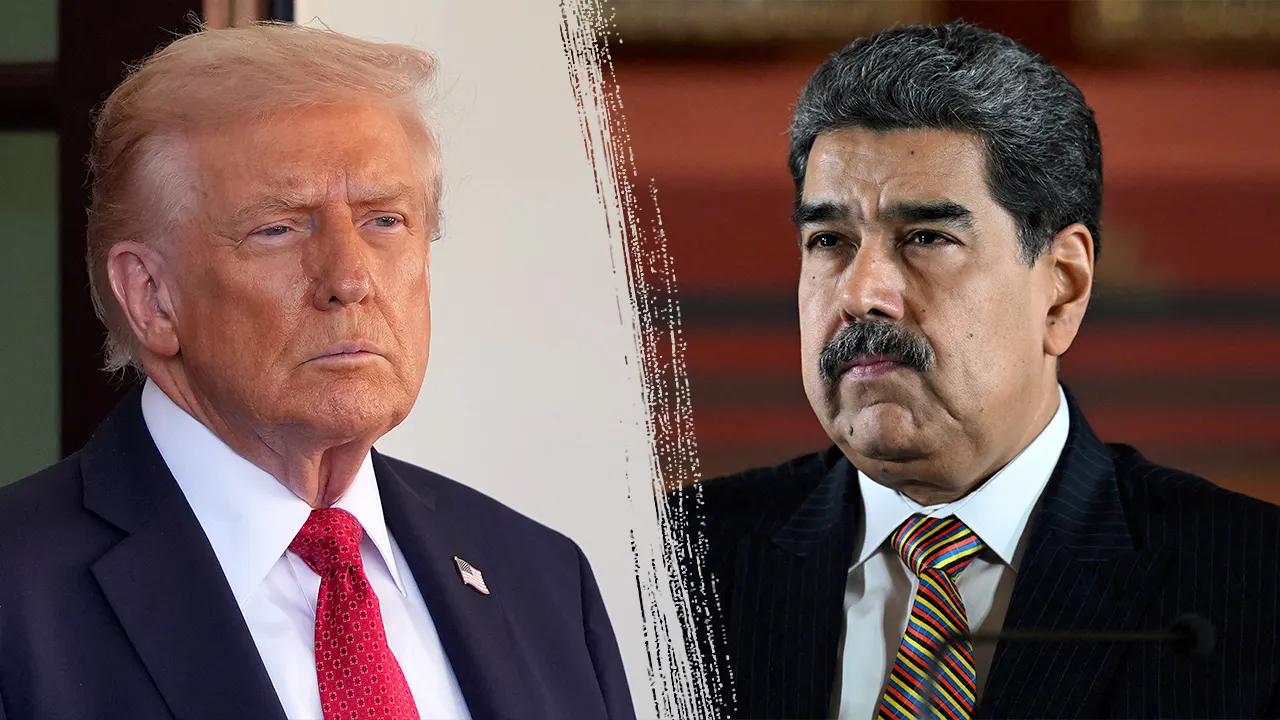
President Trump defended his warning about Venezuela’s airspace being closed during remarks to reporters aboard Air Force One on Sunday, characterizing Venezuela as “not a very friendly country” that he claims has sent criminals, gang members, and drug traffickers into the United States.
The president’s statement follows his Saturday message to airlines, pilots, drug dealers, and human traffickers to “consider THE AIRSPACE ABOVE AND SURROUNDING VENEZUELA TO BE CLOSED IN ITS ENTIRETY.” When questioned whether this warning suggested an imminent airstrike, Trump responded simply: “Don’t read anything into it.”
Trump also confirmed a recent New York Times report that he had spoken with Venezuelan President Nicolás Maduro, though he offered minimal details about their conversation. “I wouldn’t say it went well or badly,” Trump said. “It was a phone call.”
The exchange comes amid escalating tensions between Washington and Caracas, primarily centered on Venezuela’s alleged failure to curb drug trafficking operations that send narcotics into the United States. The Trump administration has significantly increased its counter-narcotics operations in Latin American waters in recent months.
Since September, U.S. forces have conducted over 20 strikes against suspected drug boats in the region while strengthening American military presence in the Caribbean. These operations are part of Trump’s broader campaign to disrupt drug trafficking routes into the United States. According to U.S. officials, these strikes have eliminated more than 82 suspected narco-terrorists, with only three survivors reported.
The military buildup in waters near Venezuela represents a significant shift in U.S. strategy toward the South American nation. American warships now regularly patrol international waters in proximity to Venezuela, signaling the administration’s determination to intercept drug shipments before they can reach U.S. shores.
For his part, Maduro has adopted a defiant posture while simultaneously calling for peace. In a recent address to supporters in Caracas, the Venezuelan leader brandished a sword that reportedly belonged to Simón Bolívar, the 19th-century independence leader revered across South America as a liberator. During this mass rally, Maduro framed the current situation as a struggle against foreign aggression.
“For anyone, whether civilian, politician, military, or police – Let no one make excuses. Failure is not an option. The homeland demands it!” Maduro declared while raising Bolívar’s sword, according to the Associated Press. “And with Bolívar, I come to say that if the homeland demands it, the homeland will have our lives, if necessary.”
Maduro also warned his supporters that the United States would “very soon” begin stopping suspected Venezuelan drug traffickers on land, further escalating his rhetoric against what he characterized as “imperialist aggression.”
The tensions between the two nations reflect broader regional challenges, as the United States attempts to curtail the flow of narcotics while Venezuela grapples with ongoing economic and political crises. The Maduro regime has long been a target of U.S. sanctions and diplomatic pressure, with Washington previously recognizing opposition leader Juan Guaidó as Venezuela’s legitimate president.
Analysts suggest that the current showdown over drug trafficking provides the Trump administration with a new avenue to pressure the Maduro government, which has maintained control despite years of international isolation and economic hardship.
As U.S. military assets continue to operate near Venezuelan territory and both leaders employ increasingly strong language, regional observers remain concerned about the possibility of miscalculation that could lead to direct confrontation between the two nations.
Fact Checker
Verify the accuracy of this article using The Disinformation Commission analysis and real-time sources.

17 Comments
Trump’s dismissive attitude towards the potential impact of his airspace warning is worrying. Even if not intended as a direct threat, such rhetoric can easily spiral out of control. I hope the administration is carefully weighing the risks and pursuing a more measured approach.
This seems like more posturing from Trump on Venezuela. Closing airspace is a major escalation that could have serious consequences. I hope his administration is carefully considering the implications before making any rash moves.
Agreed. Closing airspace is a huge step that could lead to further conflict. The administration needs to tread carefully and focus on diplomatic solutions rather than empty threats.
While I understand the US administration’s concerns about drug trafficking from Venezuela, unilateral action like airspace closures is not the solution. This could have severe humanitarian and economic consequences for the region. I hope they pursue a more collaborative, diplomatic approach.
Agreed. Escalating tensions through military posturing is unlikely to resolve the underlying issues. The administration should focus on working with regional partners to address the drug trade and other shared concerns through negotiation and cooperation.
The increasing tensions between the US and Venezuela are deeply concerning. Unilateral actions like closing airspace could have severe humanitarian consequences. I hope both sides will prioritize dialogue and seek a peaceful resolution to their differences.
Absolutely. Ratcheting up pressure through military posturing is not the answer. The administration should focus on working with regional partners to address shared concerns through diplomatic channels.
Trump’s warning about Venezuela’s airspace is concerning, but his dismissive attitude about it is even more worrying. This kind of loose rhetoric from the president can easily spiral out of control and lead to real military confrontation. Cooler heads must prevail.
Agreed. Trump’s casual disregard for the gravity of his own statements is deeply troubling. The administration needs to exercise extreme caution and diplomacy when dealing with a volatile situation like Venezuela.
Trump’s dismissive response to questions about his airspace warning is troubling. Even if not intended as a direct threat, such rhetoric can easily escalate tensions and lead to unintended consequences. I hope the administration is carefully weighing the risks and pursuing a more measured approach.
While I understand the administration’s frustrations with Venezuela, closing airspace is an extreme measure that could have devastating consequences. I hope they carefully consider the risks and pursue a more measured, diplomatic approach to addressing shared concerns.
Absolutely. Unilateral military actions are unlikely to resolve the complex issues between the US and Venezuela. A collaborative, regional strategy focused on diplomacy and addressing the root causes would be far more constructive.
Trump’s casual disregard for the potential impact of his airspace warning is deeply concerning. Even if not intended as a direct threat, such rhetoric can easily spiral out of control and lead to real military confrontation. I hope cooler heads will prevail.
While I understand the administration’s concerns about drug trafficking from Venezuela, closing airspace is an extreme measure that could backfire. I hope they carefully weigh the risks and potential for unintended consequences before taking such a drastic step.
I’m curious to know more about the details of Trump’s conversation with Maduro. While the relationship between the US and Venezuela is contentious, open communication is crucial to avoiding further escalation. I hope the administration is pursuing a measured, diplomatic approach.
It’s concerning to hear Trump casually dismiss the significance of his comments about Venezuela’s airspace. This type of rhetoric can easily escalate into military action, which would be disastrous for the region. I hope cooler heads prevail.
Absolutely. Trump’s approach to Venezuela has been erratic and reckless so far. Unilateral airspace closures could have devastating humanitarian and economic consequences. The administration must pursue a more measured, diplomatic strategy.