


Listen to the article
Afghan Refugee Accused in National Guard Shooting Was Part of US Evacuation Program
The suspect accused of shooting two National Guard members in Washington state entered the United States as one of approximately 76,000 Afghans evacuated during America’s chaotic 2021 withdrawal from Afghanistan, authorities confirmed.
Identified by law enforcement as Rahmanullah Lakanwal, the accused shooter previously worked with the CIA “as a member of a partner force in Kandahar,” according to former CIA Director John Ratcliffe. The statement did not specify Lakanwal’s exact role with the intelligence agency in Afghanistan’s southern region, an area that saw intense combat between Taliban fighters and NATO forces following the 2001 US-led invasion.
Lakanwal entered the United States through Operation Allies Welcome, a program established to resettle Afghan allies following the Taliban takeover. The Biden administration created the initiative to provide safe haven for interpreters, drivers, fighters, and others who had opposed the Taliban regime and faced potential persecution.
Little information has emerged about Lakanwal’s four years in the United States or his motivations for allegedly driving across the country from his home in Bellingham, Washington, where he reportedly lived with his wife and five children, according to a former landlord.
The case has reignited political debate about the Afghan evacuation and refugee vetting process. Ratcliffe criticized the Biden administration, stating, “This individual — and so many others — should have never been allowed to come here. Our citizens and servicemembers deserve far better than to endure the ongoing fallout from the Biden Administration’s catastrophic failures.”
Refugee resettlement advocates, however, caution against using the incident to characterize tens of thousands of Afghan evacuees who entered the US through legal pathways. “I don’t want people to leverage this tragedy into a political ploy,” said Shawn VanDiver, president of #AfghanEvac, an organization assisting Afghan refugees.
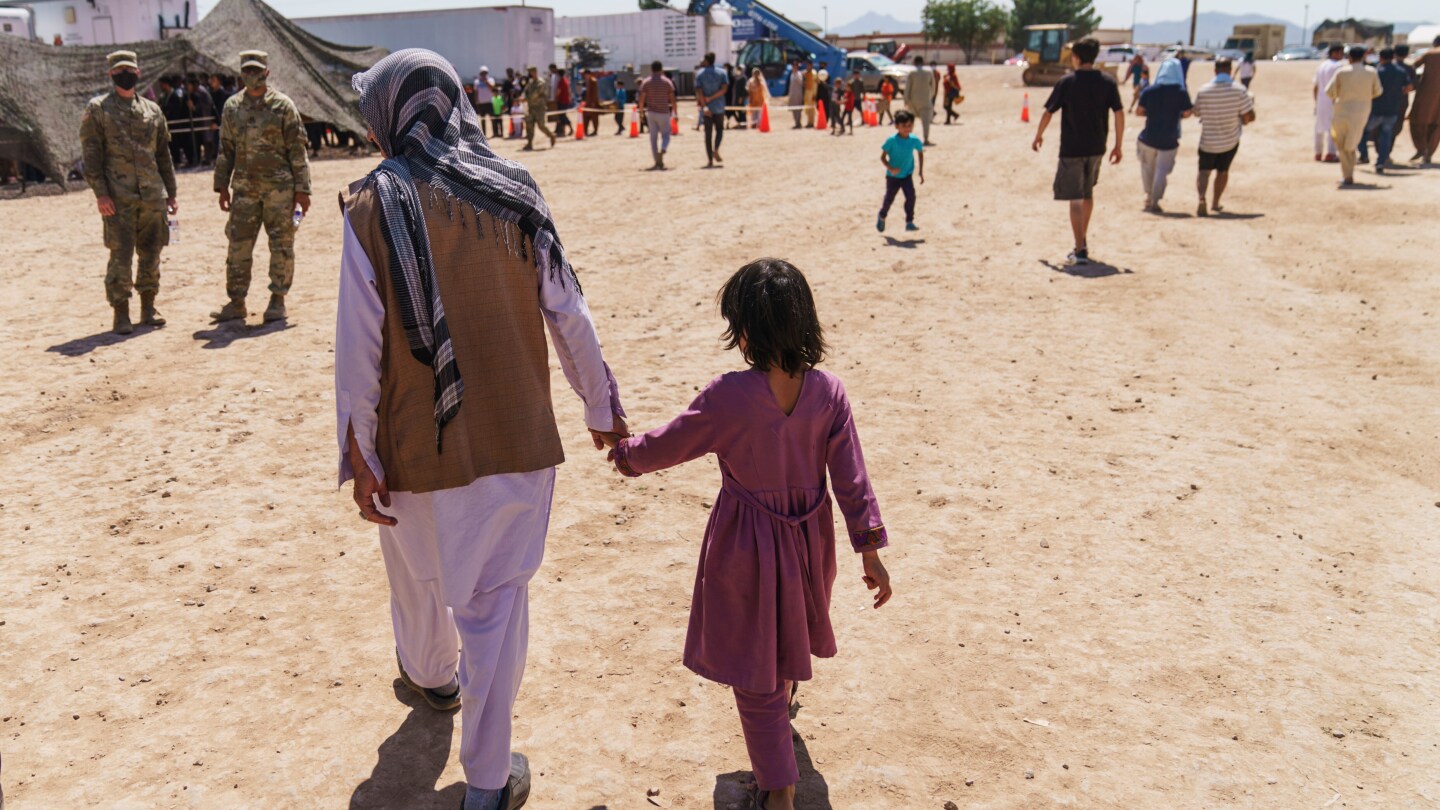
After evacuating Afghanistan, many refugees initially lived in temporary facilities at US military bases including Joint Base McGuire-Dix-Lakehurst in New Jersey, Fort McCoy in Wisconsin, and Fort Bliss in Texas. These sprawling, air-conditioned tent villages housed evacuees during health screenings and background checks before their eventual resettlement.
Many Afghans ultimately settled in established Afghan communities around Washington D.C., Northern Virginia, Northern California, and Texas. According to State Department data, several other states—including Arizona, New York, Florida, Georgia, Colorado, Nebraska, and Pennsylvania—each resettled between 1,000 and 3,000 Afghan evacuees.
The resettlement process has faced additional challenges since January, when the Trump administration suspended federal funding for resettlement agencies. This move has hampered religious organizations’ ability to provide refugees with basic necessities like food and rent.
Former President Trump, who has described Afghanistan as “a hellhole on earth,” announced plans to review every Afghan who entered under Operation Allies Welcome. Following the shooting, he reinforced this position, declaring, “If they can’t love our country, we don’t want them,” and calling the incident “a crime against our entire nation.”
Trump has also broadened his critique to include Somali refugees in Minnesota, claiming they are “ripping apart that once-great state.” This rhetoric aligns with his administration’s broader goals to deport undocumented immigrants and restrict refugee admissions, with Trump stating he wants to remove anyone “who does not belong here or does not add benefit to our country.”
Despite the heightened scrutiny of refugee programs, many Afghans who resettled in the United States remain hopeful about building new lives. Mohammad Saboor, who worked with international and US forces for 17 years as an electrician and air conditioning technician, recently resettled in California with his seven children. He told The Associated Press he looks forward to his children’s education and contributing to the country that welcomed his family.
“I believe that now we can live in a 100% peaceful environment,” Saboor said.
Fact Checker
Verify the accuracy of this article using The Disinformation Commission analysis and real-time sources.

16 Comments
This is a concerning incident. While we should be compassionate towards Afghan refugees, we must also carefully vet those entering the country to ensure public safety. More details are needed to understand the full context and motivations behind this alleged attack.
I agree, vetting processes need to be robust to balance security and humanitarian concerns. We should wait for the full investigation before drawing conclusions.
This is a complex issue with valid concerns on both sides. On one hand, the US has a moral obligation to assist those who risked their lives fighting alongside American forces. On the other, ensuring public safety must be a top priority. A measured, evidence-based approach is needed.
Agreed. Nuance and pragmatism should guide the policy response, not knee-jerk political posturing.
Bringing Afghan allies to safety in the US is important, but this situation highlights the challenges in doing so securely. Thorough background checks are critical to prevent potential threats from slipping through. I hope the authorities can provide more clarity on this case.
Absolutely, transparency and accountability are key when it comes to refugee resettlement programs. Maintaining public trust is crucial.
The details of this case are still emerging, so it’s important not to rush to conclusions. While vetting procedures should be rigorously reviewed, we must also uphold our values of offering refuge to those fleeing persecution. A balanced, fact-based discussion is needed.
Well put. Maintaining perspective and focusing on constructive solutions is key in navigating these challenging issues.
The details of this case are still emerging, and it’s important not to jump to conclusions. While the safety of American citizens is paramount, we must also consider our moral obligations to those who risked their lives fighting alongside US forces. A balanced, nuanced approach is needed.
Absolutely. Maintaining perspective and focusing on constructive solutions is key in navigating these complex issues.
This incident highlights the complexities of refugee resettlement programs. While the safety of American citizens is paramount, we must also consider our moral obligations to those who fought alongside US forces. A careful, nuanced approach is required to address both concerns.
Agreed. It’s a delicate balance, but one that’s essential to uphold America’s principles and security.
This is a concerning development that deserves a measured, fact-based response. Calls for reform or increased scrutiny may have merit, but should be based on a comprehensive review of the program’s successes and shortcomings, not political posturing.
Well said. Rational, evidence-based policymaking is the best way forward on this sensitive issue.
While it’s understandable that former Trump officials would be critical of the Afghan refugee program, we should be cautious about overgeneralizing from a single incident. Rigorous vetting is important, but so is upholding America’s tradition of welcoming the persecuted.
Well said. Striking the right balance between security and compassion is an ongoing challenge, but one that’s worth the effort.