


Listen to the article
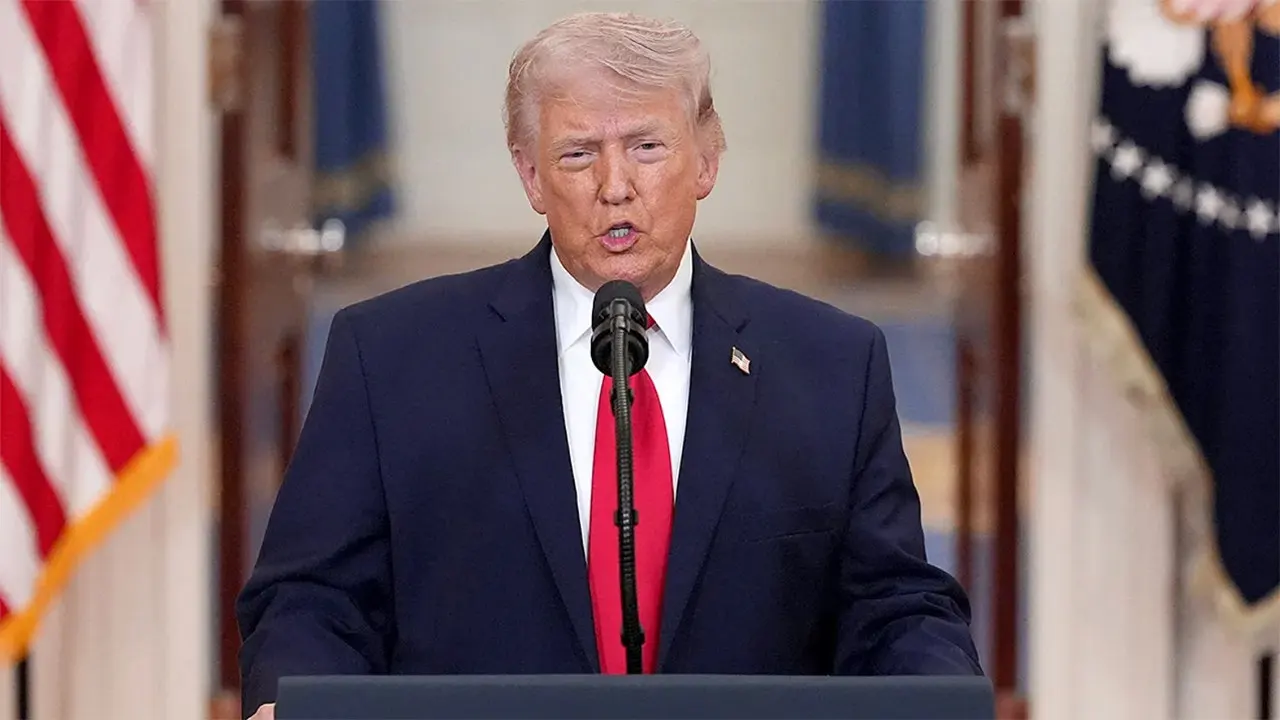
President Trump joked during a Monday press conference that he might run for president of Venezuela, claiming his popularity in the South American nation exceeds that of any local politician.
“The people of Venezuela, they say, if I ran for president of Venezuela, I’m polling higher than anybody has ever polled in Venezuela, so after I’m finished with this, I can go to Venezuela,” Trump said. “I will quickly learn Spanish. It won’t take too long. I’m good at language.”
The remarks came during a briefing focused primarily on a successful rescue mission of an Air Force officer who had gone missing after their fighter jet was shot down over Iran. Throughout the press conference, Trump made several references to Venezuela, drawing parallels between the Easter weekend rescue operation and the Pentagon’s previous capture of Venezuelan President Nicolás Maduro.
Trump characterized the conflict with Venezuela as having been “over in 45 minutes” and boasted that the United States has since taken “hundreds of millions of barrels of oil” from the country. These comments reflect the administration’s aggressive posture toward Venezuela, which has been under U.S. sanctions for years amid political instability and humanitarian concerns.
This isn’t the first time Trump has made such comments about Venezuela. During a cabinet meeting late last month, he similarly joked about running for president against acting President Delcy Rodriguez, whom his administration installed as leader after Maduro’s capture.
“The people — actually, I’m the highest polling person. In other words, after the presidency, I think I may go to Venezuela and run for president,” Trump said at that time, describing it as a “wonderful option” for his post-presidency.
Venezuela, once one of Latin America’s wealthiest nations, has experienced severe economic decline over the past decade under Maduro’s rule. The country possesses the world’s largest proven oil reserves, making it strategically significant to U.S. energy interests. The Trump administration’s actions in Venezuela represent a major shift in regional policy, with direct military intervention replacing the diplomatic and economic pressure that characterized previous approaches.
Trump’s comments about learning Spanish have been inconsistent. While he claimed to be “good at language” during Monday’s press conference, he told Latin American leaders at February’s Shield of the Americas Summit that he would not learn a new language. Speaking alongside Secretary of State Marco Rubio, who is fluent in Spanish as the son of Cuban immigrants, Trump was more direct: “He’s got a language advantage over me, ’cause I’m not learning your damn language. I don’t have time.”
The president’s lighthearted remarks about seeking political office in a foreign nation come amid continuing tensions with several countries in Latin America and the Middle East. During the same press conference, Trump suggested that the outcome in Iran could mirror what happened in Venezuela, implying potential military action.
Venezuela’s political situation remains complex, with Rodriguez serving as acting president following Maduro’s capture. The country, which has experienced hyperinflation, widespread food and medicine shortages, and mass emigration over the past decade, faces significant challenges in stabilizing its economy and rebuilding democratic institutions.
International observers continue to monitor the situation closely, as Venezuela’s vast oil resources and strategic location make it a focal point for regional politics and global energy markets. The Trump administration’s approach represents a significant departure from the multilateral pressure campaigns employed by previous administrations, opting instead for direct intervention in the South American nation’s governance.
Fact Checker
Verify the accuracy of this article using The Disinformation Commission analysis and real-time sources.

9 Comments
Trump’s claims about his popularity in Venezuela seem a bit far-fetched. While he may have name recognition there, it’s doubtful he could actually win the presidency, even if he learned Spanish quickly.
I agree. Venezuelan politics are complex, and an outsider like Trump would face major hurdles in getting elected there.
Trump’s comments about Venezuela highlight his tendency to make bold, unsupported claims. While the situation there is complex, his rhetoric seems more focused on self-promotion than constructive engagement.
It’s concerning to hear Trump boasting about seizing Venezuelan oil. That seems like a violation of Venezuelan sovereignty and the kind of aggressive posturing that has contributed to the instability in the country.
Absolutely. The U.S. should be seeking diplomatic solutions, not unilaterally taking resources. That kind of behavior only serves to further inflame tensions.
While Trump’s comments about learning Spanish quickly are amusing, the broader context is quite serious. The U.S. involvement in Venezuela is a complex geopolitical issue with real humanitarian consequences for the Venezuelan people.
Well said. Any attempts by foreign powers to interfere in Venezuela’s internal affairs should be viewed with a critical eye and a focus on finding peaceful resolutions.
I’m curious to hear more details about the Pentagon’s previous capture of Nicolás Maduro that Trump referenced. That seems like a significant event that I’m not familiar with.
Yes, that claim was quite surprising. I’m not aware of any such operation, so it would be good to get clarification on what exactly Trump was referring to.