


Listen to the article
The highly educated suspect in the White House Correspondents’ Dinner assassination attempt is challenging traditional profiles of would-be assassins, raising questions about the intersection of education and extremism, experts say.
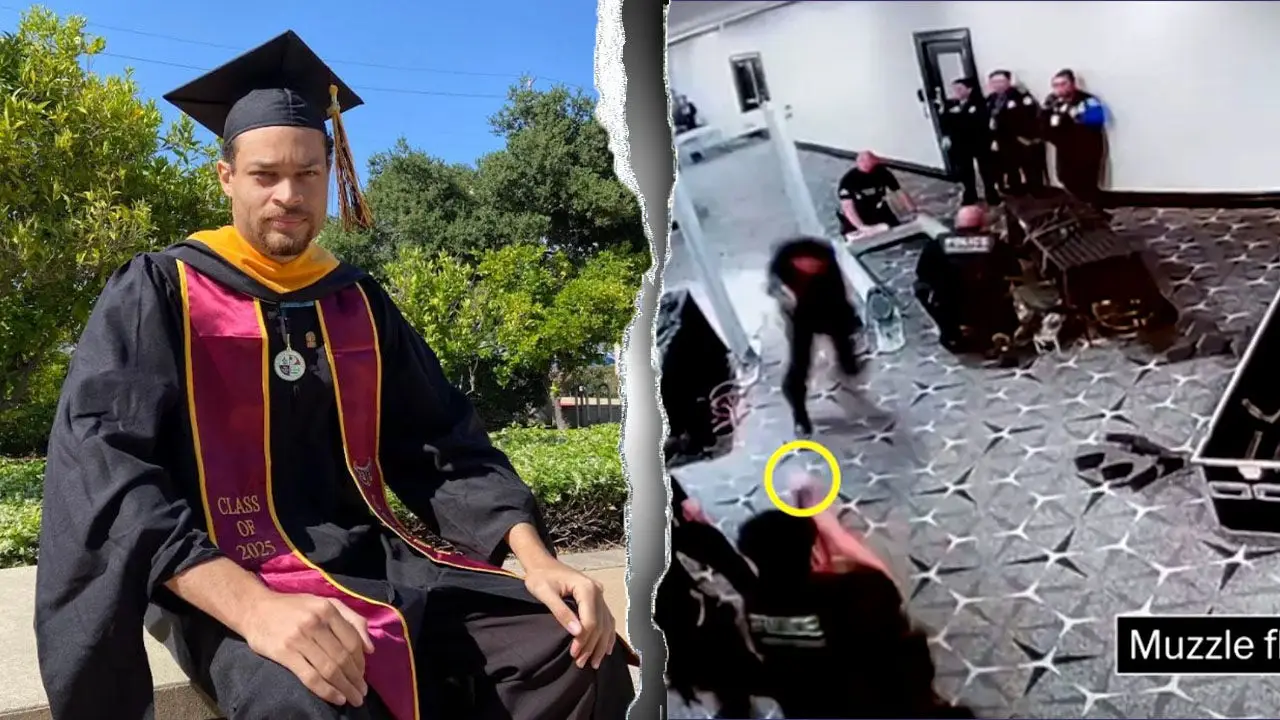
Cole Allen, 31, who allegedly attempted to assassinate former President Donald Trump at the White House Correspondents’ Association Dinner on April 25, possessed academic credentials that stand in stark contrast to typical profiles of political extremists. Allen earned a bachelor’s degree in mechanical engineering from the California Institute of Technology in 2017 and a master’s degree in computer science from California State University, Dominguez Hills last year.
Cornerstone University President Gerson Moreno-Riaño identified what he calls a troubling shift in the landscape of political violence. “A troubling trend that appears to be emerging is that of the ‘educated assassin,’ individuals who do not fit the typical profile of people who commit such heinous acts,” Moreno-Riaño said. “These individuals are often schooled in some of America’s most elite institutions and act out of a perverted philosophical conviction.”
Federal prosecutors allege Allen targeted Trump and cabinet officials in a carefully planned operation. Investigators reportedly discovered what they described as a manifesto and extensive digital evidence showing weeks of planning before the incident.
Beyond his academic achievements, Allen was employed as a tutor at C2 Education since March 2020, according to his LinkedIn profile. The company had even recognized him as “teacher of the month” in a social media post last December, highlighting his professional standing before the alleged assassination attempt.
Secret Service Director Sean Curran provided details of the confrontation, stating Allen shot an agent in the chest while “charging through security.” The agent’s bulletproof vest stopped the round, and the agent returned fire with five shots that missed. Allen reportedly fell during the altercation, allowing Secret Service agents to subdue him.
Defense attorneys have contested aspects of the prosecution’s characterization, claiming key physical evidence is lacking. A defense memo portrayed Allen as a “devout Christian” with no criminal history who was “loved and respected” as a teacher.
The case has prompted broader questions about how someone with advanced education and a teaching background could allegedly plot political violence. Moreno-Riaño suggested the issue extends beyond individual cases to broader concerns about moral education.
“The universities have rejected the centrality of God, a theistic Christian worldview, but nothing has taken its place,” he said. “There is no moral compass for universities and for education today. It just doesn’t exist.”
Security experts note that highly educated individuals who engage in political extremism often prove particularly challenging to identify before they act. Unlike perpetrators with histories of mental illness or criminal behavior, their professional accomplishments and social integration can effectively mask dangerous ideologies.
This incident follows a concerning pattern of threats against political figures in recent years. Political violence has escalated across the ideological spectrum, with security agencies struggling to adapt to more sophisticated threat profiles.
Moreno-Riaño emphasized the responsibility of parents in actively monitoring their children’s education. “Parents can no longer simply drop off their student” and assume their responsibility ends there, he cautioned.
The case against Allen continues to develop, with his next hearing scheduled for May 11. He remains in federal custody as prosecutors build their case around the alleged assassination attempt.
Law enforcement officials have increased security measures for high-profile political events following the incident, acknowledging the evolving nature of threats against political figures. The Secret Service has faced scrutiny regarding its protective procedures, particularly in light of previous security incidents involving the former president.
“Our entire life as a whole, whatever we do in private, whatever we’re doing in secret, does have a significant impact on what we do in public,” Moreno-Riaño concluded, pointing to what he describes as a broader “crisis of morality” and “crisis of faith” in American society.
Fact Checker
Verify the accuracy of this article using The Disinformation Commission analysis and real-time sources.

16 Comments
It’s concerning to see highly educated people resorting to such drastic measures. This speaks to a deeper societal issue that deserves careful analysis. We need to have an open and honest dialogue to understand what’s fueling this moral crisis.
Absolutely. The intersection of education and extremism is a complex phenomenon that requires nuanced investigation. Simplistic explanations will not suffice in addressing this challenge.
The ‘educated assassin’ phenomenon is deeply concerning and raises difficult questions about the state of our society. We must strive to understand the root causes and find ways to foster greater empathy, critical thinking, and civic engagement among our educated populace.
Agreed. This is a complex issue that defies simplistic explanations. Addressing it will require a nuanced, multidisciplinary approach focused on addressing the underlying societal and psychological factors.
This is a troubling development. We need to better understand what’s driving these educated individuals to extremism and violence. Clearly there are complex psychological and societal factors at play here that need further examination.
I agree, this is a worrying trend that challenges our assumptions about the drivers of political violence. We must address the root causes to prevent further radicalization.
This incident underscores the need for improved mental health resources and support systems, particularly within academic institutions. We must ensure that our brightest minds have access to the care and guidance they need to navigate these challenging times.
Well said. Providing robust mental health support and fostering a culture of openness and empathy within educational settings could be a crucial step in addressing this worrying trend.
The ‘educated assassin’ phenomenon is a troubling development that defies simplistic explanations. We must approach this issue with nuance, empathy, and a commitment to understanding the complex societal and psychological factors at play. Promoting greater civic engagement and critical thinking within our educational institutions could be a crucial step forward.
Absolutely. A multi-pronged approach focused on mental health support, de-radicalization programs, and fostering a culture of empathy and civic responsibility within academia is essential to addressing this challenge.
The ‘educated assassin’ phenomenon is a disturbing development that challenges our assumptions about the drivers of political violence. We must approach this issue with nuance, empathy, and a commitment to understanding the complex societal factors at play.
Absolutely. This is a complex problem that requires a multi-faceted approach, focusing on mental health support, de-radicalization programs, and fostering civic engagement and critical thinking within our educational institutions.
This incident highlights the need for better mental health support and de-radicalization programs, especially targeting educated individuals who may be vulnerable to extremist ideologies. We must address the underlying factors driving these actions.
You make a good point. Tailored interventions and support systems could help prevent such troubling cases from occurring in the future. A comprehensive, multi-faceted approach is necessary.
This incident raises serious questions about the intersection of education, extremism, and mental health. We need to deeply examine the societal and psychological factors that may be contributing to this worrying trend and develop targeted interventions to address them.
Well said. A comprehensive, evidence-based approach is required to tackle this challenge, one that combines mental health support, de-radicalization efforts, and a deeper understanding of the complex drivers behind such actions.