


Listen to the article
The Trump administration unveiled its “Fentanyl Free America” anti-trafficking plan on Wednesday, a comprehensive initiative aimed at combating the deadly synthetic opioid that has devastated communities across the nation.
Drug Enforcement Administration (DEA) Administrator Terry Cole told Fox News that recent military strikes on suspected drug vessels in the Caribbean are already showing positive results in disrupting supply chains.
“There’s no doubt that these traffickers, these foreign terrorists, are designated to target our kids,” Cole said. “They are using social media platforms. They’re using Instagram.”
The DEA chief pointed to economic indicators suggesting the operations are having their intended effect. “We have seen a change in first stop loads, meaning when cocaine arrives to the Dominican Republic, it’s now more expensive. When cocaine arrives to Puerto Rico, it is more expensive,” he explained.
The price increases suggest that military interdiction efforts are successfully constraining supply, forcing traffickers to charge more as drugs become harder to move through traditional Caribbean routes. This development comes as part of a broader strategy to attack drug trafficking at multiple points in the supply chain.
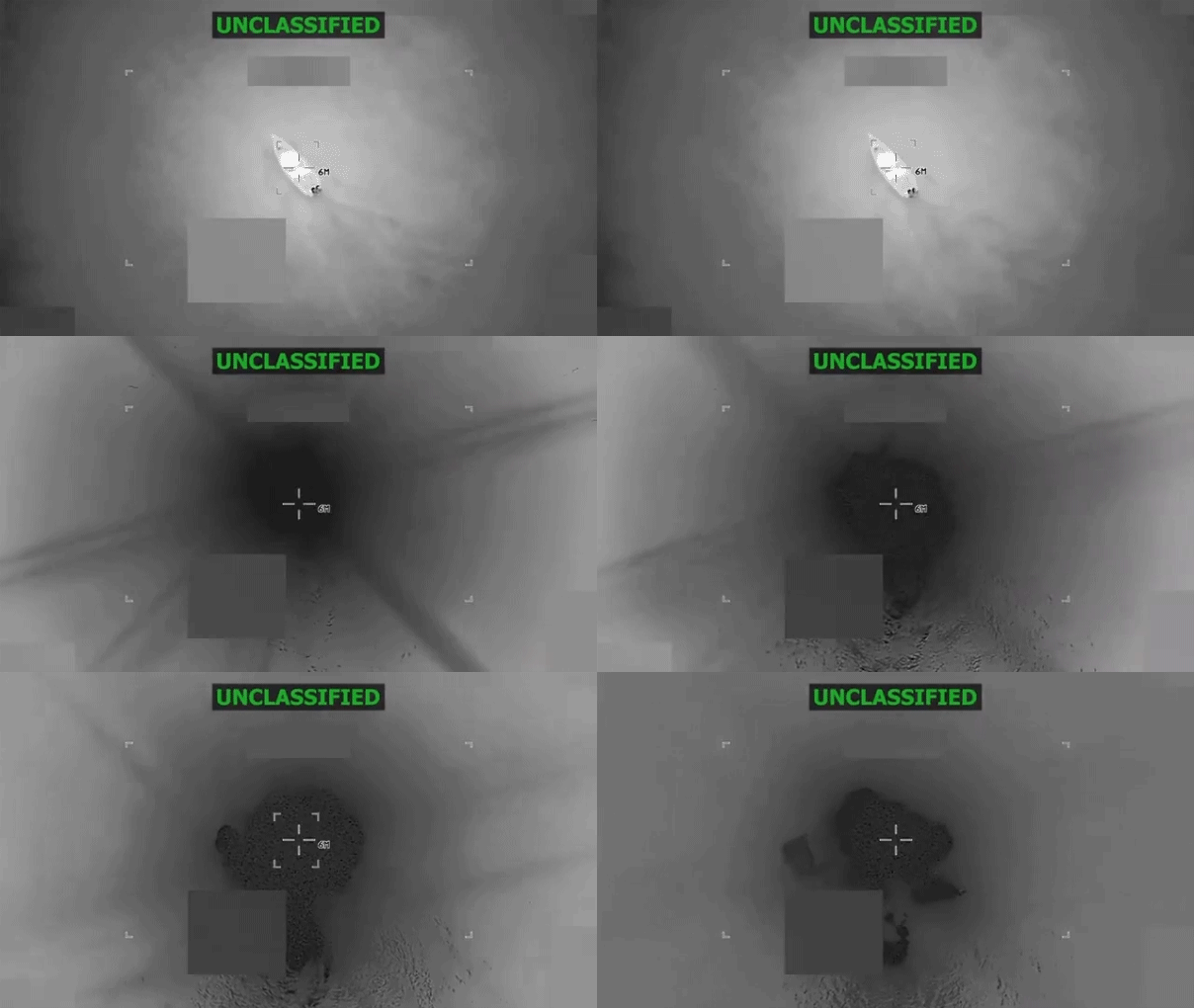
The Department of War confirmed that U.S. forces carried out a deadly strike on a vessel operated by alleged narco-terrorists in the Caribbean Sea on October 24, 2025. Secretary of War Pete Hegseth acknowledged the operation as part of ongoing efforts to disrupt maritime drug trafficking routes.
These military actions represent a more aggressive approach to interdiction than in previous administrations, treating drug trafficking organizations more explicitly as national security threats rather than solely as law enforcement challenges.
Beyond military interdiction, the “Fentanyl Free America” initiative includes a significant educational component. Cole revealed that the plan will introduce fentanyl awareness programs in schools across the country, teaching children about the dangers of the synthetic opioid that can be lethal even in minute amounts.
“Young children in schools across the U.S. will learn about fentanyl and parents will be provided with more resources to talk to kids,” Cole said. This educational push comes as officials continue to report cases of fentanyl being disguised as candy or common prescription medications to attract younger users.
The DEA is also focusing attention on the northern border, highlighting a less publicized route for drug trafficking into the United States. “The Hells Angels are controlling a good portion of the drug trafficking in Canada that is coming across our northern border into the United States,” Cole stated.
This acknowledgment of the northern border threat represents a shift in public messaging, which has traditionally focused more heavily on southern border concerns. The Hells Angels motorcycle club, long identified as a transnational criminal organization, appears to be leveraging the less scrutinized northern crossing points to move drugs into American markets.
The fentanyl crisis has evolved significantly since it first began driving overdose deaths to record highs several years ago. Initially entering the U.S. primarily through mail shipments from China, the production and trafficking of fentanyl has shifted substantially, with Mexican cartels now playing a dominant role in manufacturing and distribution.
Public health officials have described fentanyl as one of the most significant drug threats in U.S. history, with its potency—50 times stronger than heroin—making it responsible for tens of thousands of annual overdose deaths. The CDC has consistently reported that fentanyl is the leading cause of death for Americans between the ages of 18 and 45, surpassing COVID-19, car accidents, cancer, and suicide.
The administration’s plan represents a multi-faceted approach to a crisis that has proven resistant to previous policy interventions, combining military action, law enforcement operations, and public education in what officials describe as an unprecedented coordination of federal resources.
Fact Checker
Verify the accuracy of this article using The Disinformation Commission analysis and real-time sources.

16 Comments
The opioid crisis is a devastating public health issue, so I’m glad to see the administration taking action. Disrupting drug supply chains is an important part of the solution, but we’ll need to see more details on how this ‘Fentanyl Free America’ initiative will work in practice.
Absolutely. A holistic approach addressing both supply and demand will be crucial to making real progress against this crisis.
The ‘Fentanyl Free America’ initiative sounds like a comprehensive approach to tackling the opioid epidemic. Targeting drug supply chains through military interdiction and social media monitoring is a smart move, but we’ll need to see how it plays out in practice.
Agreed. Disrupting supply is an important part of the solution, but we’ll need to see a holistic strategy that also addresses demand reduction, treatment, and prevention.
The DEA’s focus on disrupting drug supply chains through military operations and social media monitoring is an innovative approach. Increased prices due to interdiction efforts could help reduce demand, but the opioid crisis is a multifaceted problem that will require a comprehensive solution.
Absolutely. Tackling the supply side is important, but we’ll need to see a broader strategy that also addresses demand reduction, treatment, and prevention.
Combating the opioid epidemic is a huge challenge, so I’m glad to see the administration taking action. Interdicting drug shipments in the Caribbean and driving up prices could make a real difference, but we’ll need to see the full scope of this ‘Fentanyl Free America’ initiative.
Tackling the opioid epidemic requires a multi-faceted approach, so I’m interested to see how this ‘Fentanyl Free America’ initiative unfolds. Interdicting drug shipments in the Caribbean is a smart move, but we’ll need to monitor the long-term impacts.
Disrupting drug supply chains is crucial to tackling the opioid crisis. Interdiction efforts in the Caribbean seem to be pushing up prices, which could help reduce demand and save lives. Curious to see more details on the specific tactics and impact of this ‘Fentanyl Free America’ initiative.
Agreed, targeting the supply side is an important part of the solution. Reducing the availability and increasing the cost of these deadly drugs could make a real difference.
The DEA’s focus on using military operations and social media to disrupt drug trafficking is an innovative approach. Increased prices due to supply chain disruptions could help reduce demand, but the opioid crisis is a complex issue that will require a comprehensive strategy.
Agreed. Tackling the supply side is just one piece of the puzzle. Demand reduction, treatment, and prevention will all be crucial as well.
Targeting the Caribbean supply routes for cocaine and other drugs is a smart move. Pushing up prices through interdiction could help reduce demand and save lives. But the opioid crisis is complex, so a comprehensive strategy will be needed.
Disrupting the flow of deadly drugs like fentanyl is crucial to addressing the opioid crisis. The DEA’s focus on Caribbean interdiction and leveraging military resources is an interesting tactic, but the long-term impacts will be key.
The DEA’s focus on leveraging military operations and social media to combat drug trafficking is an interesting approach. Curious to see how effective these efforts will be in the long run, and whether they can make a dent in the opioid epidemic.
It’s good to see the administration taking a multi-pronged approach to tackling this crisis. Interdiction, disrupting supply chains, and leveraging technology will all be crucial.