


Listen to the article
President Trump’s administration has intensified efforts to address violence against Christians in Nigeria following his sharp criticism of the country’s government for inaction on the killings.
“I’m really angry about it,” Trump told Fox News Radio on Friday. “What’s happening in Nigeria is a disgrace.”
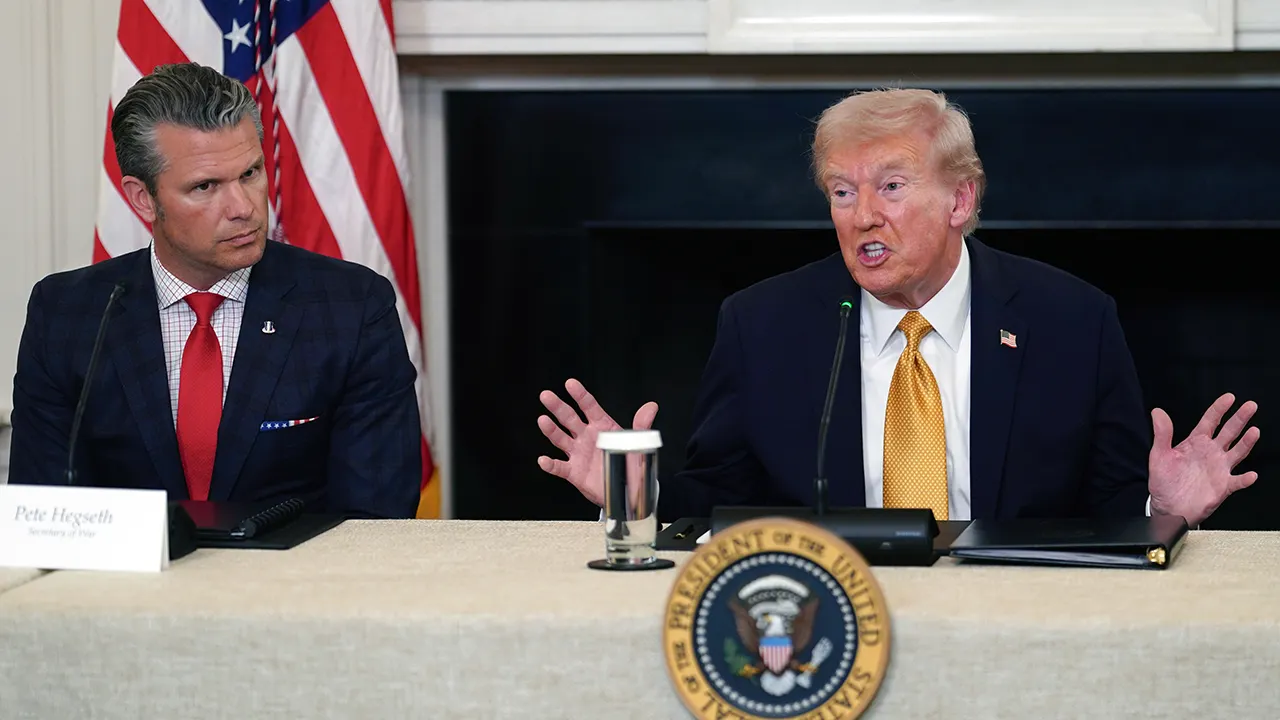
War Secretary Pete Hegseth met with Nigerian National Security Adviser Nuhu Ribadu last week amid Trump’s threats to cut off aid to Nigeria if it “continues to allow the killing of Christians.” During the meeting, Hegseth emphasized the urgent need for Nigeria to demonstrate commitment to stopping violence against Christians and expressed the Department’s desire to collaborate with Nigeria to counter terrorists threatening the United States.
Nigerian officials have pushed back against accusations that the government is not doing enough to protect Christian communities, which have been targeted in a series of violent attacks in recent months.
The administration’s focus on Nigeria comes amid escalating violence. Last week, over 300 children and 12 teachers were abducted from a Catholic school, while a separate attack on a church left two people dead and several congregants kidnapped. These incidents highlight the continuing security challenges facing Africa’s most populous nation.
Jonathan Pratt, who heads the State Department’s Bureau of African Affairs, testified before Congress on Thursday, emphasizing that any Pentagon involvement would be part of a broader strategy. “This would span from security to policing to economic,” he said. “We want to look at all of these tools and have a comprehensive strategy to get the best result possible.”
The primary threat to Christian communities in Nigeria comes from Islamist radical group Boko Haram and its splinter faction, the Islamic State West Africa Province (ISWAP). These groups primarily target Christians, though Muslims from different sects also face attacks. Since 2009, the insurgency has claimed more than 35,000 lives and displaced over two million people in northeastern Nigeria and surrounding countries.
Nigeria, Africa’s largest economy and most populous nation with over 200 million inhabitants, has struggled with sectarian violence for decades. The country is roughly divided between a predominantly Muslim north and a largely Christian south, with religious tensions often exacerbated by political, economic, and ethnic factors.
On Tuesday, U.S. Ambassador to the United Nations Mike Waltz hosted an event highlighting the ongoing violence in Nigeria. During the gathering, Waltz described the killings of Christians in Nigeria as a “genocide wearing the mask of chaos.” The event featured an appearance by rap superstar Nicki Minaj, who called for religious freedom for all.
The issue of religious persecution in Nigeria has gained increasing attention from international human rights organizations. According to Open Doors, a watchdog group monitoring Christian persecution worldwide, Nigeria ranks among the most dangerous countries for Christians, with hundreds killed annually for their faith.
The Trump administration’s focus on Nigeria represents a significant shift in U.S. foreign policy toward the West African nation, which has traditionally been considered an important regional ally. The United States provides Nigeria with substantial security assistance, including military training and equipment to combat terrorism.
Experts note that addressing religious violence in Nigeria requires a nuanced approach that considers the complex interplay of religious extremism, poverty, corruption, and weak governance. While military solutions may be necessary to combat immediate threats, long-term stability will require addressing underlying socioeconomic grievances and strengthening democratic institutions.
As the situation develops, the administration’s approach will likely involve diplomatic pressure, security cooperation, and potential economic leverage to encourage the Nigerian government to take more decisive action to protect vulnerable religious communities.
Fact Checker
Verify the accuracy of this article using The Disinformation Commission analysis and real-time sources.

7 Comments
The Trump administration’s threats to cut aid to Nigeria over Christian violence are concerning. This issue requires a nuanced, diplomatic approach to address the underlying causes and protect all vulnerable communities.
It’s troubling to see the escalating violence against Christians and other civilians in Nigeria. The government must do more to ensure the safety of all its citizens, regardless of their faith.
I agree. The Nigerian government needs to take decisive action to stop these attacks and bring the perpetrators to justice. Cutting off aid could further destabilize the situation.
Cutting aid to Nigeria could have unintended consequences and should be a last resort. The US should continue pressing the Nigerian government to uphold its responsibility to protect all citizens, regardless of their religious affiliation.
I share your concern about the potential unintended consequences of aid cuts. Maintaining diplomatic pressure while exploring alternative approaches may be a more constructive path forward.
While the administration’s focus on protecting Christians is understandable, unilateral threats of aid cuts are unlikely to be an effective long-term solution. Nigeria should be encouraged to strengthen security and promote interfaith dialogue.
The abduction of hundreds of children and attacks on churches are horrific acts that demand a comprehensive response. Both the US and Nigeria must work together to address the root causes of this violence.