


Listen to the article
Education Department Shifts Billions in Grant Programs to Other Federal Agencies
The U.S. Education Department has begun transferring control of its major grant programs to other federal agencies, marking a significant advancement in the Trump administration’s plan to dismantle the department.
Six new interagency agreements, announced Tuesday, will relocate billions of dollars in education funding to alternative federal homes. Most notably, the Department of Labor will assume oversight of several crucial K-12 funding streams, including the $18 billion Title I program that serves low-income communities.
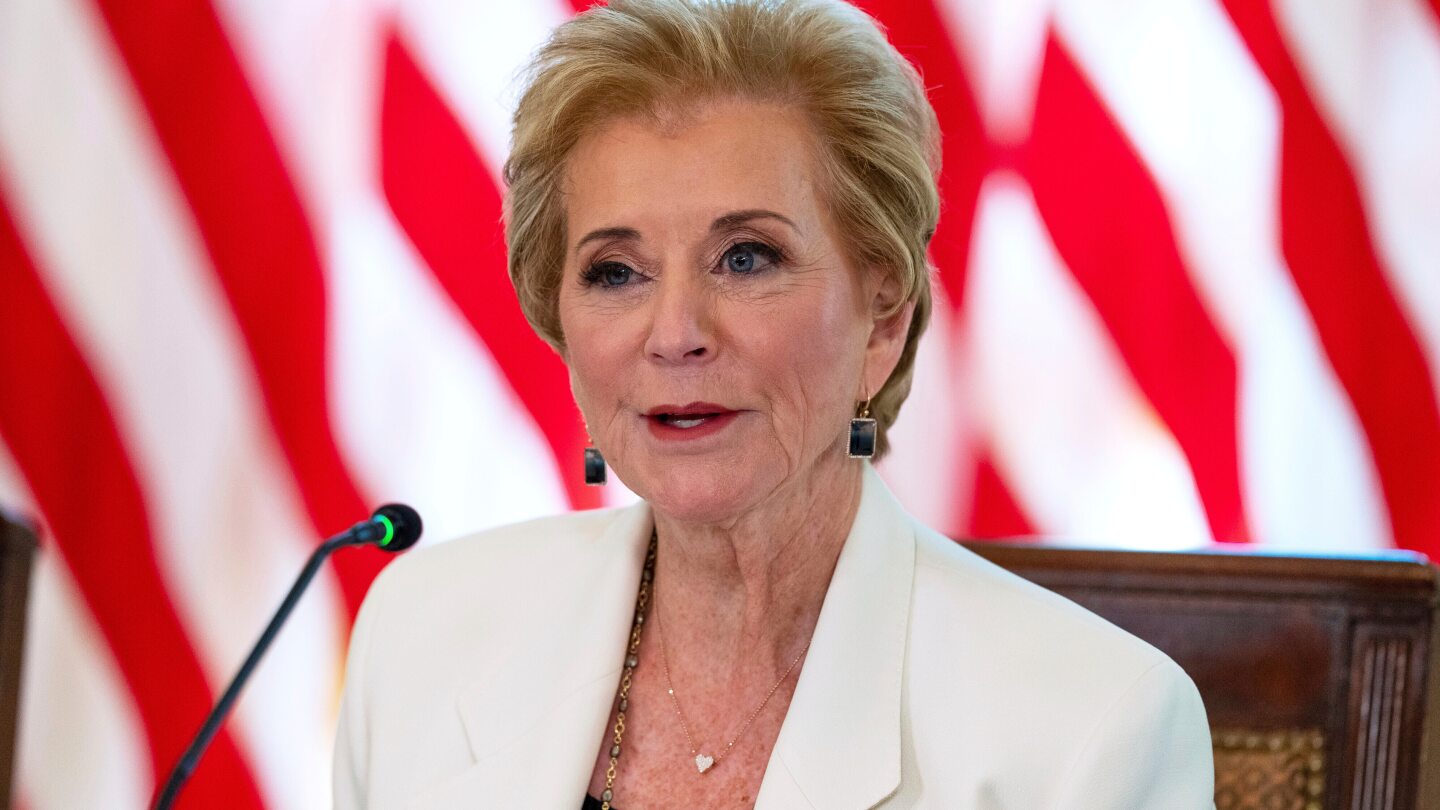
“The Trump Administration is taking bold action to break up the federal education bureaucracy and return education to the states,” Education Secretary Linda McMahon said in a statement. “Cutting through layers of red tape in Washington is one essential piece of our final mission.”
The move follows President Trump’s March executive action calling for the elimination of the department and represents the most substantial reorganization effort since then. Previously, the administration had primarily focused on reducing the department’s workforce through layoffs and voluntary retirement offers.
Under the new agreements, Labor will oversee nearly all grant programs currently managed by the Education Department’s offices for K-12 and higher education. This includes funding for teacher training, English language instruction, and TRIO, which helps disadvantaged students access college education. The shift effectively outsources two of the agency’s largest operational units.
Other federal agencies will also absorb education responsibilities. The Department of Health and Human Services will manage grants for parents attending college and oversee foreign medical school accreditation. The State Department will take charge of foreign language programs, while the Interior Department will administer Native American education initiatives.
Education officials emphasized that program funding levels will remain as determined by Congress. However, they did not address whether these changes would trigger additional job reductions at the department, which has already experienced significant staffing cuts.
The reorganization leaves several key functions intact within the Education Department, including its $1.6 trillion student loan portfolio, funding for students with disabilities, and the Office for Civil Rights, which investigates discrimination allegations. McMahon has previously suggested these functions might also be better managed elsewhere in the federal government.
Critics warn the restructuring could disrupt critical support systems for vulnerable student populations. State education officials have expressed concern about losing access to specialized expertise that Education Department staff provide.
“People might think it’s just funding and giving them the money, but it’s not,” said Angélica Infante-Green, Rhode Island’s K-12 education chief. “It is about how to co-mingle some of the funds to educate a child holistically,” particularly when addressing complex needs of students in special education who may also be multilingual learners from low-income backgrounds.
AFGE Local 252 President Rachel Gittleman, representing department workers, warned that the national educational mission “is weakened when its core functions are scattered across other federal or state agencies that are not equipped or positioned to provide the same support and services as ED staff.”
The department began testing this approach in June with a smaller agreement that moved adult education programs to Labor. These new, more expansive agreements establish a framework for further consolidation without requiring congressional approval, leveraging formal interagency agreements commonly used when work overlaps between departments.
McMahon has increasingly cited what she characterizes as the department’s failures during its 45-year history to justify its elimination. She points to declining student performance, particularly plummeting math and reading scores following pandemic-related disruptions, as evidence that the “bloated bureaucracy” has failed to improve educational outcomes.
Her ultimate vision would dissolve the Education Department entirely and grant states greater flexibility in how they allocate federal education funding. This complete dismantling, however, would require congressional approval—a complicated prospect given the longstanding bipartisan support for some of the department’s core functions.
As part of the administration’s broader strategy, McMahon plans to continue touring the country highlighting successful local schools while intensifying her engagement with lawmakers on Capitol Hill to build support for the department’s eventual closure.
Fact Checker
Verify the accuracy of this article using The Disinformation Commission analysis and real-time sources.

16 Comments
Reducing federal bureaucracy in education is a worthy goal, but I worry this could undermine important programs and services, especially for vulnerable students.
Agreed, the potential impacts on equity and access are concerning. Careful implementation and ongoing evaluation will be critical.
Transferring control of major education grants to other agencies like Labor is a bold move. I’m curious to see if it leads to more flexibility and efficiency, or just more fragmentation.
Good point. Streamlining can be positive, but not at the expense of program effectiveness and equitable distribution of resources.
Shifting major grant programs to other agencies like Labor raises a lot of questions. I hope this leads to more efficient delivery of services, not just bureaucratic reshuffling.
Agreed, the devil will be in the details. Maintaining program effectiveness should be the top priority, not just organizational changes.
Interesting move to shift control of major education funding to other agencies. I wonder if this will lead to more state-level flexibility or just further bureaucratic complexity.
Decentralizing education is a core part of the Trump administration’s agenda. It remains to be seen if this streamlines the system or creates more fragmentation.
The administration is framing this as reducing federal bureaucracy, but it may just add layers of complexity. I’m concerned about the potential impact on vulnerable students and communities.
Good point. Simplifying the system is a worthy goal, but not at the expense of critical education funding and support.
This seems like part of a broader effort to limit federal involvement in education. While state-level flexibility has merits, I worry it could exacerbate inequities between districts.
Yes, we’ll need to closely monitor how this plays out. Maintaining national education standards and equitable access is crucial.
Dismantling the Education Department seems like a drastic step. Education is a core federal responsibility – I hope this doesn’t undermine important programs and services.
Agreed, the department plays a crucial role. Shifting control to other agencies could make things more complicated for schools and students.
This seems like a significant step toward the administration’s goal of dismantling the Education Department. I’m curious to see how it impacts funding, oversight, and accountability.
Yes, it’s a major shift. We’ll have to monitor how this plays out and whether it truly streamlines the system or just creates more complexity.