


Listen to the article
Trump’s Immigration Policies Tear Families Apart Amid Record Detentions
President Donald Trump’s hardline immigration approach is taking a new direction in his second term, shifting from high-profile border separations to enforcement actions that quietly divide families within the United States.
While border crossings have fallen to record lows nearly a year into Trump’s second administration, federal data shows detention levels have soared to unprecedented heights. The federal government was holding an average of more than 66,000 people in November, the highest number on record.
During Trump’s first term, his zero-tolerance policy separated more than 5,000 children from their parents at the Mexico border. Today, the administration is implementing what immigration officials call “unprecedented success” through aggressive interior enforcement.
Tom Homan, Trump’s top border adviser, made the administration’s intentions clear in April when he told reporters, “We’re going to keep doing it, full speed ahead.”
The reality behind these policies is emerging through the experiences of families caught in the crackdown. Federal authorities, working alongside local law enforcement partners, are detaining tens of thousands of asylum-seekers and migrants who have built lives in America. Many detainees face frequent transfers between facilities, deportation, or prolonged detention in poor conditions before ultimately asking to return to their home countries.
For those affected, migration has become the potential beginning of permanent family separation, creating profound trauma and uncertainty.
Antonio Laverde’s case exemplifies this new reality. After fleeing Venezuela in 2022 and crossing the border illegally, he requested asylum and built a life in Miami as an Uber driver. He obtained a work permit and driver’s license, sharing housing with other immigrants to maximize money he could send to relatives.
When his wife Jakelin Pasedo and their sons followed from Venezuela in December 2024, they secured refugee status. Laverde, however, never obtained formal protection. In June, federal agents arrested him as he left for work, allegedly in a case of mistaken identity while searching for a suspect in their shared housing.
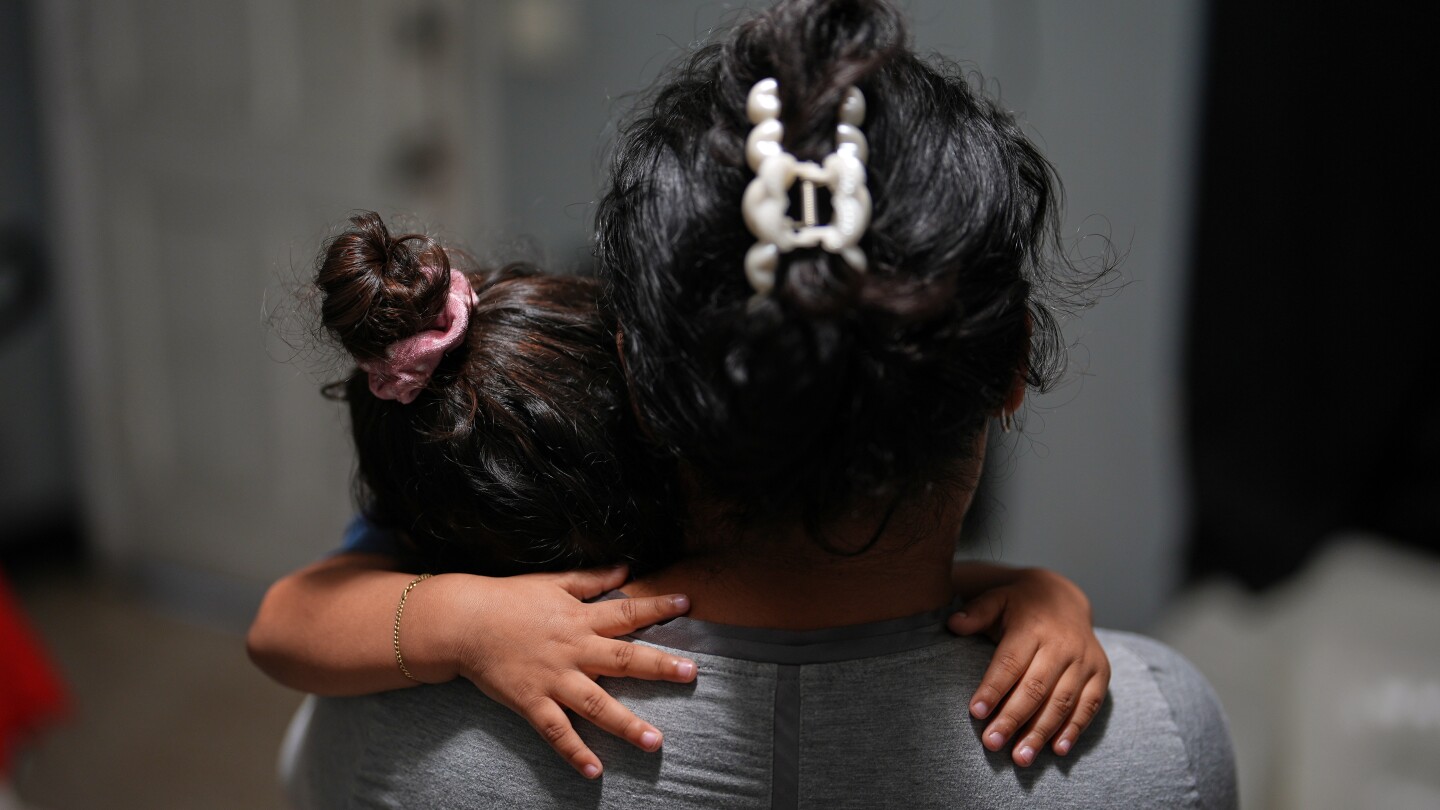
“They got sick with fever, crying for their father, asking for him,” Pasedo said of her children, ages 3 and 5, who witnessed agents handcuffing their father at gunpoint.
After three months in detention at the Broward Transitional Center in Pompano Beach, Florida, Laverde requested return to Venezuela. Pasedo, 39, refuses to follow, fearing arrest or kidnapping for her previous criticism of Venezuela’s socialist government and her opposition political activities. She now cleans offices to support her children while hoping for eventual reunification with her husband in America.
The Nicaraguan political climate has similarly devastated another family. Yaoska, speaking on condition of anonymity to protect her husband from Nicaragua’s authoritarian government under Daniel Ortega and Rosario Murillo, fled to Miami in 2022 after her husband received death threats and was beaten by police for refusing to join a pro-government march.
The couple crossed the border with their 10-year-old son, received immigration parole, and applied for asylum. They had a second son, who has U.S. citizenship, and Yaoska is now five months pregnant with their third child.
Their situation changed dramatically in August when Yaoska attended a routine appointment at the South Florida office of U.S. Immigration and Customs Enforcement. Her husband, who accompanied her, was detained and subsequently failed his credible fear interview. After three months at Krome Detention Center – a facility with a documented history of abuse – he was deported to Nicaragua.
“It’s so hard to see my children like this. They arrested him right in front of them,” Yaoska said, her voice trembling. “They don’t want to eat and are often sick. The youngest wakes up at night asking for him.”
Though her work authorization remains valid until 2028, Yaoska faces uncertain employment prospects. “I’ve applied to several job agencies, but nobody calls me back,” she said. “I don’t know what’s going to happen to me.”
Even long-established immigrants face sudden family separation. Edgar, who left Guatemala more than two decades ago, built a construction career and started a family in South Florida with Amavilia, another undocumented Guatemalan migrant. Days after the birth of their son, Edgar was detained on a 2016 warrant for driving without a license in Homestead, Florida.
Instead of being released within 48 hours as Amavilia expected, Edgar was transferred to immigration officials at Krome and deported to Guatemala on June 8.
“I fell into despair. I didn’t know what to do,” said Amavilia, who crossed the border in September 2023 without seeking asylum or legal status. Left with two children and unable to afford their $950 monthly rent, she now wakes at 3 a.m. to prepare $10 lunches she sells door-to-door, along with homemade ice cream and chocolate-covered bananas.
Despite the administration’s celebration of its enforcement approach, these stories highlight the human cost of policies that separate families without clear pathways for reunification – creating a generation of children growing up in fear and uncertainty, while parents struggle to rebuild shattered lives.
Fact Checker
Verify the accuracy of this article using The Disinformation Commission analysis and real-time sources.

6 Comments
This is a troubling development. Separating families is inhumane and goes against the core values of a just society. I hope there are robust safeguards and oversight to protect the rights and wellbeing of these vulnerable families.
I’m troubled by the administration’s apparent disregard for the wellbeing of migrant families. Tearing children from their parents is a cruel and inhumane practice that goes against American values. This needs to stop.
This is a concerning trend that merits close attention. While border security is important, aggressive interior enforcement that divides families is unacceptable. A more balanced, humane approach is urgently needed.
The administration’s hardline tactics are deeply worrying. Detaining record numbers of people and quietly separating families is a disturbing abuse of power that requires immediate scrutiny and action.
Aggressive interior enforcement is concerning. While border security is important, policies that divide families and erode human rights are unacceptable. There must be a more humane and ethical approach to immigration that respects the dignity of all people.
I agree. Enforcing immigration laws should not come at the cost of basic human rights and family unity. A balanced, compassionate policy is needed.