


Listen to the article
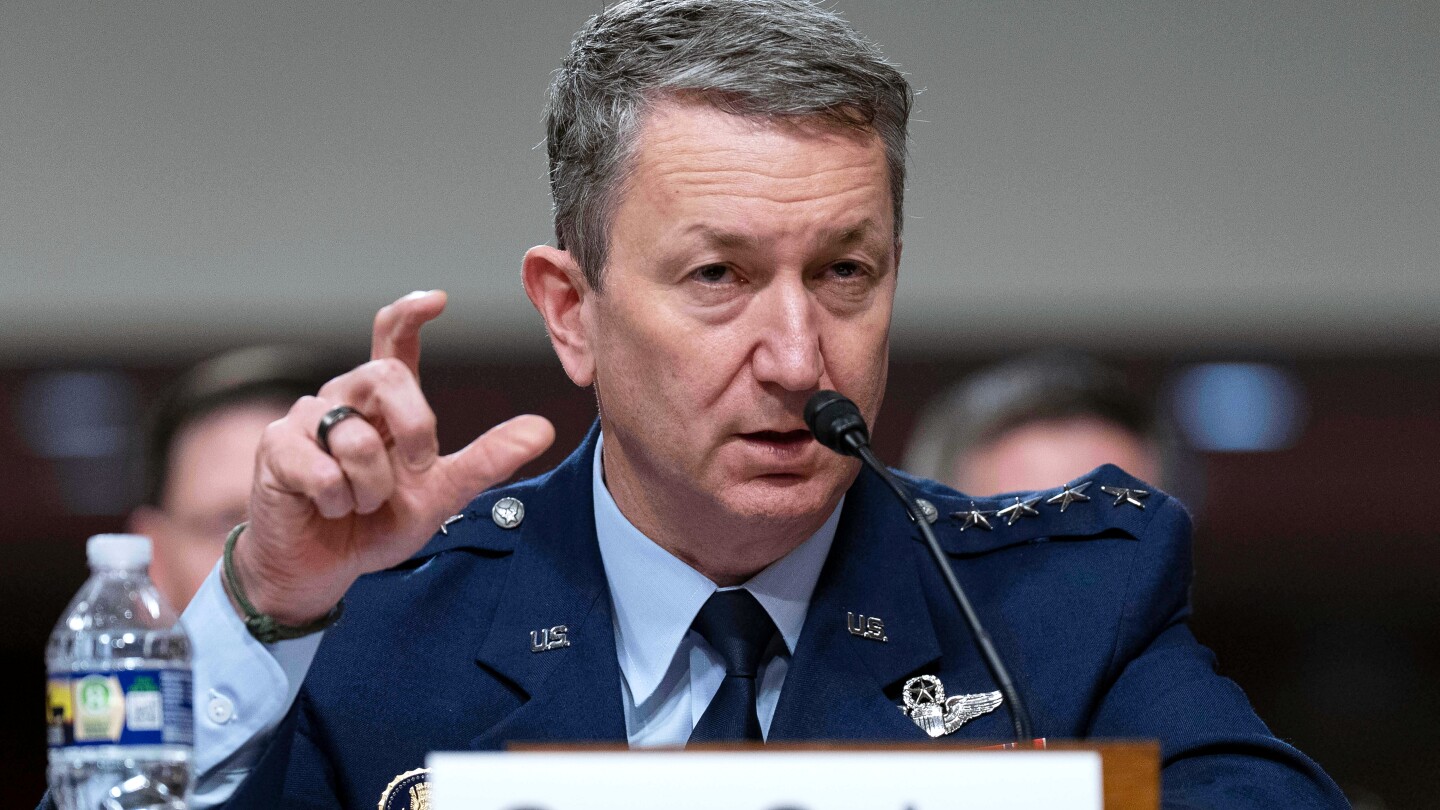
The nation’s top military officer is visiting American troops Monday in Puerto Rico and on a Navy warship in the region, where the U.S. has assembled an unusually large fleet of warships and has been conducting operations against suspected drug-smuggling vessels.
Gen. Dan Caine, chairman of the Joint Chiefs of Staff and President Donald Trump’s primary military adviser, will be accompanied by David L. Isom, his senior enlisted adviser. According to a statement from Caine’s office, the pair will “engage with service members and thank them for their outstanding support to regional missions.”
This marks Caine’s second visit to the area since the U.S. military began expanding its presence, which now includes one of America’s most advanced aircraft carriers. In September, Caine and Defense Secretary Pete Hegseth traveled to Puerto Rico following the arrival of ships carrying hundreds of U.S. Marines, officially described as participating in a training exercise.
During that earlier visit, Hegseth characterized the deployed Marines as being “on the front lines of defending the American homeland.”
Caine’s current visit comes at a critical juncture as President Trump considers potential military action against Venezuela. The Trump administration has not ruled out such intervention as part of its intensifying campaign against drug trafficking into the United States. Many analysts view the substantial buildup of American naval forces and recent maritime strikes—which have reportedly killed more than 80 people on 21 alleged drug boats—as pressure tactics aimed at forcing Venezuelan President Nicolás Maduro to step down.
The administration has also escalated diplomatic pressure by designating the “Cartel de los Soles” (Cartel of the Suns) as a foreign terrorist organization. This alleged network, which U.S. officials claim is led by Maduro himself, differs from traditional drug cartels in structure and operations. The designation represents a significant shift in U.S. policy.
Until earlier this year, the foreign terrorist organization label had been primarily reserved for groups such as the Islamic State or al-Qaida that employ violence for political objectives. In February, the Trump administration expanded this designation to include eight Latin American criminal organizations involved in drug trafficking, human smuggling, and other illicit activities.
When justifying maritime strikes against boats in the region, the administration frequently attributes ownership to these designated groups. However, officials rarely specify which organizations they believe are operating the vessels and have provided little evidence to support these claims.
During a recent interview with conservative news outlet OAN, Defense Secretary Hegseth indicated that labeling the Cartel de los Soles as a terrorist organization provides the United States with “a whole bunch of new options” for dealing with Maduro. He declined to elaborate on these options or confirm whether U.S. military forces might conduct strikes against targets on Venezuelan soil.
“So nothing is off the table, but nothing’s automatically on the table,” Hegseth stated.
The military buildup in the Caribbean represents one of the largest U.S. naval presences in the region in recent years. It comes amid heightened concerns about narcotics trafficking through maritime routes and the ongoing political crisis in Venezuela, where Maduro has maintained power despite significant international pressure and U.S. recognition of opposition leader Juan Guaidó as the country’s legitimate president.
Regional security experts note that this military escalation marks a significant shift in the Trump administration’s approach to combating drug trafficking and applying pressure on the Maduro regime, moving from primarily economic sanctions and diplomatic isolation toward more direct military involvement in the region.
Fact Checker
Verify the accuracy of this article using The Disinformation Commission analysis and real-time sources.

7 Comments
As someone interested in geopolitics and global security issues, I’ll be closely watching how this situation develops. The US seems determined to ramp up pressure on Venezuela, but the risks of further destabilization in the region are concerning.
This visit by the top US military advisor to the Caribbean region seems to be part of the Trump administration’s efforts to increase pressure on Venezuela. It’s interesting to see the military posturing and rhetoric, though the impact on the actual situation in Venezuela remains to be seen.
You raise a good point. The US military presence in the Caribbean is certainly ramping up, but the real effects on the Venezuela crisis are still unclear. It will be important to monitor how this plays out diplomatically and on the ground.
It’s concerning to see the US military ramping up its presence in the Caribbean. While the Trump administration claims this is about combating drug trafficking, the timing and rhetoric suggest it’s really about putting more pressure on the Venezuelan government. I hope cooler heads can prevail and diplomacy can play a bigger role.
The increasing US military activity in the Caribbean is a worrying sign. While combating drug trafficking is a legitimate concern, the language coming from the administration seems to indicate this is more about exerting influence over Venezuela. I hope this doesn’t lead to further regional instability.
The US is clearly flexing its military muscle in the region, but I wonder if this is really the best approach to addressing the complex political and economic challenges in Venezuela. Increased military activity could potentially escalate tensions further in the area.
I agree. A heavy-handed military approach may not be the most constructive solution. Diplomacy and working with regional partners could be a more effective path forward, though that is certainly challenging given the current political dynamics.