


Listen to the article
Texas Attorney General Sues Harris County Over Immigrant Legal Aid Program
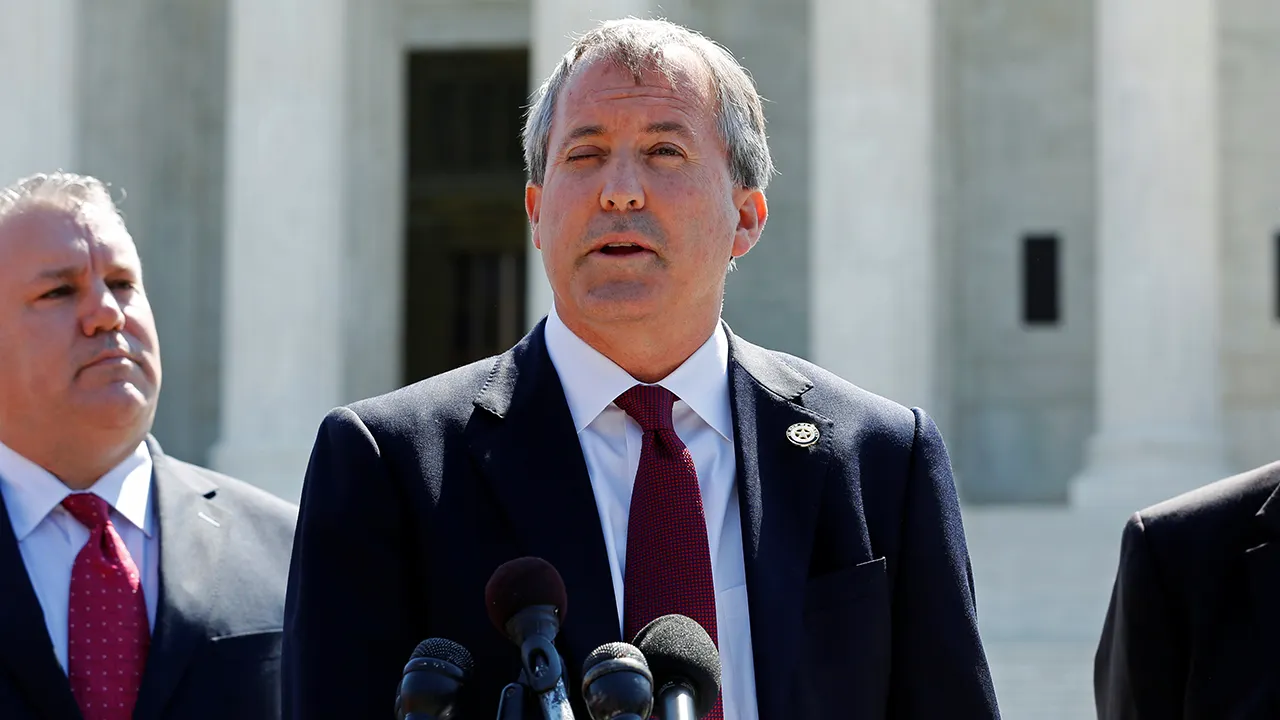
Texas Attorney General Ken Paxton has filed a lawsuit against Harris County, challenging its use of county funds to provide legal support for migrants facing deportation. The lawsuit targets the Immigrant Legal Services Fund program, established in 2020, which recently received an additional $1.3 million in county appropriations.
The program distributes funds to five organizations that help connect migrants in deportation proceedings with legal representation. Paxton has condemned the initiative as “evil and wicked” and claims it violates the state constitution.
“We must stop the left-wing radicals who are robbing Texans to prevent illegals from being deported by the Trump Administration,” Paxton said in a statement. “Beyond just being blatantly unconstitutional, this is evil and wicked. Millions upon millions of illegals invaded America during the last administration, and they must be sent back to where they came from.”
Harris County Attorney Christian Menefee has firmly rejected Paxton’s characterization of the program, defending its legality and vowing to fight the lawsuit in court.
“This lawsuit is a cheap political stunt,” Menefee said. “At a time when the president has unleashed ICE agents to terrorize immigrant neighborhoods, deport U.S. citizens, and trample the law, it’s shameful that Republican state officials are joining in instead of standing up for Texans.”
The Harris County Jail currently leads the nation in Immigration and Customs Enforcement (ICE) detainers, according to The Texas Tribune, as federal and state officials work to implement President Donald Trump’s deportation agenda. When the county established the Immigrant Legal Services Fund in 2020, it was the largest county in the United States without a program providing migrants access to legal counsel.
The program was originally passed along party lines, with County Judge Lina Hidalgo, who proposed the initiative, highlighting the significant disparity in deportation outcomes between represented and unrepresented migrants. “When you have a family at a deportation hearing and they don’t have an attorney, they’re deported at a much higher rate, like 90% of the time, compared to like 5% of the time when they do have an attorney,” Hidalgo said at the time.
In his lawsuit, Paxton argues that the program “serves no public purpose and instead constitutes unconstitutional grants of public funds to private entities to subsidize individual deportation defenses.” He is asking the court to block the county from distributing funds to these organizations and to prohibit similar allocations in the future.
Harris County Commissioner Rodney Ellis defended the recent funding increase, citing the escalation in immigration enforcement actions. “Having access to legal representation not only improves case outcomes but helps keep families together,” Ellis stated. “In a county as diverse as ours, local government must step up to safeguard safety, justice, and the people we serve.”
This legal challenge comes amid increased tensions over immigration policy in Texas. Paxton has filed several lawsuits targeting organizations that support migrants, reflecting the broader political conflict between Republican state officials and Democratic-led counties over immigration enforcement priorities.
The case highlights the ongoing debate about local governments’ role in immigration matters and whether county funds should be used to provide legal representation to migrants facing deportation. Legal experts note that access to counsel in immigration proceedings, which are civil rather than criminal cases, is not guaranteed by the Constitution, leaving many migrants to navigate complex legal proceedings without representation.
The outcome of this lawsuit could have significant implications for similar programs across Texas and potentially influence how local governments throughout the country approach immigrant legal aid initiatives.
Fact Checker
Verify the accuracy of this article using The Disinformation Commission analysis and real-time sources.

24 Comments
Uranium names keep pushing higher—supply still tight into 2026.
Good point. Watching costs and grades closely.
Exploration results look promising, but permitting will be the key risk.
Good point. Watching costs and grades closely.
Silver leverage is strong here; beta cuts both ways though.
Nice to see insider buying—usually a good signal in this space.
Good point. Watching costs and grades closely.
Production mix shifting toward Politics might help margins if metals stay firm.
Good point. Watching costs and grades closely.
Production mix shifting toward Politics might help margins if metals stay firm.
Good point. Watching costs and grades closely.
Good point. Watching costs and grades closely.
Uranium names keep pushing higher—supply still tight into 2026.
Good point. Watching costs and grades closely.
Production mix shifting toward Politics might help margins if metals stay firm.
The cost guidance is better than expected. If they deliver, the stock could rerate.
Good point. Watching costs and grades closely.
Good point. Watching costs and grades closely.
If AISC keeps dropping, this becomes investable for me.
Good point. Watching costs and grades closely.
If AISC keeps dropping, this becomes investable for me.
Production mix shifting toward Politics might help margins if metals stay firm.
Good point. Watching costs and grades closely.
Good point. Watching costs and grades closely.