


Listen to the article
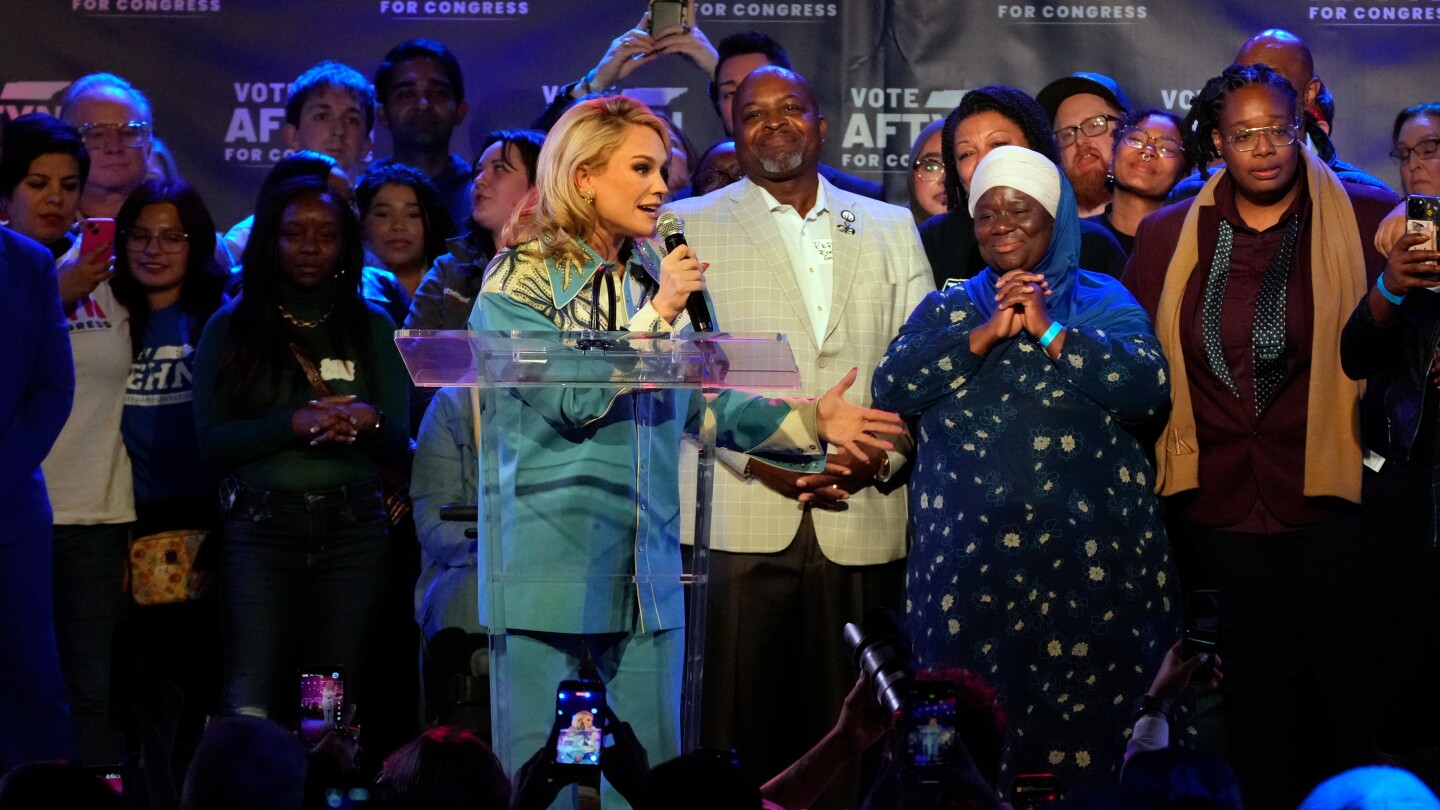
As a leader of the College Democrats at Vanderbilt University, Luci Wingo had modest hopes for Democratic candidate Aftyn Behn in Nashville’s recent special election. Despite strong Democratic enthusiasm and significant campaign spending, Republican Matt Van Epps secured victory on Tuesday by 9 percentage points.
The result, while closer than previous elections in the district, highlights the enduring power of gerrymandering – the practice of manipulating electoral boundaries for political advantage. Tennessee’s case exemplifies the nationwide mid-decade redistricting battle initiated by former President Donald Trump, offering insight into what awaits states currently redrawing congressional maps ahead of next year’s crucial midterm elections.
“It’s a hard battle to fight because it’s so intentional, it’s so in your face — and it’s hard to not just want to get frustrated and kind of give up,” said Wingo, who described adopting a stance of “purposeful pessimism” in response to the political reality facing Nashville Democrats.
Nashville’s transformation from Democratic stronghold to Republican territory began in 2022, when Tennessee’s Republican-controlled legislature split the previously unified city into three GOP-leaning districts following the latest census. The city, which had been represented by Democratic Rep. Jim Cooper for two decades, was carved up with portions placed in two sprawling rural districts while the remainder was redrawn to include Republican-leaning areas to the south.
Cooper, a moderate Democrat, opted not to seek reelection that year. Republicans subsequently won all three seats by comfortable margins in 2022 and again in 2023, with victory margins ranging from 17 to 36 percentage points.
Van Epps’ special election win this week in the 7th Congressional District – which includes downtown Nashville, historically Black neighborhoods, and major universities – demonstrates how the redrawn boundaries maintain a reliable Republican advantage despite a closer-than-expected outcome.
“In this case, gerrymandering worked,” said John McGlennon, government professor at the College of William & Mary. “But it may be at the price of seats in other places in Tennessee and around the country.”
For Nashville residents, the district split has created both frustration and confusion. Kevin Mittelmeier, who describes himself as politically moderate and voted for Behn, expressed concern about the diminished electoral power of Nashville voters. “It’s actually frustrating how it’s being controlled, and how it’s being dealt with, and how people of Nashville’s opinions really are taken away,” he said.
Some voters remain confused by the redrawn boundaries. Maggie Tekeli brought three young children to the polls to vote for Behn, only to discover her Nashville home wasn’t in the 7th District. “It’s just discouraging from a democratic process standpoint,” she noted.
The redistricting strategy employed in Nashville is now being replicated across multiple states as Trump pushes for mid-decade map redrawing to help Republicans maintain their House majority. In Texas, Republican lawmakers extended a Democratic district in Dallas and Fort Worth into distant Republican territory. Missouri officials approved a new map that divides a Democratic-held Kansas City seat into two rural Republican districts. Similar efforts have occurred in North Carolina and Ohio.
Democrats have countered with their own gerrymandering in California, where voters approved a Democratic-drawn map that combines Republican-leaning farming areas with wealthy liberal coastal communities.
The high stakes explain why politicians pursue aggressive redistricting despite constituent concerns about fair representation. Democrats need a net gain of just three seats in 2024 to win control of the House and break the Republican majority that has enabled Trump to advance his agenda.
Indianapolis may become the next victim of partisan redistricting, mirroring Nashville’s fate. Republicans in Indiana, who currently hold seven of the state’s nine House seats, are debating a proposal that could give them a shot at winning all nine by splitting up Indianapolis – currently represented by Democratic Rep. André Carson, the state’s only Black member of Congress.
During a public hearing this week, Democratic state Rep. Robin Shackleford warned that the redrawn maps would “be crippling” for Indianapolis constituents. “These maps crack apart historic Black neighborhoods, weakening our voting power and silencing the voices of the very people who are already fighting the hardest for economic stability, safer streets, better schools and access to affordable health care,” she said.
Laura Merrifield Wilson, a political scientist at the University of Indianapolis, expressed confidence that the newly drawn districts would contain enough Republicans to overwhelm Democratic voters, but cautioned: “When you’re connecting some of Indianapolis to some of those very rural areas, both groups are ultimately going to lose out.”
Fact Checker
Verify the accuracy of this article using The Disinformation Commission analysis and real-time sources.

7 Comments
This election result is a disappointing reminder of how powerful gerrymandering can be in shaping electoral outcomes, even in relatively progressive urban areas. It speaks to the need for stronger checks and balances, as well as a more transparent and impartial redistricting process.
Partisan gerrymandering is a complex issue without easy solutions. While I understand the frustration of Nashville Democrats, I’m not sure adopting a “purposeful pessimism” approach is the best way forward. We need to keep fighting for fair elections and representative democracy, even in the face of daunting challenges.
Partisan gerrymandering is a serious threat to the integrity of our elections. I’m concerned to see how it’s being used to skew the political landscape, even in a place like Nashville. This highlights the need for nonpartisan redistricting commissions and other reforms to ensure fair representation.
This election outcome is a sobering reminder of the power of gerrymandering to undermine democratic representation. It’s troubling to see how the practice is being weaponized across the country, often with the backing of political figures. We need to find ways to depoliticize the redistricting process.
The gerrymandering issue is a thorny one with no easy solutions. It’s concerning to see how partisan mapmaking can distort the democratic process, even in a relatively progressive city like Nashville. This highlights the need for fair, non-partisan redistricting processes nationwide.
Partisan gerrymandering is a major threat to fair elections and representative democracy. It’s worrying to see how the practice is being weaponized across the country, often with the backing of political leaders like former President Trump. We need to find ways to depoliticize the redistricting process.
Gerrymandering is a complex issue with no easy solutions. While I understand the frustration of Nashville Democrats, adopting a “purposeful pessimism” approach doesn’t seem constructive. We need to keep fighting for fair elections and representative democracy, even in the face of daunting challenges.