


Listen to the article
Tennessee National Guard operations in Memphis will continue during the state’s appeal of a ruling that challenged Governor Bill Lee’s authority to deploy troops in the city, according to the governor’s office.
Davidson County Chancellor Patricia Head Moskal ruled Monday that the Republican governor overstepped his authority when he deployed National Guard troops to Memphis as part of President Donald Trump’s crime-fighting initiative. In her ruling, Moskal stated that the governor’s power as commander-in-chief “is not unfettered” and emphasized “there is no rebellion or invasion currently taking place in Memphis” that would justify such deployment under Tennessee law.
However, the judge placed her own order on hold for at least five days to allow the state government time to appeal the decision. During this period, Guard troops will remain in place continuing their operations.
“Memphis is experiencing a violent crime emergency that the state must address,” said Elizabeth Lane Johnson, Lee’s spokesperson, in a statement Tuesday. “There’s no question these public safety efforts must continue.”
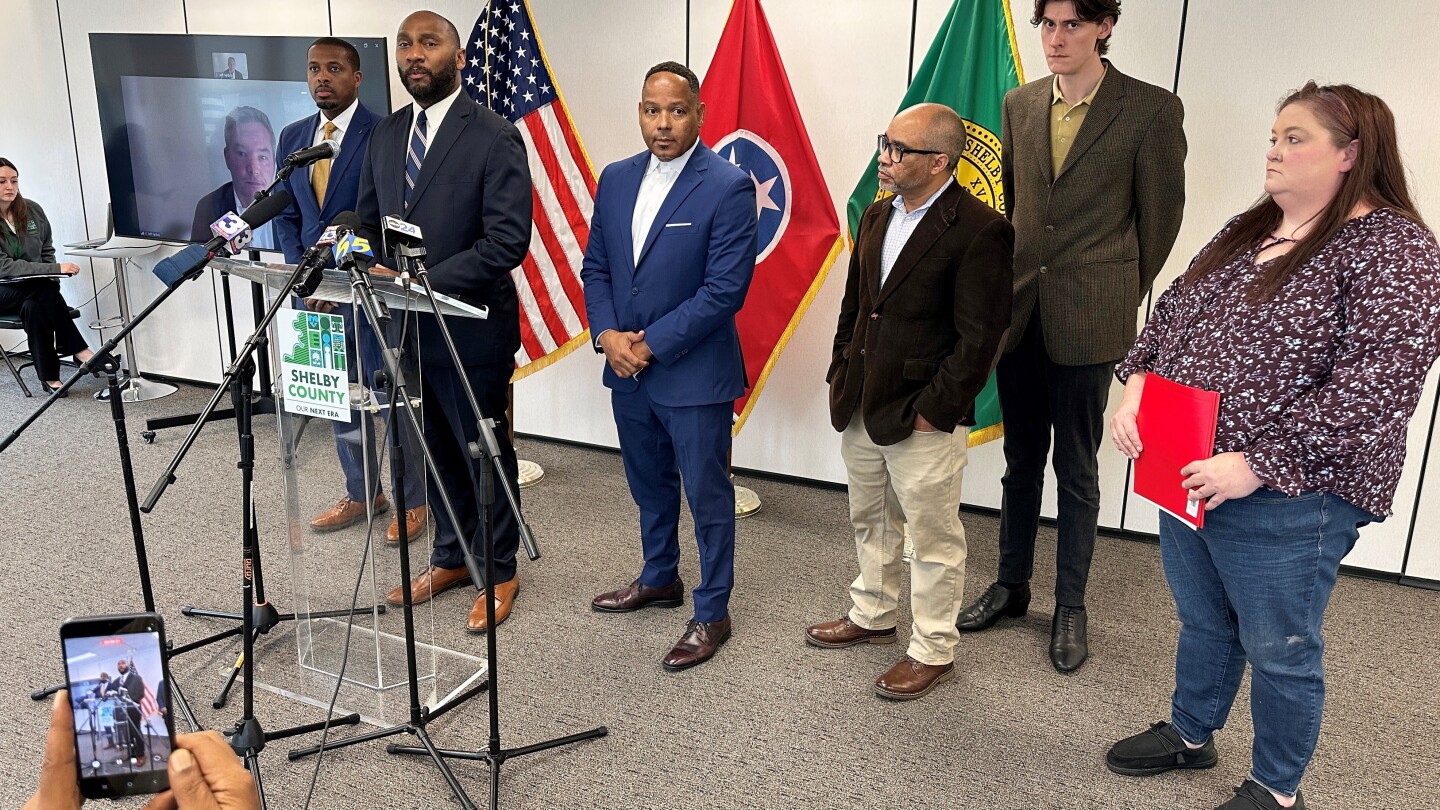
The legal challenge was brought by Democratic state and local officials who argued that under Tennessee law, the governor cannot deploy the National Guard for civil unrest unless there is rebellion or invasion. Even in such cases, they contended, deployment would require a request from local officials amid a “breakdown of law and order” and action by state lawmakers.
The case highlights the ongoing tension between state and local control in law enforcement matters. Shelby County Mayor Lee Harris, one of the plaintiffs, has argued that the Guard’s presence instills fear in residents and damages the city’s reputation.
Memphis has long struggled with high rates of violent crime, including assaults, carjackings, and homicides. While recent statistics show improvement in several categories, including murders, violence remains a persistent challenge in Tennessee’s largest city.
The deployment stems from Trump’s September announcement of the Memphis Safe Task Force, an initiative combining hundreds of personnel from approximately 30 federal and state law enforcement agencies with Memphis police. Since late September, the task force has made over 2,500 arrests.
National Guard troops, who began arriving on October 10, have been patrolling neighborhoods and commercial areas, including downtown Memphis near the iconic Pyramid. The uniformed personnel wear camouflage and protective vests marked “military police” and carry holstered firearms, though they lack authority to make arrests or conduct searches.
In her ruling, Judge Moskal noted that Lee failed to issue a specific written order for the troop deployment, with the only documentation being a press release announcing the Guard would be sent to Memphis. She characterized the National Guard’s role as “support and deterrence” that “does not appear to be critical to the Memphis Safe Task Force’s mission of fighting violent crime.”
The situation is complicated by the fact that Memphis Mayor Paul Young, a Democrat, never requested Guard assistance. However, after Trump’s announcement and Lee’s agreement, Young indicated he wanted the task force to focus on targeting violent offenders.
According to the Memphis Police Department, between 140 and 180 Guard personnel were operating in the city as of November 13, with plans to increase that number to approximately 350 troops. It remains unclear how the ongoing legal proceedings might affect those deployment plans.
Tennessee Attorney General Jonathan Skrmetti confirmed the state’s intention to appeal, emphasizing that the case raises fundamental legal questions with “ramifications for all Tennesseans for centuries to come.”
The dispute underscores broader national debates about the proper role of military forces in domestic law enforcement and the balance of power between state executives and local governments in addressing public safety challenges.
Fact Checker
Verify the accuracy of this article using The Disinformation Commission analysis and real-time sources.

10 Comments
While addressing violent crime is a valid concern, the court’s finding that the governor exceeded his authority seems reasonable. I hope the appeal process leads to a resolution that upholds the rule of law.
This case highlights the ongoing debates around the appropriate use of National Guard forces for domestic law enforcement. The outcome could set an important precedent for future such deployments.
While I understand the state’s desire to address the city’s violent crime issues, the court’s ruling that the governor overstepped his authority seems reasonable. The legal process should play out carefully.
It will be interesting to see if the state can demonstrate a valid justification for the National Guard deployment that aligns with Tennessee law. The outcome could set an important precedent.
Deploying the National Guard is a significant step that requires clear legal justification. I hope the appeal process leads to a balanced resolution that respects both public safety and constitutional principles.
This case highlights the ongoing tensions between state and local authority, especially when it comes to emergency powers. It will be worth monitoring how the courts navigate these complex issues.
The National Guard deployment in Memphis is a complex issue with valid arguments on both sides. I’m curious to see how the state’s appeal plays out and whether the court ruling will stand.
It’s important to balance public safety needs with constitutional limitations on executive power. This case could have broader implications for the scope of governors’ authority during emergencies.
The governor’s decision to keep the National Guard in Memphis during the appeal process suggests the state views this as a critical public safety matter. However, the court’s initial ruling also raises important legal questions.
This case touches on the delicate balance between executive authority and judicial oversight, particularly when it comes to domestic military deployments. I’m curious to see how the appeal unfolds.