


Listen to the article
In the dense rainforests of northeastern Congo’s Tshopo province, a deadly rumor emerged late last year that would claim at least 17 lives, including four health workers. The unfounded claim—that a mysterious illness was causing men’s genitals to shrink—spread rapidly from village whispers to viral social media posts, showcasing the lethal potential of health misinformation in Africa.
The panic erupted in October when angry mobs attacked vaccination researchers in Tshopo, according to four officials and a survivor who spoke with Reuters. The violence has since spread to other regions of the Democratic Republic of Congo (DRC).
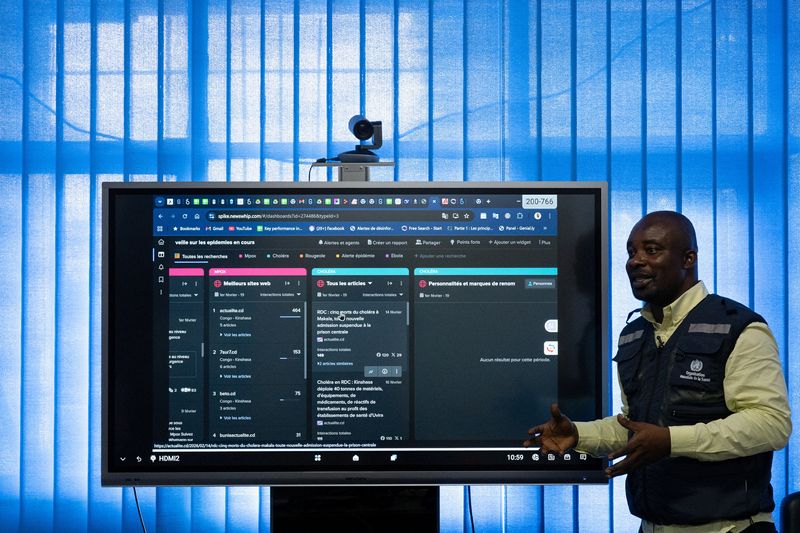
“It really led to death and murder,” explained Elodie Ho, director of the WHO-led Africa Infodemic Response Alliance (AIRA), which monitors health misinformation. “It started in communities. It spread into social media and local media. It was amplified by those actors.”
Reuters’ investigation of over a dozen video testimonials—some viewed hundreds of thousands of times—revealed that local churches played a significant role in spreading the rumors. In two verified videos, pastors and congregants at churches in Kisangani, the provincial capital, claimed prayer had cured supposed victims.
One particularly influential video showed a taxi driver at a Christian gathering describing how Jules Mulindwa, pastor of the Pentecostal Church Light of the World, had “cured” him through prayer. Posted on TikTok by a church worker, the video garnered hundreds of thousands of views after being shared by Boyoma Revolution, an online news site with an address in Marseille, France.
Mulindwa, who has over 400,000 TikTok subscribers, previously made false claims about curing coronavirus, according to fact-checkers. He received a 12-month prison term for defamation last year that he has not served, according to a lawyer for the prosecution.
Another video showed pastor Christophore Kabamba at the Assemblée Chretienne de Kisangani claiming to have a “miracle cure” for the non-existent condition.
Tshopo’s government spokesman told Reuters that officials investigated claims by five alleged victims and found no evidence the illness was real. Authorities have since arrested about a dozen people and sentenced one man to 12 months in prison for accusing another of spreading the disease.
Health misinformation in Africa is fueled by historical mistrust of established medicine, partly rooted in colonial-era abuses and controversial Western clinical trials. This distrust has been amplified by widespread social media use, artificial intelligence, uneven healthcare access, and weak rule of law.
“When populations do not trust vaccines, health workers, or government policies, it means they don’t access services that can help them survive,” said Dr. Jean Kaseya, Director General of the African Union’s Africa Centres for Disease Control and Prevention.
The violence in Tshopo erupted on October 6 when health workers arrived in villages to conduct vaccination surveys. In Ilambi village, young men accused the workers of secretly spreading the fake disease when they saw outsiders wearing high-visibility vests and carrying tablet computers.
Two team members—medical doctors Placide Mbungi and John Tangakeya—tried to explain their vaccine research but were killed on the spot.
“They burned him alive, without even leaving me a trace of him,” Tangakeya’s widow told Reuters.
In nearby Yafira village, colleagues Mathieu Mosisi and Kevin Ilunga sought help from a policeman but were killed by an angry mob, according to Tshopo health official Marie Jeanne Lebe.
Despite efforts to combat the misinformation—including radio broadcasts in local languages and community outreach—the rumors continue to resurface. In March, a woman in Congo’s Lualaba province was reportedly lynched after being accused of spreading the disease.
Efforts to tackle health misinformation face significant challenges. AIRA has seen its funding reduced amid foreign aid cuts, leaving the organization with personnel in just three countries, down from five. An AI platform built to track online misinformation is currently non-operational due to lack of funds.
The WHO regional office has indicated that discussions are underway to secure funding to sustain and expand AIRA’s critical work as the battle against deadly misinformation continues in the region.
Fact Checker
Verify the accuracy of this article using The Disinformation Commission analysis and real-time sources.

14 Comments
This is a concerning situation. Misinformation can have devastating consequences, especially when it spreads through trusted community sources like churches. Effective public health education and communication are critical to counter these types of rumors.
You’re right, this is extremely troubling. Health authorities need to work closely with local leaders to rapidly dispel these kinds of dangerous falsehoods before they turn violent.
This is a tragic story. Health misinformation can have severe real-world consequences, especially when it targets people’s deeply-held beliefs and fears. Robust public health outreach and media literacy education will be crucial to address the root causes.
This is a heartbreaking situation. Unfounded health claims can rapidly metastasize into deadly violence, as we’ve seen here. Proactive, collaborative efforts between public health authorities, media, and local leaders are clearly needed to combat this threat.
The role of local churches in amplifying these harmful rumors is quite concerning. Trusted community institutions need to be partners in promoting accurate, evidence-based health information to prevent further violence.
Absolutely. Religious leaders have an important responsibility to their congregations to ensure they are not spreading dangerous misinformation, even unintentionally.
This story illustrates the urgent need for comprehensive public health education and communication strategies in regions prone to the spread of misinformation. Trusted local voices and channels must be leveraged to ensure accurate, culturally-relevant information reaches all communities.
The role of local churches in amplifying these rumors is deeply concerning. Religious institutions must recognize their responsibility to provide accurate, evidence-based health information to their congregations, not spread potentially deadly misinformation.
It’s alarming to see how quickly unsubstantiated health claims can spiral out of control in vulnerable communities. Building trust and delivering accurate, culturally-appropriate information seems key to preventing such tragedies.
I agree. This highlights the urgent need for better digital literacy and fact-checking capabilities within these affected regions to limit the spread of misinformation.
The role of social media in amplifying these rumors is deeply concerning. Tech platforms must do more to quickly identify and limit the spread of potentially harmful misinformation, especially in vulnerable regions.
I agree. Social media companies have a responsibility to work closely with local authorities to develop effective content moderation strategies tailored to the unique challenges in places like the DRC.
It’s tragic to see how health misinformation can incite such deadly violence. Robust, multi-stakeholder efforts to counter the spread of these types of false claims are clearly crucial to prevent further tragedies.
Agreed. This underscores the complex challenges in combating misinformation, especially when it intersects with deeply-rooted social and cultural dynamics. A nuanced, context-specific approach will be essential.