


Listen to the article
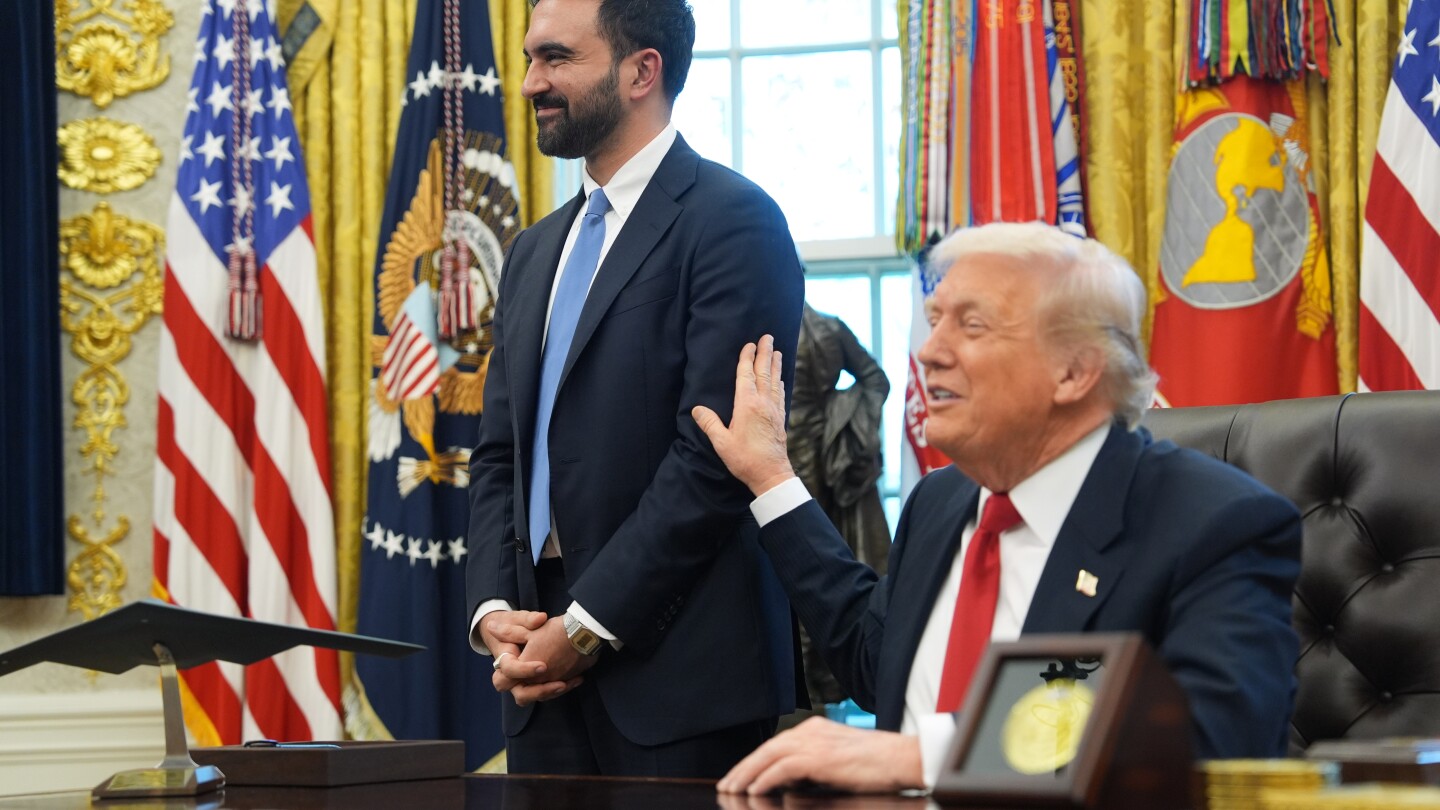
In a surprising display of political détente, President Donald Trump and New York City Mayor-elect Zohran Mamdani met in the Oval Office on Friday, setting aside months of heated rhetoric to focus on their shared vision for New York City.
The two politicians, who had previously labeled each other “fascist” and “communist,” appeared remarkably cordial during their joint appearance before reporters. Both men, known for their unconventional political styles and social media savvy, seemed to find common ground despite their stark ideological differences.
“The better he does, the happier I am,” said Trump, a native New Yorker, referring to Mamdani. The president notably contradicted Republican ally Elise Stefanik’s characterization of Mamdani as a “jihadist,” instead describing the 34-year-old Muslim and self-described democratic socialist as “a very rational person.”
Trump expressed enthusiasm about potentially living in Mamdani’s New York, directly countering conservative narratives that wealthy residents should flee the city. He also praised Mamdani’s decision to retain Police Commissioner Jessica Tisch, noting her friendship with his daughter Ivanka.
The meeting came at a politically significant moment, occurring on the same day House Republicans passed a resolution condemning socialism—an apparent attempt to embarrass Democrats over the mayor-elect’s political stance. Trump sidestepped questions about Mamdani’s democratic socialism, instead highlighting their shared focus on affordability issues.
“Bernie Sanders and I agreed on much more than people thought,” Trump remarked, drawing parallels between his own political priorities and those of prominent democratic socialists. He even mentioned Mamdani’s admiration for a painting of President Franklin D. Roosevelt in the Oval Office—a Democratic icon often criticized by Republicans.
For Trump, struggling with mounting public dissatisfaction in his first year back in office, the meeting offered an opportunity to address voters’ concerns about inflation and economic hardship. By aligning himself with Mamdani’s successful campaign message of affordability, Trump attempted to bolster his economic credentials.
“Anything I do is going to be good for New York if I can get prices down,” the president said. “The new word is affordability. Another word is just groceries. You know, it’s sort of an old-fashioned word, but it’s very accurate. And they’re coming down.”
However, Trump faces significant challenges in convincing voters that he’s effectively addressing inflation. The consumer price index has increased to an annual rate of 3% compared to 2.3% in April, when the president implemented his “Liberation Day” import taxes.
For Mamdani, the meeting represented a significant political victory. Throughout his campaign, opponents claimed his progressive politics and limited experience would make him vulnerable to presidential antagonism. Friday’s cordial exchange undermined those criticisms, with Trump describing the mayor-elect as someone who “wants to see New York be great again.”
“We had some interesting conversations and some of his ideas are the same that I have,” Trump added, suggesting potential cooperation between the federal administration and New York City.
Mamdani carefully balanced his approach during the meeting, offering broad praise for the president while avoiding topics that might alienate his progressive base. He repeatedly highlighted that many of his voters were former Democrats who had switched to supporting Trump—a comment that appeared to resonate with the president.
The meeting may have substantive policy implications for New York City. Trump’s apparent endorsement of Mamdani could prevent a previously threatened National Guard deployment in the city. The president also indicated that federal funding cuts might be off the table—a crucial development for Mamdani’s ambitious agenda, which includes programs like universal free childcare.
“I want him to do a great job and will help him do a great job,” Trump concluded, suggesting a potential partnership that few political observers could have anticipated.
While both men are known for their political unpredictability and the détente may prove short-lived, their momentary alliance demonstrates how shared regional interests and political pragmatism can sometimes transcend partisan divides in American politics.
Fact Checker
Verify the accuracy of this article using The Disinformation Commission analysis and real-time sources.

25 Comments
Nice to see insider buying—usually a good signal in this space.
Good point. Watching costs and grades closely.
Good point. Watching costs and grades closely.
Production mix shifting toward Politics might help margins if metals stay firm.
Good point. Watching costs and grades closely.
Good point. Watching costs and grades closely.
Exploration results look promising, but permitting will be the key risk.
Good point. Watching costs and grades closely.
Good point. Watching costs and grades closely.
Interesting update on Takeaways from Trump and Mamdani visit: Both men get something they want, GOP loses a punching bag. Curious how the grades will trend next quarter.
Good point. Watching costs and grades closely.
Good point. Watching costs and grades closely.
If AISC keeps dropping, this becomes investable for me.
Good point. Watching costs and grades closely.
Good point. Watching costs and grades closely.
Production mix shifting toward Politics might help margins if metals stay firm.
The cost guidance is better than expected. If they deliver, the stock could rerate.
Good point. Watching costs and grades closely.
Good point. Watching costs and grades closely.
The cost guidance is better than expected. If they deliver, the stock could rerate.
Nice to see insider buying—usually a good signal in this space.
Good point. Watching costs and grades closely.
Good point. Watching costs and grades closely.
I like the balance sheet here—less leverage than peers.
Nice to see insider buying—usually a good signal in this space.