


Listen to the article
Supreme Court to Hear Landmark Birthright Citizenship Case This Week
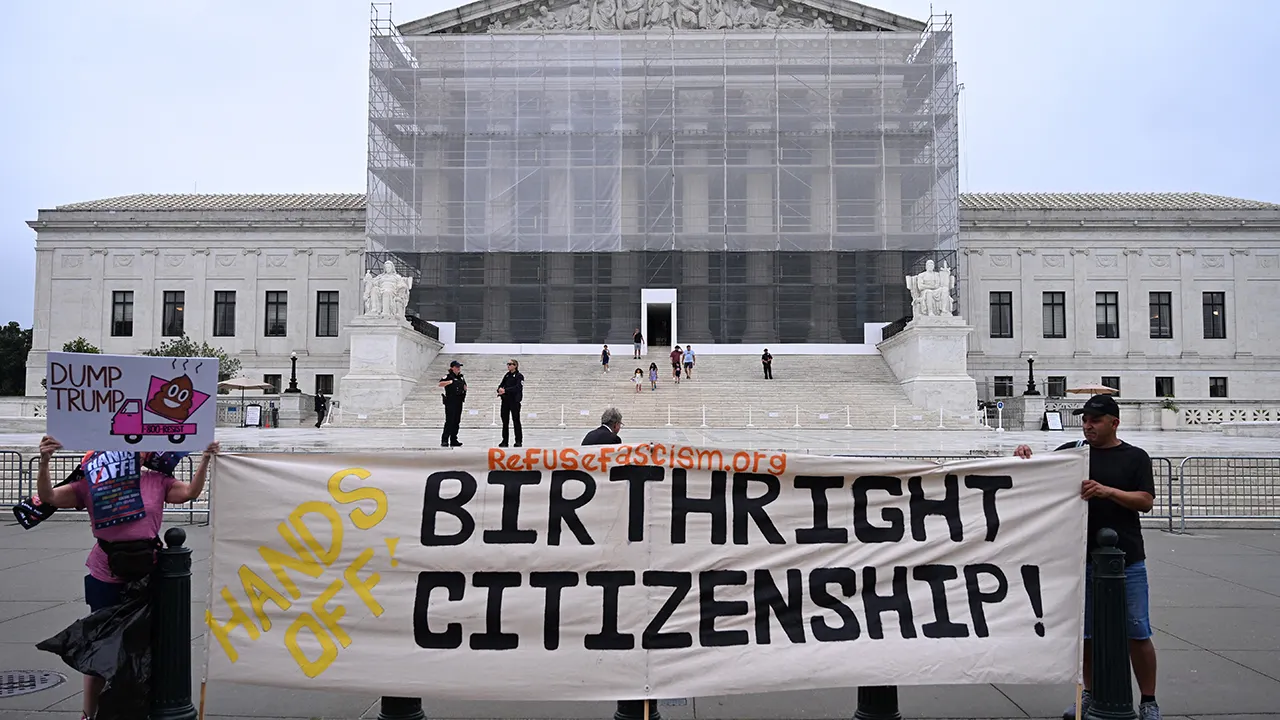
This week, the U.S. Supreme Court will hear arguments in what many legal experts consider one of the most consequential cases of the 21st century: a challenge to the Trump administration’s executive order on birthright citizenship.
At the heart of the case is whether children born on U.S. soil to non-citizen parents—particularly those who entered the country illegally—automatically become American citizens. Multiple lower courts have blocked the executive order from taking effect while the case proceeded through the judicial system.
The case centers on the interpretation of the 14th Amendment’s citizenship clause, which states: “All persons born or naturalized in the United States, and subject to the jurisdiction thereof, are citizens of the United States and of the State wherein they reside.”
Despite a century of legal precedent upholding birthright citizenship, the current Supreme Court’s willingness to take this case has raised eyebrows among constitutional scholars. In recent terms, the Court has not hesitated to overturn long-standing precedents, including Roe v. Wade in the Dobbs decision and the Chevron doctrine in the Loper Bright ruling.
The 14th Amendment was ratified in 1868, following the Civil War and in direct response to the 1857 Dred Scott decision, which had denied citizenship rights to enslaved people and their descendants. This historical context will likely feature prominently in the Court’s deliberations.
A key point of contention in the upcoming arguments will focus on the phrase “subject to the jurisdiction thereof.” Michigan Senator Jacob Howard, who authored this clause, stated at the time that it did not include “persons born in the United States who are foreigners, aliens, who belong to families of ambassadors or foreign ministers.”
The Trump administration’s attorneys will likely highlight Howard’s original intent, arguing that the amendment was never meant to grant citizenship to children of unauthorized immigrants. However, opponents of the executive order will point to the subsequent Immigration and Nationality Act of 1952, which mirrors the 14th Amendment’s language.
Perhaps the most significant precedent in this area is the 1898 Supreme Court decision in United States v. Wong Kim Ark. In that case, the Court ruled that a man born in San Francisco to Chinese parents who were permanent U.S. residents was automatically a citizen, despite laws at the time making it difficult for Chinese nationals to become naturalized citizens.
The Court interpreted “subject to the jurisdiction thereof” to mean subject to U.S. laws—a condition that applies to citizens and non-citizens alike while in American territory. The decision established birthright citizenship as we understand it today, with only narrow exceptions for children of foreign diplomats.
Notably, the Wong Kim Ark decision emphasized that the parents were “permanently domiciled” in the United States. This distinction may provide the current Court with room to craft a narrower ruling that distinguishes between immigrants with different legal statuses.
Immigration advocates warn that eliminating birthright citizenship could create a permanent underclass of stateless individuals in America, while supporters of the executive order argue it would reduce incentives for illegal immigration and address what they call “birth tourism.”
The political implications are significant. According to recent estimates from the Migration Policy Institute, approximately 300,000 children are born annually in the United States to parents who are not legal residents.
A decision is expected by late June, when the Court typically releases opinions in its most consequential cases before the summer recess. Whatever the outcome, the ruling will have profound implications for American immigration policy and constitutional interpretation for generations to come.
Fact Checker
Verify the accuracy of this article using The Disinformation Commission analysis and real-time sources.

14 Comments
This is certainly a complex and divisive issue, with valid arguments on both sides. I hope the Court will strive for an impartial, well-reasoned decision that upholds the Constitution and serves the national interest.
Well said. Maintaining the integrity of the legal system and the rule of law should be paramount, regardless of the specific outcome.
From a legal perspective, I’m curious to see how the Court grapples with the wording and original intent of the 14th Amendment’s citizenship clause. Their interpretation could set an important precedent.
You raise a good point. The Court’s analysis of the 14th Amendment’s text and historical context will be crucial in shaping the outcome and long-term impact of this case.
This is a complex and sensitive issue that touches on fundamental questions of national identity and immigration policy. I hope the Court will carefully weigh the legal and constitutional arguments on both sides.
Absolutely. Given the far-reaching implications, this decision will require the Justices to balance competing principles and interests with great care and nuance.
The potential impact of this case on commodities like gold, silver, and uranium is worth considering. Changes to immigration and citizenship policies could affect labor and workforce dynamics in these industries.
You make a good point. Any shifts in the legal landscape around birthright citizenship could have ripple effects on the mining and natural resources sectors that rely heavily on immigrant labor.
As an investor, I’ll be closely monitoring any market reactions or volatility related to the Court’s forthcoming decision on this landmark birthright citizenship case.
That’s a smart approach. This ruling could trigger significant shifts in policy and regulations that may affect the mining, commodities, and energy sectors in unexpected ways.
As someone invested in mining and energy equities, I’ll be watching this case closely. The Court’s decision could influence the regulatory environment and business climate for companies in those industries.
Agreed. The outcome of this case may create new challenges or opportunities for mining and commodity firms, depending on how the Court rules.
This is an intriguing case that could have far-reaching implications for immigration policy and birthright citizenship. I’m curious to see how the Court interprets the 14th Amendment’s wording and whether they uphold or overturn the existing legal precedent.
The Court’s willingness to take up this case suggests they may be open to a new interpretation of the citizenship clause. It will be important to follow the arguments and reasoning behind their eventual ruling.