


Listen to the article
Democrat-Led States Navigate Complex Energy Transition as Lawsuits Mount Against Fossil Fuel Companies
Several Democratic-led states find themselves caught in a complex balancing act as they pursue ambitious green energy goals while simultaneously grappling with the practical realities of maintaining reliable power grids.
This tension is playing out dramatically in states like Colorado and California, where officials are simultaneously pursuing legal action against fossil fuel companies while working to ensure energy stability during the transition period.
In Colorado, Boulder City, Boulder County, and San Miguel County recently received approval from the state Supreme Court to proceed with a lawsuit against ExxonMobil and Suncor. The lawsuit draws parallels to the landmark tobacco litigation of the 1990s, when dozens of states sued major tobacco companies for knowingly endangering public health and misleading consumers about nicotine’s addictiveness—cases that ultimately resulted in a $200 billion master settlement in 1998.
The Colorado plaintiffs claim these energy companies “greatly contributed to an altered climate” while concealing the environmental dangers of their products. Boulder city officials stated the case “seeks to hold these companies responsible for knowingly contributing to climate change while concealing the dangers of their products.” Local authorities warn that Coloradans could face hundreds of millions in additional costs needed to adapt to climate change impacts.
ExxonMobil has pushed back strongly, maintaining that the case is “meritless” and arguing that federal law preempts Colorado’s authority to apply state law to the alleged injuries.
Meanwhile, Colorado Governor Jared Polis faces criticism for seemingly contradictory positions. While Polis has set a 2040 goal for transitioning the state away from fossil fuels, his administration recently joined with Xcel Energy to petition state regulators to keep the Comanche Unit 2 coal plant operational for at least another year beyond its scheduled December 31 closure date.
When asked about this apparent contradiction, Polis spokesperson Eric Maruyama told Fox News Digital that a separate Comanche coal-fired unit is currently non-operational and keeping Unit 2 running would benefit the state. “Colorado is well on its way to achieving 100% clean energy and reducing emissions while saving people money and ensuring energy reliability,” Maruyama said, noting that 43% of Colorado’s electricity already comes from renewable sources.
Similar dynamics are playing out in Hawaii, which also sued oil companies in 2024, alleging violations of the state constitution’s “public trust doctrine” by deceiving the public about fossil fuels’ harm to state resources.
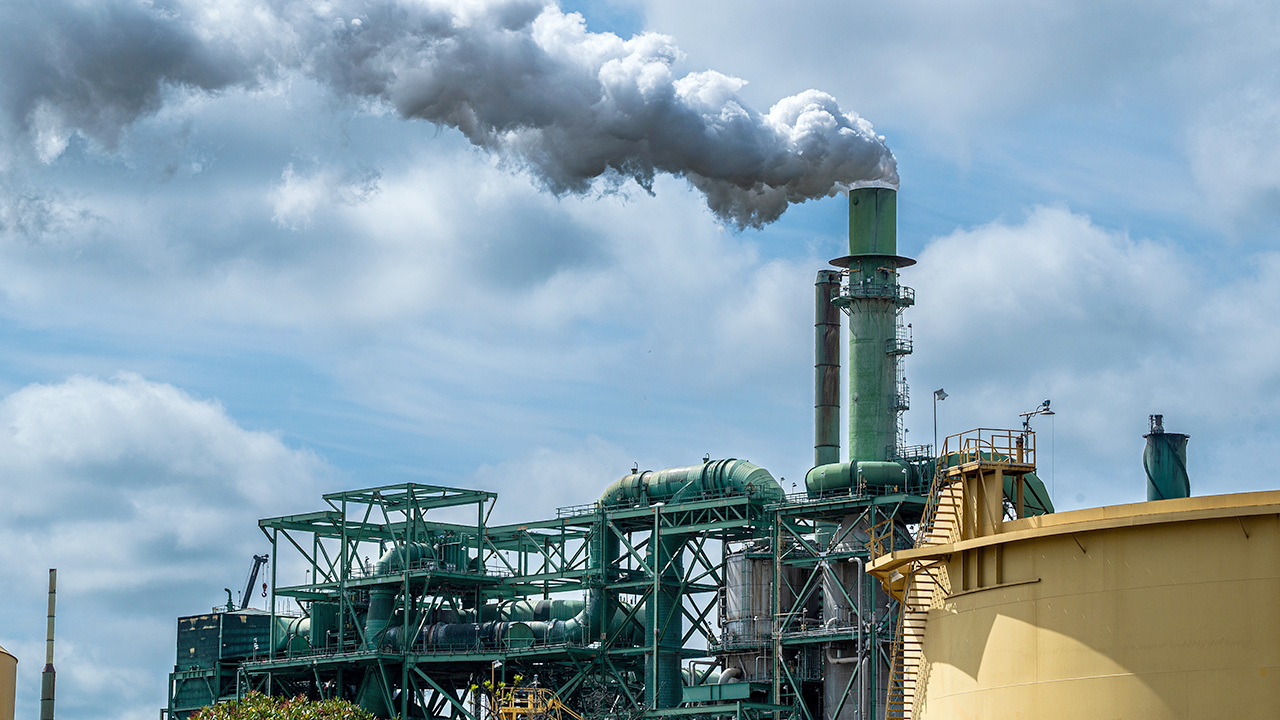
California presents perhaps the most dramatic case study in these competing priorities. Under former Governor Jerry Brown and current Governor Gavin Newsom, the state established a 2045 deadline for achieving carbon-free energy through SB-100. However, this aggressive timeline has created market uncertainty that appears to be accelerating the departure of major oil refineries.
Phillips 66 and Valero are both considering or have already begun the process of shutting down their California operations by 2026. Energy industry sources familiar with the situation note that oil companies must regularly analyze whether costly maintenance cycles occurring approximately every five years are worth funding. With California’s clear policy direction away from fossil fuels, many companies are reconsidering these investments.
Valero informed California officials earlier this year that it plans to seriously consider idling or ending production at its Benicia facility by April, while Chevron has already relocated its headquarters from Contra Costa County to Houston, Texas.
The Newsom administration, recognizing potential supply disruptions, has recently engaged in what Politico described as an “about-face,” holding talks with “market players” to discuss the impacts of refinery closures and even proposing to loosen permitting requirements for new oil wells in the Bakersfield area.
California Senate Minority Leader Brian Jones, R-San Diego, criticized Newsom’s approach, stating, “Social engineering and market manipulation on the part of government never end well. We’re seeing that now in California and everyday citizens are the ones paying the price for Gavin Newsom’s political experiments.”
The affordability crisis in California is “only exacerbated by recent and looming refinery closures,” Jones added. “We need a major course correction that puts working families over ideology. Absent that, I’m not sure this ends well.”
These states’ experiences highlight the complex challenges facing policymakers attempting to balance ambitious climate goals with the practical realities of maintaining energy security and affordability during a transition period that may last decades.
Fact Checker
Verify the accuracy of this article using The Disinformation Commission analysis and real-time sources.

29 Comments
The cost guidance is better than expected. If they deliver, the stock could rerate.
Good point. Watching costs and grades closely.
Good point. Watching costs and grades closely.
Exploration results look promising, but permitting will be the key risk.
Exploration results look promising, but permitting will be the key risk.
Good point. Watching costs and grades closely.
Good point. Watching costs and grades closely.
If AISC keeps dropping, this becomes investable for me.
Good point. Watching costs and grades closely.
Interesting update on States Sue Big Oil Over Climate Change, But Local Refineries Remain Untouched. Curious how the grades will trend next quarter.
Good point. Watching costs and grades closely.
Good point. Watching costs and grades closely.
The cost guidance is better than expected. If they deliver, the stock could rerate.
I like the balance sheet here—less leverage than peers.
Good point. Watching costs and grades closely.
Good point. Watching costs and grades closely.
Interesting update on States Sue Big Oil Over Climate Change, But Local Refineries Remain Untouched. Curious how the grades will trend next quarter.
Exploration results look promising, but permitting will be the key risk.
Good point. Watching costs and grades closely.
Good point. Watching costs and grades closely.
Silver leverage is strong here; beta cuts both ways though.
Good point. Watching costs and grades closely.
Nice to see insider buying—usually a good signal in this space.
Good point. Watching costs and grades closely.
Good point. Watching costs and grades closely.
Nice to see insider buying—usually a good signal in this space.
I like the balance sheet here—less leverage than peers.
Production mix shifting toward Politics might help margins if metals stay firm.
Good point. Watching costs and grades closely.