


Listen to the article
Senate Prevails in Battle Over State-Level AI Regulations
The Senate has effectively blocked attempts to impose a federal moratorium on state-level artificial intelligence regulations, though discussions continue about establishing a broader national framework. House Republicans recently considered including such a moratorium in the National Defense Authorization Act but have since withdrawn the proposal.
This marks the second defeat for proponents of federal preemption, following an earlier unsuccessful attempt to include similar provisions in former President Trump’s “One Big, Beautiful Bill” over the summer. That effort was decisively rejected by lawmakers concerned about preserving states’ regulatory autonomy.
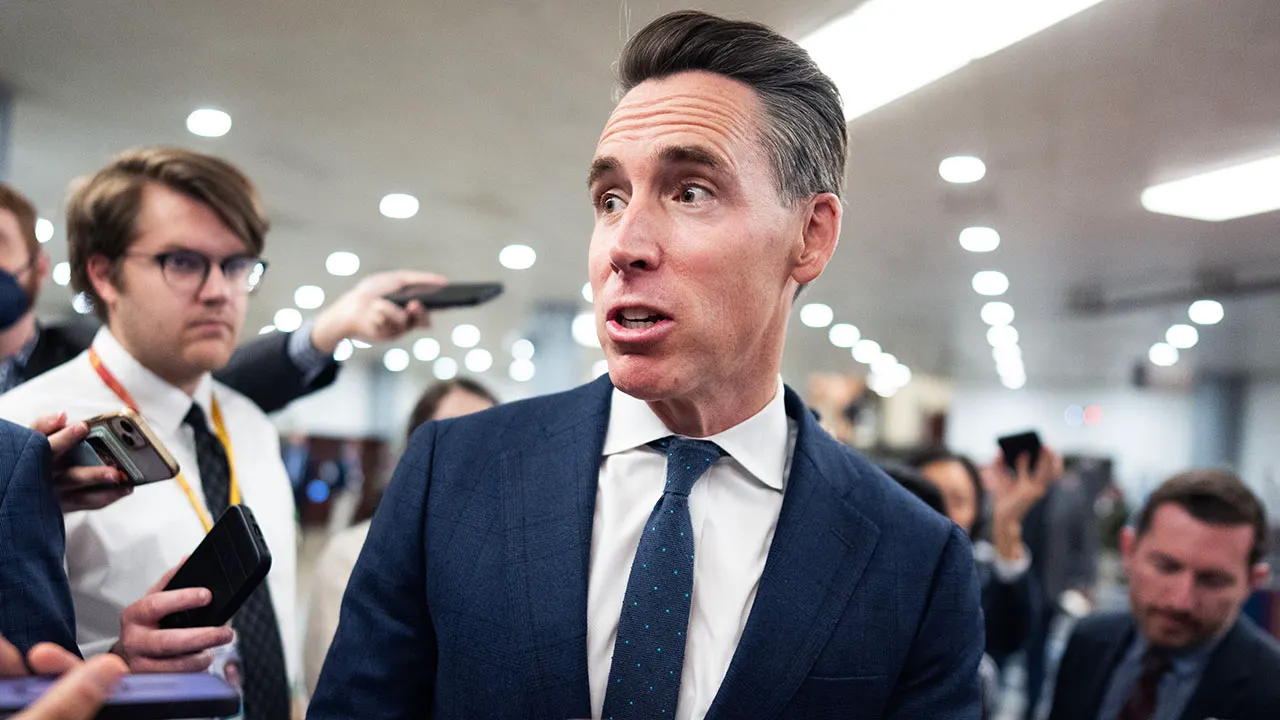
A trio of Republican senators—Josh Hawley of Missouri, Marsha Blackburn of Tennessee, and Ron Johnson of Wisconsin—have been instrumental in blocking these preemption efforts. Senator Hawley told Fox News Digital that while the provision’s exclusion from the defense bill was positive, “vigilance is needed, and Congress needs to act.”
“For everybody out there saying, ‘Well, Congress needs to act and create one standard,’ I agree with that,” Hawley stated. “And we can start by banning chat bots for minors.”
Senator Ted Cruz of Texas, who chairs the Senate Commerce, Science and Transportation Committee, has been a leading advocate for the moratorium. Cruz has framed his position as necessary to give the United States a competitive advantage against foreign rivals like China by removing regulatory barriers to AI development. Despite facing setbacks, Cruz indicated discussions are ongoing, noting that “it is the White House that is driving” these efforts.
Senate Majority Leader John Thune acknowledged the controversial nature of the proposal earlier this week. “The White House is working with senators and House members to try and come up with something that works but preserves states’ rights,” Thune said.
The White House’s interest in federal AI regulation aligns with former President Trump’s position. Trump declared last month that the U.S. “MUST have one Federal Standard instead of a patchwork of 50 State Regulatory Regimes,” arguing that state-level regulation threatens investment and expected growth in the AI sector.
Reports indicate the White House drafted an executive order that would have blocked states from regulating AI by withholding certain federal funding from non-compliant states and authorizing the Department of Justice to sue states that created their own regulatory frameworks. However, Trump has not yet acted on this order.
Despite opposing a blanket moratorium, Senator Blackburn supports creating some federal framework, but one specifically designed to “protect children, consumers, creators, and conservatives,” according to a spokesperson. “Senator Blackburn will continue her decade-long effort to work with her colleagues in both the House and Senate to pass federal standards to govern the virtual space and rein in Big Tech companies who are preying on children to turn a profit,” the spokesperson added.
Senator Johnson, while acknowledging AI presents an “enormously complex problem,” expressed skepticism about Congress’s ability to produce effective legislation. “I’m not a real fan of this place,” Johnson said. “And I think we’d be far better off if we passed a lot fewer laws. I’m not sure how often we get it right.”
The ongoing debate reflects the challenging balance between encouraging AI innovation and addressing potential harms through regulation. As states continue developing their own approaches to AI governance, pressure remains on federal lawmakers to establish at least basic guidelines that could provide consistency without completely overriding state authority.
Fact Checker
Verify the accuracy of this article using The Disinformation Commission analysis and real-time sources.

10 Comments
This seems like a complex issue with valid arguments on both sides. I’m glad to see lawmakers taking a measured approach rather than rushing to impose a federal moratorium.
Preserving state-level regulatory authority on AI is an important consideration. It will be interesting to see if Congress can find a balanced national framework that satisfies all stakeholders.
Interesting development on the AI regulation front. States seem determined to maintain their regulatory autonomy, despite federal pressure. Curious to see how this plays out long-term.
I appreciate the nuance in this debate. Striking the right balance between federal and state oversight of AI will be critical as the technology continues to evolve.
Interesting that the Senate has effectively blocked a federal moratorium on state-level AI regulations. This highlights the complexities involved in governing emerging technologies.
The battle over AI regulation continues, with states asserting their right to set their own rules. This is a complex issue that deserves careful deliberation by policymakers.
The Senate’s rejection of a federal moratorium on state AI regulations is an interesting development. It highlights the complexities involved in governing emerging technologies like AI.
This is a significant development in the ongoing debate over AI regulation. I’m glad to see lawmakers taking a thoughtful approach rather than rushing to impose a federal solution.
The Senate’s rejection of a federal moratorium on state AI regulations is a significant move. I wonder how this will impact the wider AI policy landscape in the US.
The tension between federal and state control over AI regulation is an intriguing issue. Glad to see lawmakers are taking the time to consider the various perspectives.