


Listen to the article
Civil Rights Groups Sue Florida Over New Congressional Map, Alleging Partisan Gerrymandering
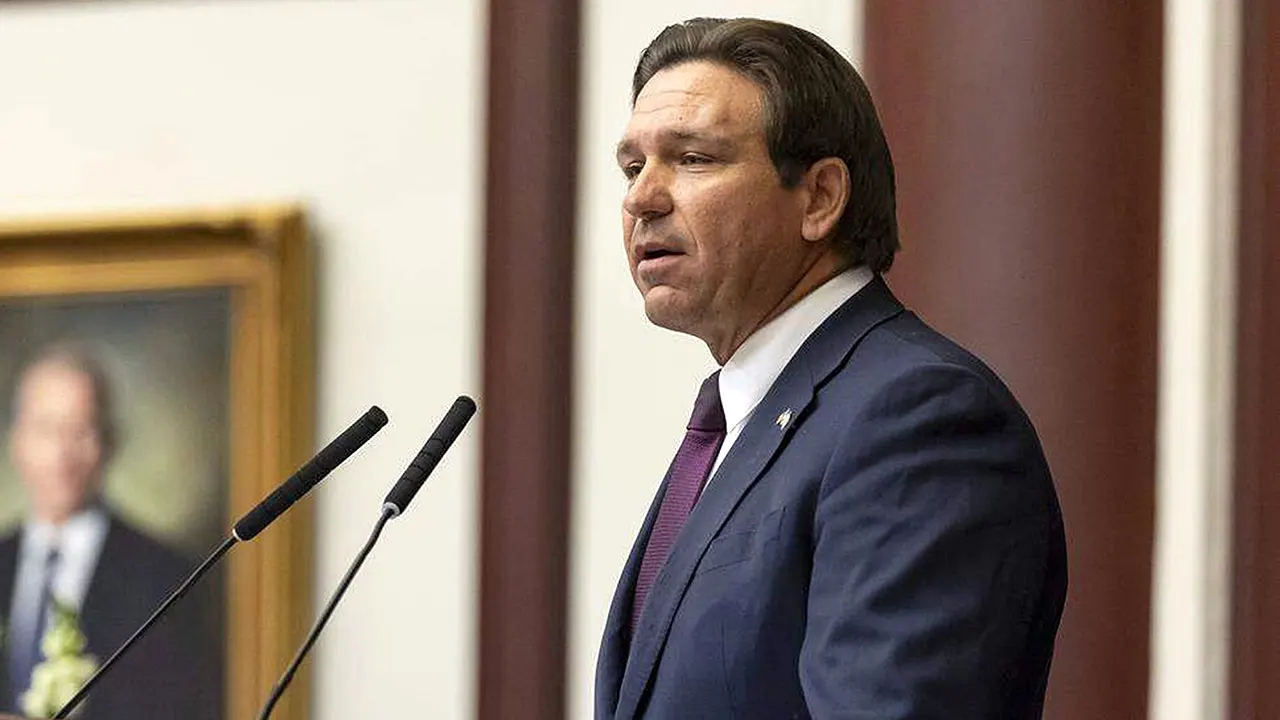
A coalition of civil rights and voter advocacy organizations has filed a lawsuit challenging Florida’s newly approved congressional map, claiming it violates state constitutional provisions against partisan gerrymandering. The legal action represents the second challenge in as many days to the controversial redistricting plan signed into law by Governor Ron DeSantis.
The 41-page lawsuit was filed by Common Cause, the League of Women Voters of Florida, and the League of United Latin American Citizens (LULAC), with legal representation from the Southern Poverty Law Center (SPLC). The plaintiffs argue that the map explicitly violates Florida’s Fair Districts Amendment, which prohibits the state legislature from drawing electoral boundaries that favor one political party.
“The fact that this is a partisan gerrymander is as obvious as it is unconstitutional,” said Bradley Heard, deputy legal director for the SPLC. “And while this unnecessary map is egregious in how it advantages Republicans and disadvantages Democrats, the people who will suffer the most if it is allowed to stand are once again Black and Brown communities, whose voices are consistently silenced in these redistricting battles.”
This legal challenge follows closely on the heels of another lawsuit filed by the Equal Ground Education Fund and 18 Florida voters just hours after DeSantis signed the map into law. Both lawsuits seek to block implementation of the new districts before they can take effect.
Florida’s Fair Districts Amendment, approved by voters in 2010, established strict standards for redistricting that prohibit favoring political parties or diminishing minority voting power. The amendment was specifically designed to prevent the type of gerrymandering the plaintiffs allege is present in the new map.
“The governor’s ploy to impose maps for an unfair partisan advantage is exactly why voters made it illegal in 2010—and why we’re going to court,” said Amy Keith, executive director for Common Cause Florida. “This governor and Republican lawmakers will stop at nothing to put their finger on the scale because they are afraid of being held accountable by the people.”
The political stakes are significant. Currently, Florida Republicans hold a 20-8 majority in the state’s congressional delegation. Analysis suggests the new map could expand the GOP advantage to 24-4, potentially unseating several Democratic incumbents, including Representatives Darren Soto, Kathy Castor, Debbie Wasserman Schultz, and Jared Moskowitz.
The plaintiffs are asking a judge to declare the map unconstitutional and issue an injunction preventing its implementation. They also seek to reinstate the previous 2022 congressional map or order the creation of an entirely new redistricting plan that complies with the state constitution.
Jessica Lowe-Minor, president of the League of Women Voters of Florida, pointed to suspicious circumstances surrounding the map’s development. “When a map is distributed in a red/blue format to the media before being transmitted to the legislature, and when the governor’s staff openly acknowledges in committee that there is no new Census data being used to justify a new map, Florida voters can’t help but suspect that this is a partisan gerrymander.”
Democratic Party officials have condemned the redistricting effort as voter suppression. Nikki Fried, chairwoman of the Florida Democratic Party, claimed the new map “disenfranchises millions of Black, brown, and Jewish voters in the state.”
“This type of voter suppression is nothing new in Florida—from Jim Crow and the Ocoee massacre to election police and the enactment of the most extreme voter suppression laws in the country since 2021, unfortunately, Florida has always been a testing ground for conservative extremism,” Fried said.
The redistricting battle in Florida is part of a broader national trend of intense partisan fighting over electoral maps. With control of the U.S. House of Representatives potentially hanging in the balance in the upcoming elections, both parties are aggressively pursuing advantageous district boundaries in states across the country.
The lawsuit comes at a challenging time for the SPLC, one of the organizations representing the plaintiffs. The civil rights group currently faces separate federal charges alleging it secretly transferred money to extremist groups it claimed to be monitoring, accusations the organization has disputed.
Fact Checker
Verify the accuracy of this article using The Disinformation Commission analysis and real-time sources.

5 Comments
Lawsuits over redistricting are becoming increasingly common as both parties try to gain partisan advantage. It’s important that the process remains fair and non-partisan, as mandated by Florida’s constitution.
Absolutely, the integrity of the electoral process should be the priority, not partisan gamesmanship.
Interesting to see this legal challenge to Florida’s new congressional map. Gerrymandering is a thorny issue that can undermine fair representation. It’ll be worth following how this case progresses and whether the courts find the map unconstitutional.
The Fair Districts Amendment seems like a reasonable safeguard against partisan gerrymandering. I’m curious to hear the state’s defense of the new map and whether the courts agree that it violates the state constitution.
Agreed, the Amendment’s intent seems clear – it will be telling to see how the courts interpret and apply it in this case.