


Listen to the article
Chicago Alderman Blasts Walgreens for “Corporate Abandonment” as Store Closure Looms
A Chicago alderman has launched a scathing critique of Walgreens, declaring that the pharmacy chain should face charges of “first-degree corporate abandonment” for its decision to close a store in the city’s Chatham neighborhood.
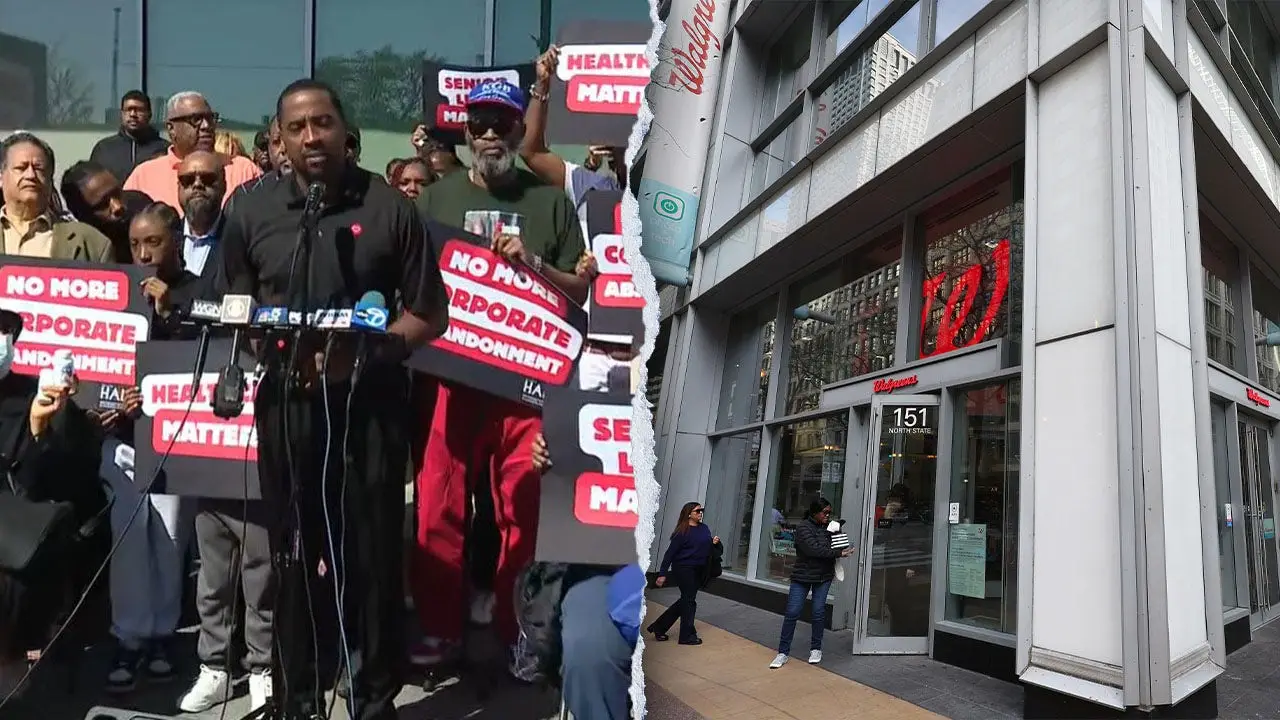
Alderman William Hall, representing Chicago’s 6th Ward, voiced his outrage during a news conference on Monday, where he stood alongside community members to protest the June 4 closure of the Walgreens location on South Cottage Grove Avenue.
“Walgreens should be charged with first-degree corporate abandonment,” Hall told reporters. “It should be a crime, the way they’re treating our elders. It should be a crime, the way they’re treating our families.”
The pharmacy chain cited ongoing safety concerns as the primary reason for the closure. In a statement to the Chicago Sun-Times, Walgreens explained that theft and violent incidents had made it increasingly difficult to maintain operations at the location.
“Despite a range of efforts, including previous operating adjustments, these ongoing safety challenges have made it increasingly difficult to maintain a secure environment for our team members and customers,” the company stated. “While this was not an easy decision, safety must remain our top priority.”
Employees at the closing location will be eligible to transfer to other Walgreens stores, according to the company.
Hall emphasized that the community isn’t “begging” Walgreens to stay but insisted the decision would have severe consequences for local residents, particularly seniors and those managing chronic health conditions who rely on the pharmacy for medications.
“We’re not here to beg Walgreens to stay. We are saying that their decision is the wrong decision,” Hall said. “In my opinion, it should be considered a first-degree corporate crime… the number of elders who will not have access to healthcare is evil.”
The alderman warned that the closure would create a “medicine drought” for vulnerable residents and noted that when Walgreens initially opened the store, it drove out smaller local businesses in the area, making its departure now even more problematic for the community.
The Chatham closure is part of a troubling trend for urban neighborhoods across America. In 2021, Walgreens shuttered several locations in San Francisco, similarly citing organized retail crime as the driving factor. The pattern of pharmacy closures has sparked concerns about creating “pharmacy deserts” in urban areas, where residents must travel significant distances to access prescription medications and healthcare services.
Not all Chicago officials view the situation the same way. Alderman Raymond Lopez, a Democrat, expressed understanding of the community’s frustration but questioned the timing of the outrage.
“Where was that anger when the stores in our communities were under years and years of assault by criminals allowed to shoplift, vandalize, and destroy neighborhood institutions?” Lopez asked in a statement. “Many leaders say it is simply an insurance matter. They are wrong. There are real-world consequences for crime running rampant. This closure is the perfect example of that effect.”
The dispute highlights the complex relationship between retail businesses, public safety, and community needs in urban environments. While retailers cite legitimate concerns about employee and customer safety, community advocates point to the essential services these businesses provide, particularly in neighborhoods with limited options.
For Walgreens, which is headquartered in the Chicago area, the decision to close stores in its home region underscores the severity of the safety concerns the company claims to be facing. However, for residents of affected neighborhoods, the closures represent another blow to communities already struggling with limited access to essential services.
As the June 4 closure date approaches, community members and city officials are left to grapple with the gap this Walgreens location will leave behind and the broader implications for retail presence in urban neighborhoods facing similar challenges.
Fact Checker
Verify the accuracy of this article using The Disinformation Commission analysis and real-time sources.

8 Comments
While I understand the community’s frustration, criminal charges against Walgreens may not be the most constructive approach. This is a complex issue requiring cooperation between businesses, local government, and law enforcement.
Store closures are always disruptive for communities, but it sounds like Walgreens had legitimate safety concerns at this location. I hope the city and company can find a way to keep the pharmacy open or ensure adequate access in the area.
Interesting situation with Walgreens in Chicago. Closing stores due to theft and safety concerns is a complex issue with no easy solutions. Curious to see how the city and community respond to this proposal for criminal charges.
Agreed, it’s a difficult balance between public safety and business needs. Criminal charges may be an aggressive move, but it speaks to the frustration in the community.
This certainly highlights the challenges retailers face with theft and security, especially in urban areas. I’m curious to learn more about the specific safety issues that led to this Walgreens closure.
Theft and violence leading to store closures is a serious problem. I’m curious to learn more about the specific security challenges Walgreens faced and whether there are any potential solutions that could prevent further closures in Chicago.
Pharmacy closures due to theft and safety concerns are an unfortunate trend in some cities. Curious to see if the proposed criminal charges lead to any productive solutions or just escalate the conflict.
Yes, it will be interesting to see the city’s next steps and whether they can work collaboratively with Walgreens to address the root causes of the issues.