


Listen to the article
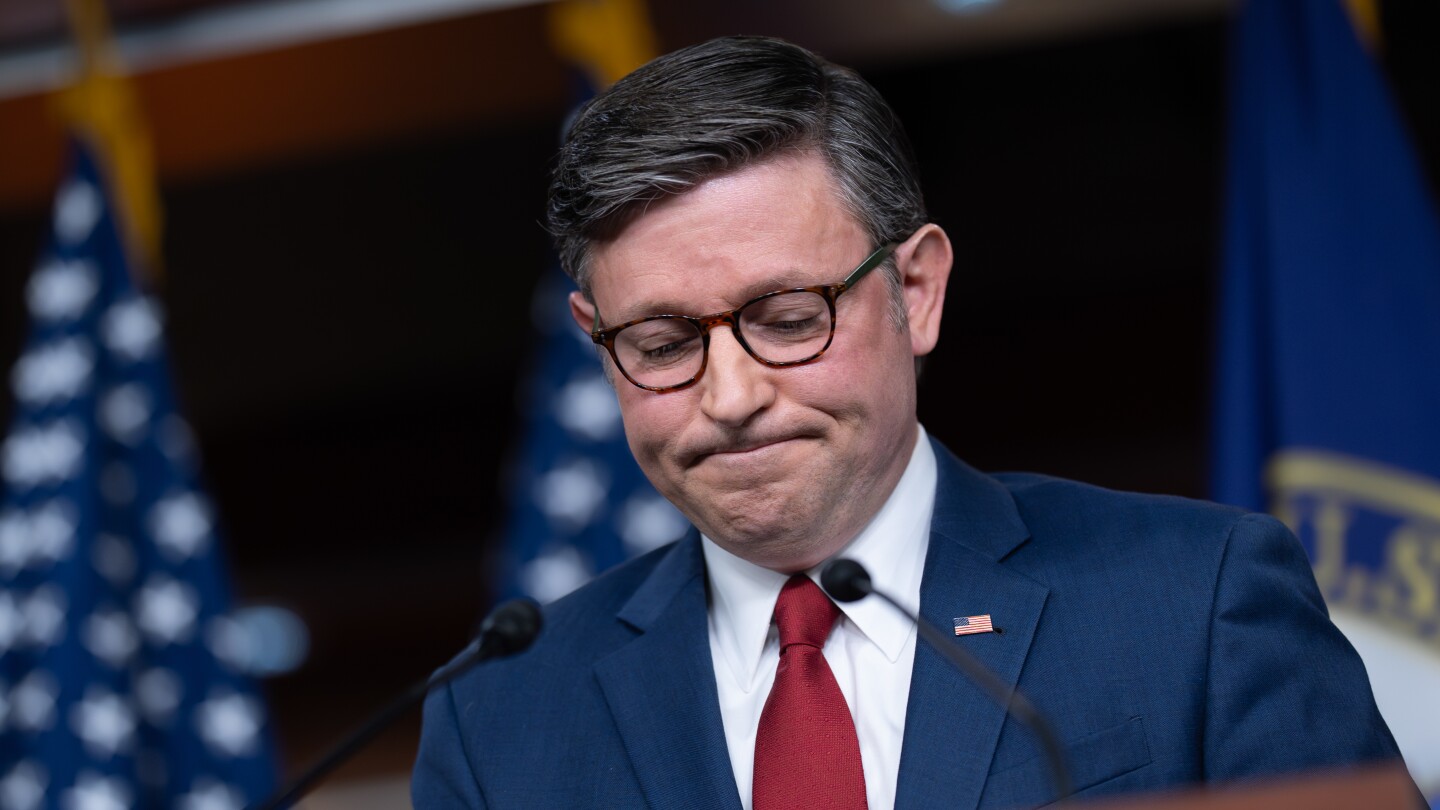
House Speaker Mike Johnson is facing mounting internal rebellion as Republicans increasingly air their grievances publicly despite his pleas for private discussions. The growing fractures were on full display this week when a member of Johnson’s own leadership team openly accused him of lying, while rank-and-file members forced votes through procedural maneuvers typically considered affronts to party leadership.
“They’re going to get upset about things. That’s part of the process,” Johnson told reporters Thursday. “It doesn’t bother me. But when there is a conflict or concern, I always ask all members to come to me, don’t go to social media.”
The discord comes as anxiety grows within the GOP about potentially losing their House majority in 2026. California Representative Kevin Kiley, who has become increasingly critical of Johnson after redistricting efforts backfired in his state, was blunt in his assessment.
“I certainly think that the current leadership and specifically the speaker needs to change the way that he approaches the job,” Kiley said Thursday. He added that since Johnson has criticized rank-and-file Republicans, “he needs to be prepared to accept any criticism that comes with the job.”
For much of early 2025, Johnson managed to hold his slim Republican majority together to pass several of President Donald Trump’s priorities, including a major spending and tax cut plan. However, after keeping members out of session for nearly two months during the government shutdown, lawmakers returned anxious to tackle backlogged priorities—and increasingly aware their majority might be slipping away.
The rising frustration has manifested in a wave of discharge petitions, a rarely used procedural tool that forces floor votes on legislation without leadership approval. A recent petition to release the Jeffrey Epstein files succeeded after reaching the required 218 signatures. Other lawmakers have launched similar efforts, including a successful petition to repeal Trump’s executive order ending collective bargaining with federal labor unions, which garnered support from seven Republicans.
This week, Florida Representative Anna Paulina Luna introduced another discharge petition for legislation barring members of Congress from trading stocks, quickly attracting bipartisan support. Luna expressed her frustration on social media Thursday, writing, “Anxious is what happens when you get nervous. I’m not nervous. I’m pissed,” responding to leadership comments suggesting she was merely anxious.
South Carolina Representative Nancy Mace, who signed both Luna’s petition and the one to release the Epstein files, said she directly communicated her concerns to Johnson. “We have a very slim majority, but I want President Trump’s executive orders codified,” Mace told reporters. “I want to see his agenda implemented. Why do we have to legislate by discharge petitions?”
Perhaps most troubling for Johnson is the open criticism from his own leadership team. New York Representative Elise Stefanik, the House Republican Conference chairwoman, publicly rebuked the Speaker after a provision she championed was excluded from a defense authorization bill. She called Johnson’s claim that he was unaware of the provision “more lies from the Speaker” and told The Wall Street Journal he was a “political novice” who wouldn’t win reelection as Speaker if a vote were held today.
Johnson told reporters he had a “great talk” with Stefanik. “I called her and I said, ‘Why wouldn’t you just come to me, you know?'” he recounted. “So we had some intense fellowship about that.” When asked if she had apologized for calling him a liar, Johnson replied, “Um, you ask Elise about that.”
The GOP’s internal strife extends to legislative efforts as well. Recently, House Republican leaders attempted to push through an NCAA-backed bill regulating college sports after White House endorsement, only to see support among their own ranks crumble. Some Republican lawmakers pointedly stated they had more pressing priorities before year’s end.
House Democratic Leader Hakeem Jeffries has seized on the dysfunction: “It’s not that Congress can’t legislate, it’s House Republicans that can’t legislate. It’s the gang that can’t legislate straight. They continue to take the ‘my way or the highway’ approach.”
Underlying all this tension is Republicans’ growing concern about their electoral prospects. A recent special election in a heavily Republican Tennessee district saw their candidate win by only 9 percentage points—a significant drop from the nearly 21-point margin in 2024.
“I do think to have that district that went by over 20 points a year ago be down to nine, it should be a wakeup call,” said Nebraska Representative Don Bacon, who emphasized Republicans need “to get some economic progress, like immediately.”
Adding to their challenges, several House Republicans have announced retirements, including the abrupt declaration by Georgia Representative Marjorie Taylor Greene that she would resign in January, partly because “the legislature has been mostly sidelined” this year.
These retirements compound the GOP’s struggle to maintain control of the House, as the party must now defend more open seats. Their redistricting efforts, initially spurred by Trump’s pressure on Texas Republicans, have partially backfired, with California voters approving a new congressional map that favors Democrats.
Kiley, whose own seat is now at risk following California’s redistricting, dismissed the redistricting strategy as ineffective. “That’s living in a fantasy world if you think that this redistricting war is what’s going to save the majority,” he said. “I think what would make a lot bigger impact is if the House played a proactive role in actually putting forward legislation that matters.”
Fact Checker
Verify the accuracy of this article using The Disinformation Commission analysis and real-time sources.

14 Comments
The internal turmoil within the Republican party is certainly concerning. Hopefully, Speaker Johnson and the leadership can find a way to address the grievances privately and move forward in a more unified manner.
Maintaining party unity is crucial, especially with the 2026 elections looming. Johnson needs to strike a delicate balance between listening to concerns and upholding discipline.
The internal turmoil within the Republican party is concerning, but Speaker Johnson’s request for private discussions is a reasonable approach. Public airing of grievances is unlikely to be productive.
Criticism of the speaker’s leadership style is understandable, but it needs to be handled constructively and privately. Publicly undermining the party leadership is counterproductive.
It’s understandable that tensions are running high, but airing grievances publicly is rarely productive. Speaker Johnson is right to urge his colleagues to discuss issues privately and constructively.
Procedural maneuvers that undermine party leadership are counterproductive. Republicans need to present a united front if they want to maintain their House majority.
While it’s healthy for members to voice their concerns, doing so through social media is not the way to go. Speaker Johnson’s request for private discussions is a reasonable approach to address the growing fractures.
The discord within the GOP is concerning, but they should focus on addressing the issues at hand rather than engaging in public criticism of the party leadership.
Criticism of the speaker’s leadership style is understandable, but it needs to be handled constructively and privately. Airing grievances publicly is unlikely to resolve the underlying issues.
Maintaining party unity is crucial, especially with the 2026 elections approaching. Speaker Johnson should strive to find a way to address the concerns of his colleagues while upholding discipline.
The growing fractures within the Republican party are concerning, but Speaker Johnson’s request for private discussions is a sensible approach. Public airing of grievances is unlikely to be productive.
Procedural maneuvers that undermine party leadership are counterproductive. Republicans need to present a united front if they want to maintain their House majority in 2026.
While it’s natural for members to have differing opinions, Speaker Johnson is right to ask them to address concerns privately. Publicly criticizing the party leadership is unlikely to resolve the underlying issues.
Maintaining party unity is crucial, especially with the 2026 elections on the horizon. Johnson needs to strike a balance between listening to concerns and upholding discipline.