


Listen to the article
In an unprecedented move, more than 50 U.S. House members have directly challenged South Korean leadership over what they describe as discriminatory practices against American companies operating in the country. The bipartisan group, led by Republican Representative Darrell Issa of California, sent a strongly worded letter to South Korea’s Ambassador to the United States, Kyung-wha Kang, expressing serious concerns about regulatory actions that appear to favor Chinese businesses while targeting U.S. firms.
“Many American tech companies have faced a range of regulatory actions that seek to punish them while shielding Korean domestic competition,” states the congressional letter obtained exclusively by Fox News. The lawmakers warned that these practices could have severe economic consequences, citing research from think tank Competere that projects “$1 trillion in combined economic damage to the U.S. and Korean economies over the next 10 years,” with American households potentially losing nearly $4,000 each.
The letter specifically highlights the case of Coupang, an e-commerce company founded by a Korean-American entrepreneur that has been described as “the Amazon of South Korea.” According to Rep. Issa, Coupang has been “systematically attacked” by South Korean authorities.
“We are committed to ensuring that your government ceases its persecution of Coupang and other American companies operating in South Korea,” the lawmakers wrote, emphasizing that “the stakes for American economic and security interests are enormous.”
In an interview discussing the letter, Rep. Issa linked these developments to South Korea’s recent political shift. “South Korea is still an important strategic partner, but their last election led to a left-wing government closely aligned with China that, among other things, has begun attacking American companies,” Issa said.
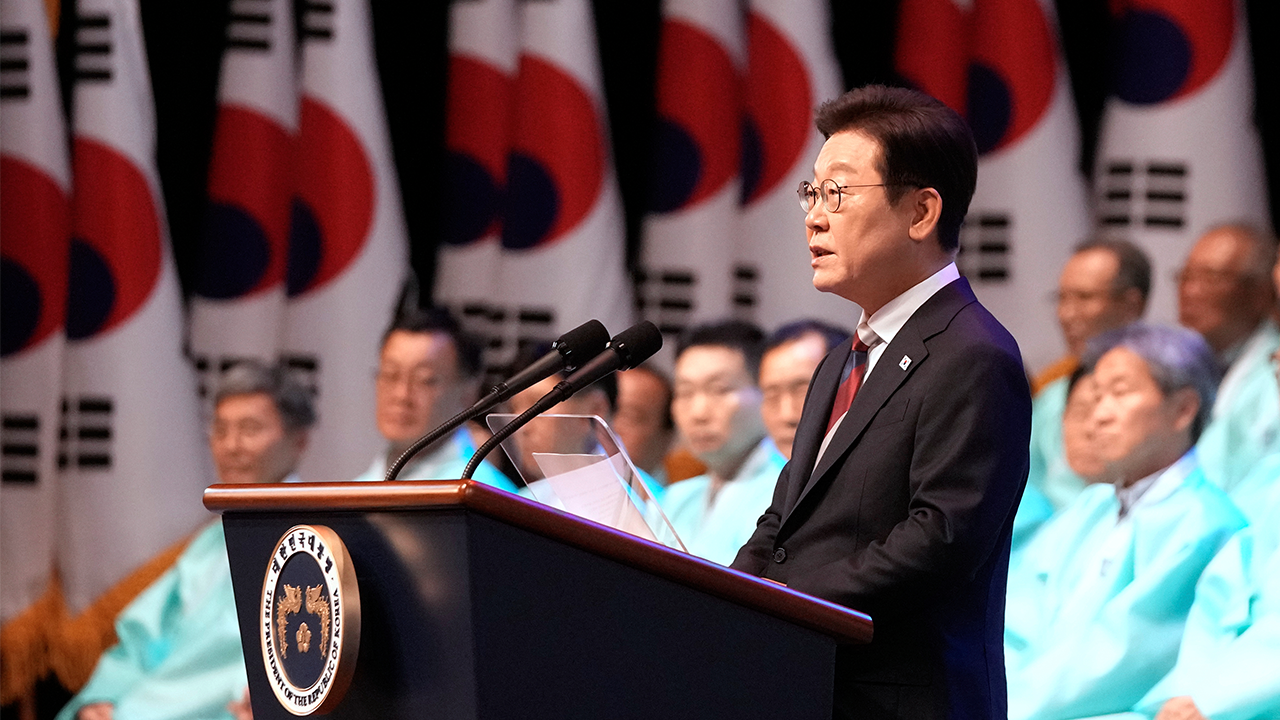
The political landscape in South Korea has indeed undergone significant changes. In 2025, Lee Jae-myung of the Democratic Party was elected president, creating the first full Democratic majority government in four years. The Democratic Party, which holds liberal views, has historically favored different approaches to relations with North Korea and China compared to its conservative counterparts.
This shift follows the controversial impeachment of former President Yoon Suk-yeol of the People Power Party in December 2024, largely due to his attempt to declare martial law. Lee, who had previously lost to Yoon in 2022, succeeded in winning the presidency in 2025.
Issa and his colleagues are particularly concerned that South Korea has adopted European-style digital regulations, which they view as designed to favor local companies over international ones. Meta, the parent company of Facebook and Instagram, was also mentioned as a target of these regulatory actions.
The situation holds significant implications for U.S.-South Korea relations, which have been formalized through the KORUS FTA (U.S.-South Korea Free Trade Agreement) established in 2018. This agreement was designed to promote trade between the two allied nations.
Issa suggested that the U.S. could leverage this trade agreement if South Korea doesn’t change course. “South Korea depends on the United States for a sale of Hyundai, Kia, obviously the Samsung line and others,” he explained. “Our free trade agreement allows that product to come in at the lowest possible rate, in some cases still zero. If they want that benefit, we have to use that leverage.”
The congressman also drew parallels between the current geopolitical situation and the Cold War era, noting that China and Russia have become “strategic partners” and are aligning with countries like North Korea, Cuba, and Iran.
Beyond economic concerns, Issa highlighted the broader strategic relationship between the U.S. and South Korea, including the presence of over 25,000 American troops in the country. “We have a strategic partnership with them that keeps North Korea from reuniting the country under a communist government,” he emphasized.
As tensions simmer, the congressional letter serves as a warning that discriminatory business practices could have far-reaching consequences for the longstanding alliance between the United States and South Korea, particularly as the Indo-Pacific region faces increasing geopolitical pressures from China.
Fact Checker
Verify the accuracy of this article using The Disinformation Commission analysis and real-time sources.

9 Comments
The case of Coupang highlights the complexity of this situation. As a Korean-American founded company, it seems to be caught in the middle. Regulators will need to tread carefully to ensure a level playing field for all businesses.
Good point. The treatment of companies like Coupang will be a key indicator of whether the South Korean government is truly acting in an impartial manner.
This dispute highlights the delicate balance between national interests and maintaining strong international partnerships. Both sides will need to approach the dialogue with good faith and a willingness to compromise.
Well said. Geopolitical tensions can easily escalate, but finding a mutually acceptable solution should be the priority for the US and South Korea.
This is a concerning situation. If the allegations of discriminatory practices against US firms are true, it could indeed have serious economic consequences for both countries. I hope the diplomatic dialogue can resolve this issue amicably.
Agreed. Maintaining fair and open trade relations between allies like the US and South Korea is crucial. Hopefully, they can find a mutually beneficial solution.
The $1 trillion in potential economic damage projected by the Competere think tank is a staggering figure. If accurate, this underscores the need for urgent resolution to avoid severe consequences for both countries.
I’m curious to learn more about the specific regulatory actions that the US lawmakers are concerned about. It would be helpful to get a clearer picture of the alleged discrimination against American firms.
Yes, more transparency around the regulatory environment and decision-making process would shed light on whether there is a legitimate basis for the US lawmakers’ concerns.