


Listen to the article
University of Michigan Board Sees Jewish Regent Ousted as Nominee with Controversial Posts Wins Democratic Support
A Jewish member of the University of Michigan Board of Regents has been unseated after Michigan Democrats selected a candidate who previously shared social media posts praising Hezbollah as the party’s nominee. The decision, made during the state party’s convention last weekend, has sparked significant controversy within Democratic circles.
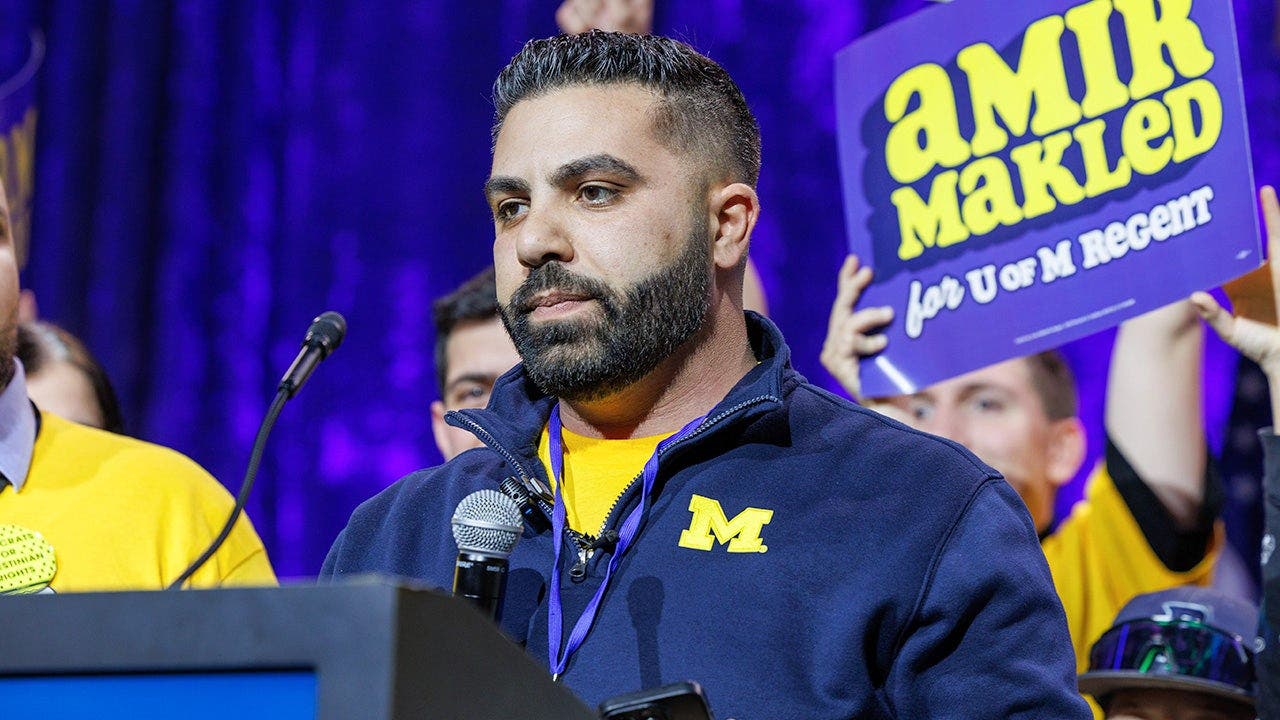
Amir Makled, a trial lawyer who has represented anti-Israel student protesters at the university, defeated incumbent Regent Jordan Acker for the Democratic Party’s nomination. The Detroit News had reported that Makled had shared and subsequently deleted posts on X (formerly Twitter) praising Hezbollah leaders Hassan Nasrallah and Abu Ali Khalil, who were killed in Israeli airstrikes, describing them as “martyrs.”
Additionally, Makled reportedly shared and later removed a post from media personality Candace Owens in which she called Israelis “demons” who “lie, steal, cheat, murder and blackmail.”
The nomination has drawn sharp criticism, particularly from within Michigan’s Democratic establishment. Brandon Dillon, former head of Michigan’s Democratic Party, penned an opinion piece in the Detroit News days before Makled secured the nomination, arguing that Makled’s social media behavior reflected “a pattern of extremism and bigotry.”
“These are not isolated missteps or comments taken out of context,” Dillon wrote. “They reflect a broader pattern of poor judgment that should raise serious concern.”
In his acceptance speech after winning the nomination, Makled acknowledged students involved in anti-Israel protests that emerged on the University of Michigan campus following the October 7, 2023, Hamas attacks in Israel.
“To these students, the students who spoke up, the students who organized, the students who refused to let anyone tell them that their education wasn’t worth fighting for, you all reminded us what a public university is supposed to be,” Makled said.
The controversy unfolds against a backdrop of increasing tensions on the Ann Arbor campus. The University of Michigan was among 60 universities notified by the Department of Education that it was being investigated for potentially violating Title VI of the Civil Rights Act of 1964, specifically for allegedly failing to properly address antisemitic harassment and discrimination.
Reports of antisemitic attacks against Jewish students have emerged amid the anti-Israel protests at the university. Makled, who has provided legal representation to students involved in these protests, has previously called for the university to divest from Israel.
The situation took a personal turn for Regent Acker in December 2024, when his car was vandalized with the words “Divest… Free Palestine” and an inverted triangle, reportedly referencing Hamas. At the time, Acker stated it was the third incident that year in which he had been targeted by anti-Israel vandals.
This latest development at the University of Michigan reflects the broader tensions playing out on college campuses across the United States, where debates about the Israel-Hamas conflict have sometimes led to divisive protests, allegations of antisemitism, and concerns about academic freedom.
The controversy also highlights growing divisions within the Democratic Party over Israel policy and how to address criticisms of the Israeli government while combating antisemitism. As universities continue to navigate these complex issues, the political repercussions are increasingly evident in governance decisions and party nominations.
The University of Michigan Board of Regents plays a crucial role in setting policy for one of the nation’s leading public research universities, making the composition of the board and the views of its members particularly significant during this contentious period in campus politics.
Fact Checker
Verify the accuracy of this article using The Disinformation Commission analysis and real-time sources.

7 Comments
While I respect the democratic process, I’m troubled by the nomination of a candidate with such controversial views. The party should carefully reconsider this decision and its implications for Jewish voters and the broader community.
This is a complex issue that deserves thoughtful discussion. I hope the party can find a way to address the concerns raised while upholding democratic principles. Maintaining trust and unity will be crucial moving forward.
This is a concerning development. Praising Hezbollah, a designated terrorist organization, is very troubling. Michigan Democrats should carefully vet all candidates to ensure they align with the party’s values and principles.
Replacing a Jewish regent with a candidate who has praised Hezbollah raises serious questions. The party must uphold its commitment to inclusivity and oppose extremism, regardless of political affiliations.
I’m curious to learn more about the party’s vetting process and the rationale behind this nomination. Praising Hezbollah is a serious matter that requires a thorough explanation and clear accountability.
While I respect the party’s democratic process, I’m concerned about the implications of this nomination. Praising Hezbollah is a significant red flag that deserves serious scrutiny and reconsideration.
This is a complex and sensitive issue that requires careful deliberation. I hope the party can find a way to uphold its values and principles while maintaining unity and trust within the broader community.