


Listen to the article
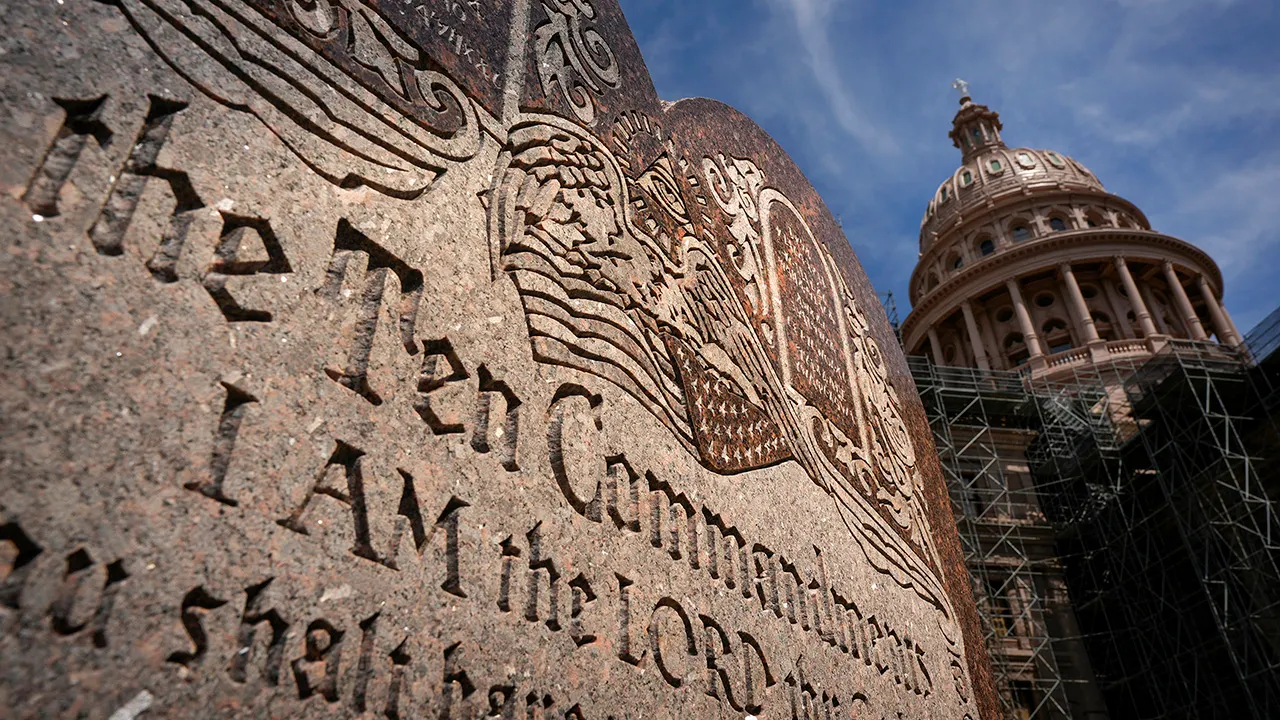
A federal appeals court has upheld a Texas law requiring the display of the Ten Commandments in public schools across the state, marking a significant legal victory for religious expression in educational settings.
The Fifth Circuit Court of Appeals ruling validates legislation passed by Texas’ Republican-led legislature, which mandated the biblical display in classrooms statewide. The decision represents a major development in the ongoing national debate over religious symbolism in public institutions.
Jonathan Saenz, president and attorney for Texas Values, the organization that defended the law in court, called the ruling “one of the most important religious liberty victories for Texas in our glorious history.” His organization has been at the forefront of advocating for religious expression in public spaces throughout Texas.
“Today’s ruling confirms that our state can honor the moral heritage that undergirds our legal system without violating the First Amendment,” Saenz stated. “This decision makes clear that acknowledging the historical foundations of our laws is not only permissible — it is fully consistent with the Constitution.”
The case has attracted significant attention as it navigates the complex relationship between religious expression and constitutional protections. The Ten Commandments display requirement touches on fundamental questions about the separation of church and state, particularly in educational environments where students of diverse religious backgrounds attend.
This Texas ruling comes amid similar legal battles across the country. In February, a separate federal appeals court allowed Louisiana’s Ten Commandments classroom mandate to proceed temporarily, suggesting a potential judicial trend favoring such displays when framed as acknowledgments of historical legal foundations rather than primarily religious statements.
Legal experts note that the Fifth Circuit, which covers Texas, Louisiana, and Mississippi, has historically been one of the more conservative federal appellate courts in the nation. Its decision aligns with recent Supreme Court rulings that have shown increased tolerance for religious symbols and expressions in public settings when they can be connected to American historical traditions and heritage.
Critics of such mandates argue that requiring the display of explicitly religious texts in public schools violates the Establishment Clause of the First Amendment, which prohibits government from favoring one religion over others. Civil liberties organizations have expressed concern that such displays create an environment where students of minority faiths or no religious affiliation may feel marginalized.
However, supporters contend that the Ten Commandments represent a historical foundation of Western legal systems that transcends purely religious significance. They argue that displaying these texts serves an educational purpose by highlighting the cultural and historical underpinnings of American jurisprudence.
The Texas law is part of a broader movement in several conservative-led states to increase religious expression in public institutions. Similar initiatives have included legislation allowing or mandating prayer in schools, Bible study as elective courses, and religious displays in government buildings.
The ruling may face further legal challenges, potentially setting up a case that could eventually reach the Supreme Court. The nation’s highest court has previously ruled on Ten Commandments displays in public buildings with mixed outcomes, generally distinguishing between displays that serve primarily religious purposes and those that have historical or educational context.
This decision is likely to embolden similar legislative efforts in other states while intensifying the national conversation about the appropriate boundaries between religion and public education in America’s increasingly diverse society.
As implementation of the law proceeds across Texas schools, educators, parents, and community members will be watching closely to see how the mandated displays impact school environments and whether they trigger additional litigation in specific districts or circumstances.
Fact Checker
Verify the accuracy of this article using The Disinformation Commission analysis and real-time sources.

5 Comments
I have mixed feelings about this decision. On one hand, I respect the desire to acknowledge historical foundations. But on the other, I worry about the precedent this sets for religious displays in public schools. As with many complex issues, there are valid arguments on both sides.
Given the highly charged political climate, this ruling is bound to become a flashpoint. I’ll be curious to see how it plays out and what impact it has on the ongoing national conversation around religious expression in public settings.
As someone who values both religious freedom and the separation of church and state, I find this a complex issue. I can see merits to both sides of the debate. Ultimately, I hope the courts can find a balanced approach that respects the diverse views of all Americans.
This ruling is sure to stir up more debate around the separation of church and state. While some see it as honoring our moral heritage, others will view it as an infringement on the First Amendment. It will be interesting to see how this plays out going forward.
This is a controversial ruling that is likely to face legal challenges. While I understand the desire to recognize the role of religion in our history, I’m not sure mandating religious displays in public classrooms is the right approach. It seems to cross a line in terms of church-state separation.