


Listen to the article
Homeland Security Nominee Faces Scrutiny Over Potential ICE Presence at Polling Places
Homeland Security Secretary-designate Markwayne Mullin faced pointed questioning Wednesday about whether the incoming Trump administration might position Immigration and Customs Enforcement (ICE) agents near polling locations during November’s election.
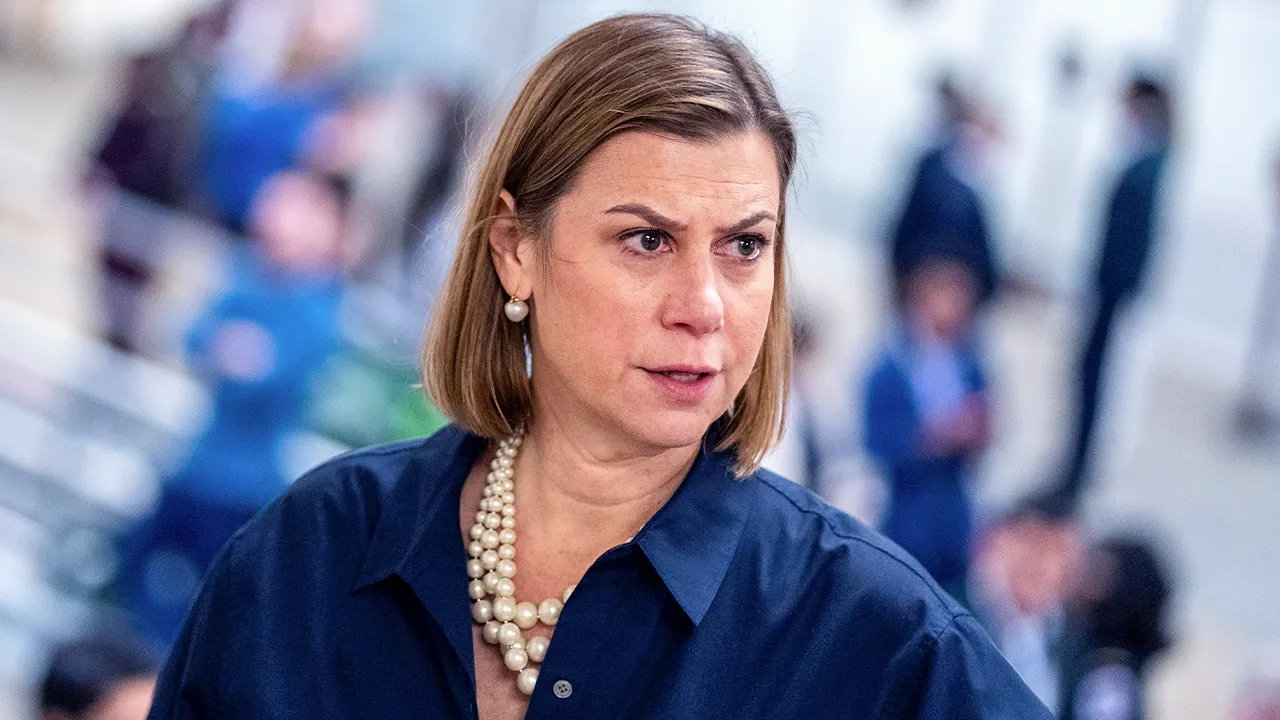
During a tense Senate confirmation hearing, Michigan Democratic Senator Elissa Slotkin pressed Mullin on his views regarding federal involvement in elections, particularly concerning immigration enforcement activities on Election Day.
The exchange comes amid growing tensions between Republicans concerned about illegal immigrants potentially voting in federal elections and Democrats worried about voter intimidation. While federal law prohibits non-citizens from voting in congressional and presidential contests, some localities, beginning with Takoma Park, Maryland in 1993, have allowed non-citizen participation in local elections.
When questioned about who runs elections, Mullin cited the Constitution’s framework, stating that elections are primarily a state responsibility with some federal oversight. He defended citizenship verification measures, saying, “I don’t think it’s too much to ask somebody to prove they’re a citizen of the U.S. to vote in a federal election.”
Slotkin clarified that her concerns centered specifically on immigration enforcement activity at polling places. “If you are Secretary of Homeland Security, do you feel you have the authority to put uniformed officers at polling locations in 2026?” she asked directly.
Mullin responded that he would only dispatch ICE agents if there was a “specific threat” and “not for intimidation.” This answer didn’t satisfy Slotkin, who questioned what type of threat would warrant such a deployment, noting that even during dangerous periods like World War II or the height of the War on Terror, such measures weren’t deemed necessary.
The nominee maintained that he couldn’t address hypotheticals but emphasized that if there were specific threats to communities, the public would understand the need for DHS presence in certain areas.
Slotkin concluded with a stark warning: “I think the reason you’re here and not Kristi Noem is because Americans trust their local law enforcement now way more than they trust ICE. So I would just say, if we ever get to the point where you are being asked to put armed ICE officers at polling locations, we have lost the plot as a country.”
The senator added, “Until I hear someone tell me that this man, President Trump, will actually allow us to have a free and fair election, there is zero trust here, and I cannot trust that he won’t try and steal it.”
The debate over ICE’s potential presence at polling places has already prompted legislative action in several states. Connecticut lawmakers are reportedly preparing to vote on prohibiting enforcement activity within 250 feet of polling locations without a warrant. Democratic Representative John Larson is pursuing similar nationwide restrictions.
New Mexico has already banned ICE from poll proximity, while Virginia is considering comparable restrictions that would also include courthouse areas. Federal law currently prohibits deployment of armed forces to polling places unless “necessary to repel armed enemies of the United States.”
Connecticut State Representative Matthew Blumenthal, who authored his state’s proposed 250-foot ban, has expressed concerns that the Trump administration might “attempt to evoke a national emergency or execute some other deployment of federal agents or military troops in order to interfere with elections and intimidate voters.”
Meanwhile, some Trump allies have advocated for ICE presence at polls. Former White House adviser Stephen Bannon stated on his “War Room” program in February that “we’re going to have ICE surround the polls in November,” adding that this would ensure “only people with IDs; [those] actually registered to vote and people that are United States citizens vote in this election.”
As the confirmation process continues, the question of federal immigration enforcement’s role in election security remains contentious, highlighting broader national divisions over voting rights, election integrity, and immigration policy ahead of November’s high-stakes election.
Fact Checker
Verify the accuracy of this article using The Disinformation Commission analysis and real-time sources.

21 Comments
Voter intimidation is a serious concern that must be addressed. I’m glad to see this issue being scrutinized during the confirmation process. Transparent and fair elections are essential for a healthy democracy.
The presence of federal immigration enforcement at polling places raises valid concerns about voter intimidation. I’m glad Slotkin is taking a close look at this issue. Transparent and non-partisan election oversight is crucial.
Agreed. Maintaining public trust in the electoral process should be a bipartisan goal, regardless of political affiliation.
This is a complex and politically charged topic. I hope Mullin can articulate a balanced and evidence-based approach that protects the integrity of elections while ensuring access and trust for all eligible voters.
Agreed. Upholding democratic principles should be the primary objective, not partisan interests.
The integrity of our elections is the bedrock of American democracy. I appreciate Slotkin’s probing questions and hope Mullin can provide reassurance that the administration will uphold democratic principles.
Absolutely. Safeguarding the electoral process should be a top priority for any administration, regardless of party affiliation.
The presence of federal immigration enforcement at polling places is a concerning prospect that could undermine voter confidence and participation. I’m glad Slotkin is pressing Mullin on this issue.
While voter fraud is a legitimate concern, measures to address it must be carefully balanced against the risk of disenfranchising legitimate voters. I hope Mullin can articulate a clear, evidence-based approach on this sensitive topic.
Voter fraud and election integrity are important concerns, but measures to address them must be carefully considered to avoid disenfranchising legitimate voters. I’m glad Slotkin is pressing Mullin on this issue.
Interesting discussion on the complex issue of election integrity. Balancing security measures with voter access and trust is critical for a healthy democracy. I’m curious to hear more about Mullin’s views on striking that balance.
Agreed, it’s a nuanced topic with valid concerns on both sides. The key is finding fair and transparent solutions that uphold democratic principles.
The presence of federal immigration enforcement at polling places is a concerning prospect. I hope Mullin can provide assurances that the administration will take a non-partisan, evidence-based approach to election security.
Agreed. Voter intimidation and suppression have no place in a healthy democracy.
Maintaining the integrity of our elections is critical for a healthy democracy. I hope Mullin can provide clear, evidence-based assurances that the administration will take a non-partisan approach to election security.
Agreed. Voter intimidation and suppression have no place in a free and fair electoral process.
This is an important topic as we approach the next election cycle. I appreciate Slotkin pressing Mullin on his commitment to fair and accessible elections. Protecting the voting process should be a top priority for any administration.
This is a critical issue that deserves robust, fact-based discussion. I’m glad to see Slotkin challenging Mullin on the administration’s commitment to fair and accessible elections.
This is a complex and politically sensitive topic. I appreciate Slotkin’s probing questions and hope Mullin can articulate a balanced, fact-based approach that upholds democratic principles.
Voter fraud is a complex and politically charged issue. I hope Mullin can articulate a balanced approach that protects the integrity of elections while ensuring access and trust for all eligible voters.
Agreed. Upholding democratic principles should be the top priority, not partisan interests.