


Listen to the article
Thanksgiving Traditions Reflect America’s Evolving Social Landscape
Thanksgiving, traditionally viewed as a holiday of unity and togetherness, has increasingly become a reflection of America’s deepening social and political divides. From changing food preferences to the dynamics at the dinner table, this quintessential American holiday serves as a barometer for broader cultural shifts taking place across the country.
Recent data reveals significant changes in how Americans celebrate the holiday. According to research from restaurant software company Popmenu, there has been a 42% increase since 2024 in the number of people planning to dine out or order takeout for Thanksgiving. Financial considerations rank as the primary driver of this trend, with many citing the desire to spend quality time with family without the stress of meal preparation.
“People are increasingly looking for ways to enjoy the holiday without the burden of cooking and cleanup,” explains a spokesperson for the National Restaurant Association. “This shift represents both economic pragmatism and changing attitudes about what constitutes a ‘traditional’ celebration.”
The political atmosphere has also left its mark on Thanksgiving gatherings. A revealing study analyzing smartphone location data found that politically diverse family dinners tend to be significantly shorter than those with ideologically aligned participants. In 2018, researchers noted that politically mixed gatherings were 30 to 50 minutes shorter on average. A similar study in 2020 found the difference had narrowed slightly to about 24 minutes.
This pattern aligns with recent YouGov survey data from 2025, which indicates that 19% of Democrats expect political arguments at their Thanksgiving tables, compared to just 9% of Republicans. These statistics highlight how political polarization affects even intimate family gatherings.
Despite these changes, many traditional elements remain central to the holiday. According to the National Turkey Federation, 94% of Americans still celebrate Thanksgiving, with 87% of those incorporating turkey into their meal. Nearly three-quarters of celebrants plan to serve a whole bird as the centerpiece of their feast.
The U.S. Department of Agriculture’s Economic Research Service offers further insight into how Americans spend their holiday. Based on long-term analysis between 2003 and 2015, people typically devote 128 minutes to meal preparation and cleanup, 89 minutes to eating and drinking, and about 148 minutes to socializing during Thanksgiving celebrations.
Yet within these traditions, innovation flourishes. Research from turkey producer Jennie-O indicates growing openness to non-traditional meal options, with 55% of Americans willing to try Thanksgiving recipes from different cultures. This trend is particularly evident in side dishes, where international flavors and cooking techniques are gaining popularity.
“We’re seeing a fascinating blend of old and new redefining what Thanksgiving dinner looks like across America,” notes a culinary historian specializing in American food traditions. “Families are honoring their heritage while incorporating diverse influences, creating celebrations that feel both familiar and fresh.”
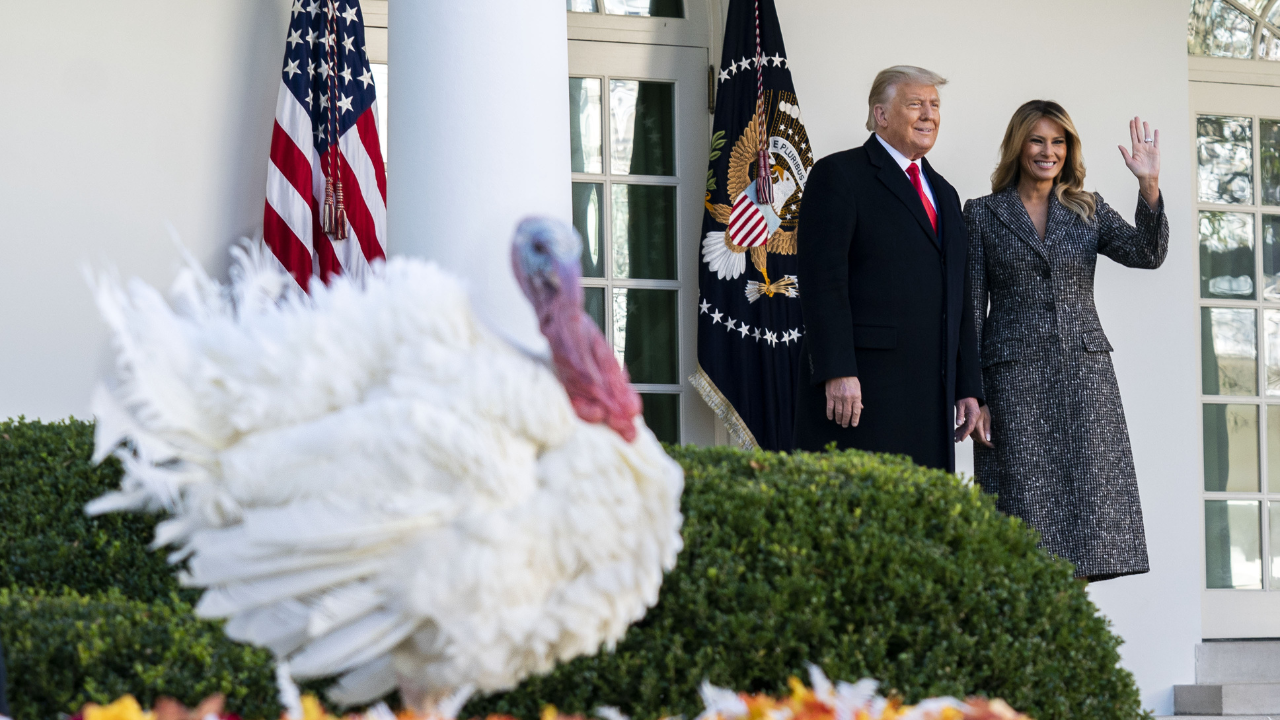
Even the ceremonial presidential turkey pardon reflects these evolving attitudes. Early 2000s pardons often featured unnamed birds treated with less fanfare. Today’s pardoned turkeys receive names and more humanized treatment, mirroring broader societal shifts toward animal welfare.
As Thanksgiving continues to evolve, it maintains its dual nature—a holiday that both bridges divides and highlights differences. This tension between tradition and change, between unity and division, makes Thanksgiving not just a celebration but a mirror reflecting the complex and ever-changing American identity.
Fact Checker
Verify the accuracy of this article using The Disinformation Commission analysis and real-time sources.

8 Comments
Fascinating insights into how Thanksgiving traditions are evolving with the times. It’s interesting to see the interplay between economic, social and political factors shaping how people celebrate this holiday.
I agree, the data on increased dining out and takeout for Thanksgiving reflects broader changes in American culture and priorities.
The shifting Thanksgiving traditions highlighted in this article seem to mirror the nation’s broader political, economic and cultural divides. It’s a fascinating window into the changing fabric of American society.
This article raises thought-provoking questions about the evolving nature of American traditions and how they intersect with broader social, economic and political trends. It’s a complex, nuanced topic worth deeper exploration.
This article highlights the complex, multifaceted nature of Thanksgiving in modern America. It’s a holiday that seems to mirror the nation’s shifting social and political landscape.
Indeed, the article touches on an important point – that Thanksgiving is no longer a monolithic tradition, but one that is adapting to people’s changing needs and preferences.
The data on increased dining out for Thanksgiving is quite interesting. It suggests a desire for convenience and quality time with family over the burden of meal preparation.
You’re right, it reflects a pragmatic approach to the holiday that may be driven by economic considerations as well as changing attitudes about what constitutes a ‘traditional’ Thanksgiving.