


Listen to the article
The Trump Administration’s Challenge to Scientific Consensus
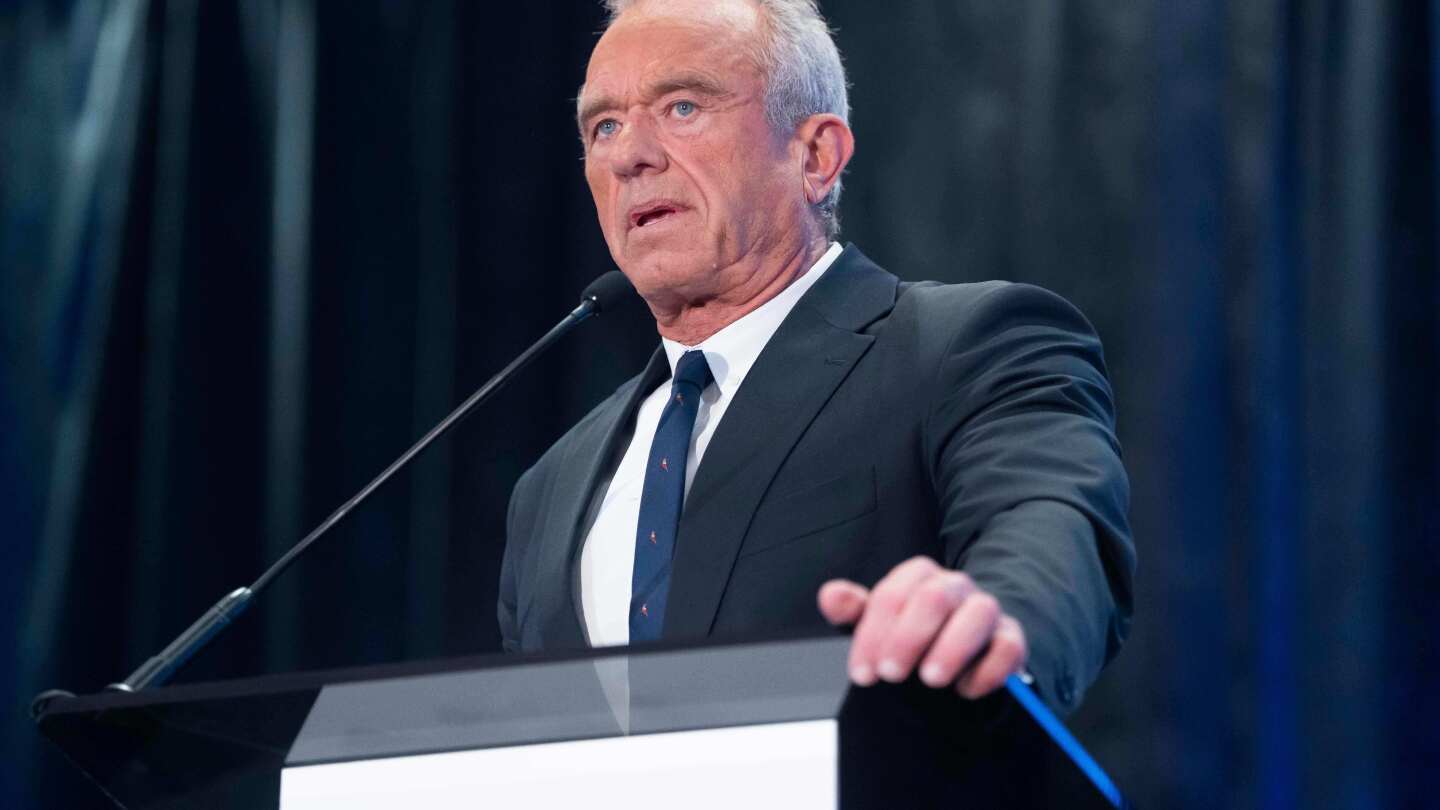
Public health officials and scientists are raising alarms over what they describe as a systematic departure from evidence-based medicine under the Trump administration, particularly through the influence of Health and Human Services Secretary Robert F. Kennedy Jr.
Despite repeated claims of adhering to “gold standard” science from both President Trump and Secretary Kennedy, experts argue the administration has been doing the opposite—relying on preliminary studies, fringe science, and personal hunches to make health policy decisions and recommendations.
The Centers for Disease Control and Prevention (CDC) recently altered its website to contradict the scientific consensus that vaccines do not cause autism, a move that shocked health experts nationwide. Dr. Daniel Jernigan, who resigned from the CDC in August, told reporters that Kennedy seems to be “going from evidence-based decision making to decision-based evidence making.”
This pattern has manifested in multiple instances. In September, President Trump advised pregnant women and parents against taking acetaminophen, the active ingredient in Tylenol, based on what experts say is weak or no evidence. He has also repeatedly promoted the long-debunked link between vaccines and autism, saying his assessment was based on “a hunch” and “strong feelings about autism and how it happened.”
During a two-day meeting this fall, Kennedy’s handpicked vaccine advisers questioned vaccinating babies against hepatitis B, despite overwhelming evidence showing the vaccine drastically reduces disease and death. Dr. Flor Munoz, a pediatric infectious disease expert at Baylor College of Medicine, criticized the discussion, noting it was “not based on evidence other than case reports and anecdotes.”
In the midst of the country’s worst measles outbreak in over three decades, Kennedy has cast doubt on the measles vaccine while promoting unproven treatments and claiming that unvaccinated children who died were “already sick.”
The situation represents a significant departure from the traditionally rigorous U.S. drug and vaccine approval process, which has been so respected that much of the world has historically followed American regulators’ lead.
“The gold standard can differ because science and medicine is complicated and everything cannot be tested the same way,” explains Dr. Jake Scott, an infectious disease physician and Stanford University researcher. The term simply refers to the best possible evidence available for a particular question.
Randomized clinical trials represent the most rigorous form of scientific evidence, where two identical groups differ only in the treatment being tested. When such trials aren’t possible for ethical or practical reasons, scientists rely on observational studies, which track participants without manipulating variables.
Real-world evidence from large populations has proven particularly valuable in understanding both the effectiveness and rare side effects of treatments like vaccines. This data has demonstrated that vaccines provide extraordinary protection from disease while confirming their overall safety.
“If vaccines caused a wave of chronic disease, our safety systems—which can detect 1-in-a-million events—would have seen it. They haven’t,” Dr. Scott testified to a Senate subcommittee in September.
Health experts emphasize that scientific integrity depends on transparency, including pre-established hypotheses, disclosed conflicts of interest, peer review, and accessible underlying data. Single studies and anecdotes, while sometimes informative, must be considered within the broader context of established research.
“Science isn’t about reaching certainty,” says Dr. Steven Woloshin, a Dartmouth College professor. “It’s about trying to reduce uncertainty to the point where you can say, ‘I have good confidence that if we do X, we’ll see result Y.’ But there’s no guarantee.”
The current tension between established scientific processes and the administration’s approach to health policy highlights broader questions about how medical evidence is evaluated and communicated to the public during a period of heightened polarization around health issues.
Fact Checker
Verify the accuracy of this article using The Disinformation Commission analysis and real-time sources.

9 Comments
This is a complex issue with valid concerns on both sides. While I’m generally in favor of evidence-based policymaking, I also believe we should be open to new or minority scientific viewpoints that challenge the status quo. A healthy scientific discourse is important.
I appreciate your balanced perspective. There is certainly room for healthy debate, but it needs to be grounded in rigorous, high-quality research rather than personal beliefs or political agendas.
The potential influence of Secretary Kennedy on public health policy is quite alarming. As a high-profile figure, he has a responsibility to base his claims on the strongest scientific evidence, not fringe theories. I hope there is greater transparency and accountability going forward.
Agreed. Public health decisions should never be driven by personal biases or political pressures. The administration must demonstrate a clear commitment to upholding the integrity of our scientific institutions.
This is a concerning development, if the administration is indeed undermining evidence-based public health policies. We should be relying on the scientific consensus, not personal hunches or fringe views. Maintaining trust in our public health institutions is crucial.
I agree, the CDC’s website changes seem very troubling. We need our health agencies to be guided by the best available science, not political agendas.
I’m curious to learn more about the specific studies and evidence that RFK Jr. claims support his positions. It’s important to carefully evaluate the quality and validity of the scientific data being used to inform policy decisions.
That’s a good point. Extraordinary claims require extraordinary evidence, as they say. I hope there is a transparent, fact-based debate on these issues.
This situation highlights the importance of maintaining a clear distinction between scientific consensus and individual views, no matter how prominent the individual. Policymakers must be willing to respectfully challenge claims that are not supported by rigorous, peer-reviewed research.