


Listen to the article
Health Secretary Kennedy Orders CDC to Revise Autism-Vaccine Guidance, Sparking Scientific Backlash
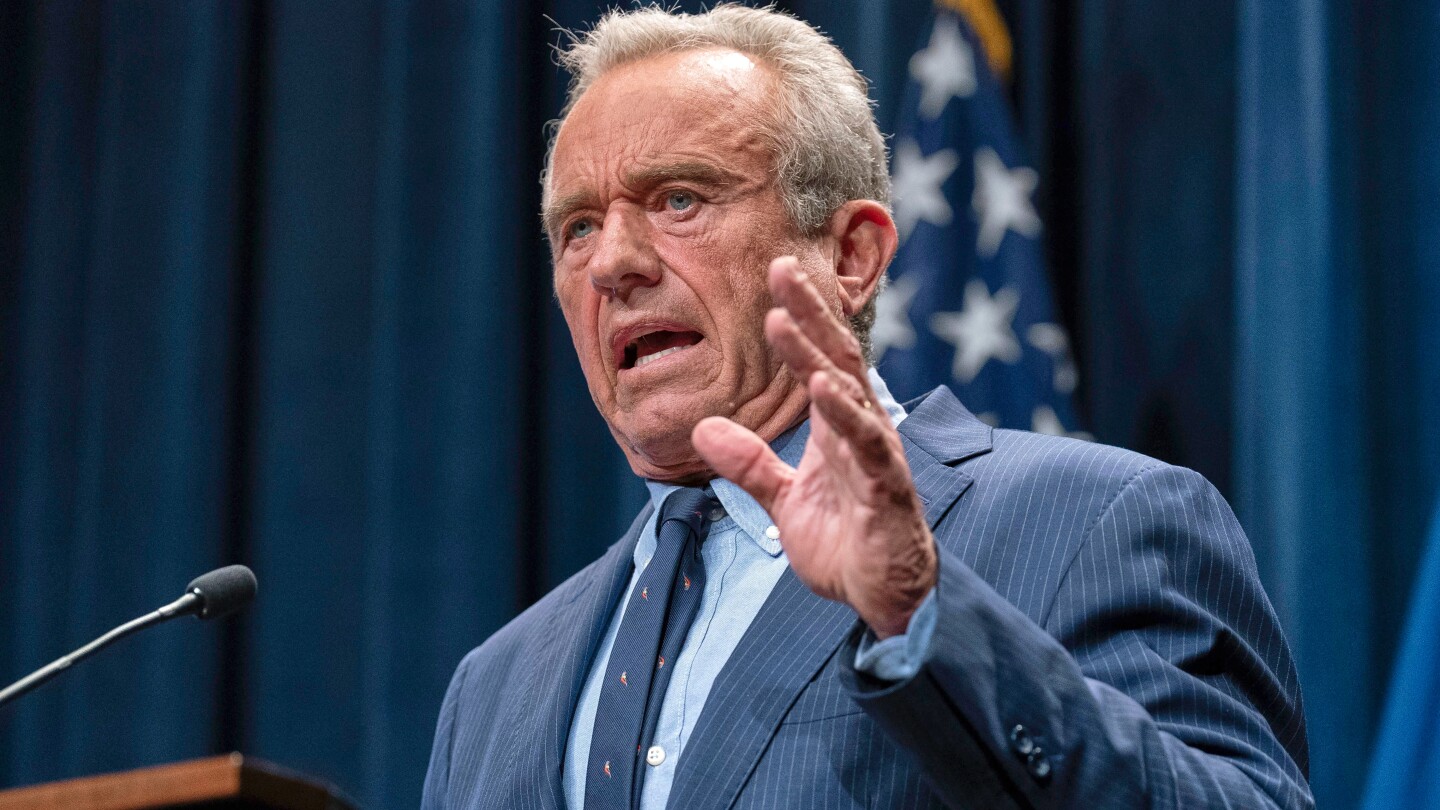
Health Secretary Robert F. Kennedy Jr. has personally directed the Centers for Disease Control and Prevention to alter its longstanding guidance on vaccines and autism, confirming in a New York Times interview that he ordered the controversial website changes that appeared Wednesday.
The CDC’s vaccine safety page now suggests that the statement “vaccines do not cause autism” lacks evidential basis because it doesn’t completely rule out potential links between infant vaccines and autism spectrum disorder. The updated guidance also implies that health officials have overlooked studies showing possible connections.
“The whole thing about ‘vaccines have been tested and there’s been this determination made,’ is just a lie,” Kennedy told the Times in an interview conducted Thursday. The health secretary acknowledged studies showing no link between autism and both the mercury-based preservative thimerosal and the measles, mumps, and rubella vaccine, but insisted there remain “gaps in vaccine safety science” requiring further research.
The changes have sent shockwaves through the medical community, with many public health experts condemning the revisions as dangerously misleading. Critics argue the new guidance exploits a fundamental principle of scientific methodology—that it’s impossible to definitively prove a negative—to cast doubt on decades of comprehensive research.
“No environmental factor has been better studied as a potential cause of autism than vaccines,” the Autism Science Foundation stated Thursday. “This includes vaccine ingredients as well as the body’s response to vaccines. All this research has determined that there is no link between autism and vaccines.”
The website modifications directly contradict Kennedy’s confirmation hearing pledge to Senator Bill Cassidy, a physician and Louisiana Republican who chairs the Senate health committee. During that process, Kennedy promised to maintain the CDC’s statement that vaccines don’t cause autism. While technically kept on the site, that statement now appears with a disclaimer explaining it remains only because of their agreement.
Kennedy told the Times he discussed the website changes with Cassidy, who disagreed with the decision. The senator made his position clear Thursday in a post on X: “What parents need to hear right now is vaccines for measles, polio, hepatitis B and other childhood diseases are safe and effective and will not cause autism. Any statement to the contrary is wrong, irresponsible, and actively makes Americans sicker.”
The website revision follows a series of controversial actions by Kennedy since taking office. The health secretary has withdrawn $500 million from vaccine development programs, completely replaced the members of a federal vaccine advisory committee, and vowed to overhaul a program that compensates Americans for vaccine injuries. Kennedy also fired CDC Director Susan Monarez less than a month into her tenure after disagreements over vaccine policy.
Dr. Sean O’Leary, who heads the infectious diseases committee at the American Academy of Pediatrics, condemned the CDC’s website update during a press briefing Thursday. “This is madness,” he stated. “Vaccines do not cause autism, and unfortunately, we can no longer trust health-related information coming from our government.”
Kennedy, a longtime leader in the anti-vaccine movement, has significantly disrupted the public health agencies under his oversight. His policy shifts have alarmed medical professionals who view these changes as potentially harmful to public health, particularly as they may decrease vaccine confidence during a time when immunization rates for preventable diseases have already been declining in parts of the country.
The Department of Health and Human Services did not immediately respond to requests for comment on the matter from The Associated Press.
The controversy highlights the growing tension between political appointees and scientific consensus in federal health agencies, raising concerns about the politicization of public health information and its potential impact on vaccination rates and disease prevention efforts across the United States.
Fact Checker
Verify the accuracy of this article using The Disinformation Commission analysis and real-time sources.

14 Comments
While vaccine safety is paramount, revising longstanding CDC guidance without clear scientific justification is extremely troubling. Vaccines have saved countless lives and their efficacy and safety are well-established facts, not open to political debate.
I agree completely. Undermining the authority of the CDC on vaccine policy is a dangerous and misguided move that could have severe public health consequences if it leads to decreased vaccination rates.
This is a concerning development. Vaccines are a critical public health tool backed by extensive scientific evidence. Any rollback of vaccine guidance risks public health and could lead to preventable illness and loss of life.
I agree, we should be very cautious about making changes to vaccine guidance without a strong scientific basis. Public health and safety should be the top priority.
I’m deeply concerned by this attempt to override the CDC’s vaccine guidance. Vaccines are a medical necessity, not a political issue. Any changes should be based on thorough, peer-reviewed research, not the whims of a single official.
Well said. Vaccine policy decisions must be left to scientific and medical experts, not political appointees. Undermining public trust in vaccines puts vulnerable populations at risk.
The CDC’s vaccine guidance is based on decades of scientific consensus. Attempts to unilaterally override this guidance without clear justification are deeply concerning and could have devastating consequences for public health. Vaccines save lives, period.
Absolutely. Undermining the CDC’s vaccine recommendations based on the views of a single official rather than the scientific community is extremely troubling. This decision seems to prioritize politics over public wellbeing.
Vaccines are one of the greatest public health achievements in history. Overriding the CDC’s vaccine guidance without robust new evidence is extremely reckless and puts lives at risk. This decision seems driven by politics, not science.
Well said. Vaccine policies must be grounded in rigorous, peer-reviewed research, not the personal beliefs of government officials. Anything less jeopardizes public health and safety.
This is a very worrying development. The CDC’s vaccine guidance is based on extensive scientific research and consensus. Overriding this guidance without clear justification could undermine public trust in vaccines and lead to preventable disease outbreaks. Vaccine policy should be left to medical experts, not political appointees.
Vaccines are a public health necessity, not a political issue. Revising longstanding CDC guidance without robust scientific evidence is extremely irresponsible and puts lives at risk. Any changes to vaccine policy must be grounded in thorough, peer-reviewed research.
While vaccine safety is important, undermining well-established vaccine guidance without rigorous new evidence is extremely worrying. Vaccines have saved millions of lives and any changes should be made with the utmost care and transparency.
Exactly. Vaccine policies must be grounded in the scientific consensus, not the personal views of government officials. Rolling back guidance could have severe public health consequences.