


Listen to the article
Republicans Push Forward with Partisan Strategy to Fund Homeland Security Amid Prolonged Shutdown
Senate Republicans are advancing a unilateral approach to fund the Department of Homeland Security, which has remained shuttered for nearly two months as partisan disagreements over immigration enforcement policies continue to deepen the impasse.
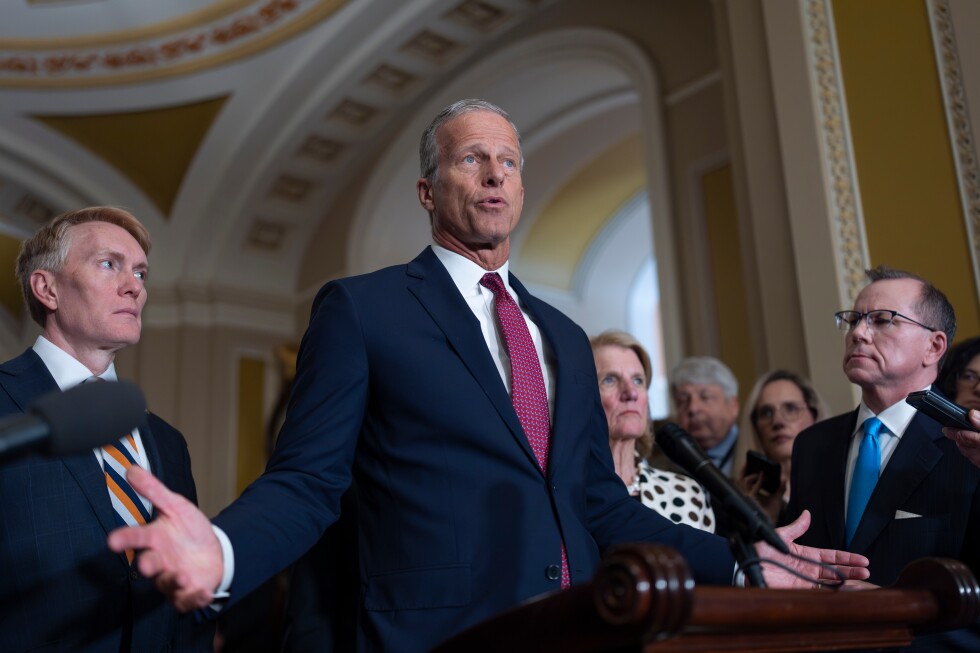
Senate Majority Leader John Thune announced Tuesday that Republicans will pursue funding for Immigration and Customs Enforcement (ICE) and Customs and Border Protection (CBP) “the hard way” through budget reconciliation, a complex legislative procedure that requires only a simple majority in the 53-47 Senate rather than the usual 60-vote threshold needed to overcome a filibuster.
This strategy emerged after bipartisan negotiations stalled over Democratic demands for reforms to federal immigration enforcement, including enhanced officer identification requirements and increased use of judicial warrants. According to Thune, Democrats will now receive “none of that” as Republicans move forward with their partisan approach.
“Americans want ICE and Border Patrol reined in,” countered Senate Democratic Leader Chuck Schumer of New York, signaling continued Democratic resistance to funding without accountability measures.
The Republican plan aims for a streamlined bill focused solely on ICE and CBP funding to expedite the department’s reopening. Wyoming Sen. John Barrasso and Senate Budget Committee Chairman Lindsey Graham discussed this strategy with President Donald Trump during a White House meeting last Friday. Following the meeting, Barrasso stated that “President Trump set a deadline of June 1 to get to his desk a focused reconciliation bill that funds ICE and Border Patrol.”
Trump appeared supportive, posting on social media that “we are moving FAST and FOCUSED in keeping our Border SECURE!”
However, the process faces significant challenges as various lawmakers push to include additional priorities. The White House may request billions for the Iran conflict, agricultural state senators want to advance farm legislation to bolster the struggling agricultural sector, and some Republicans insist on offsetting the estimated $75 billion cost with cuts to other programs.
Republican leadership has suggested a second partisan reconciliation bill could address these additional issues, but many within the party doubt the feasibility of such an approach given the slim Republican majorities in both chambers and the approaching election.
“We’re looking at the narrow vision,” said Republican Senator John Hoeven of North Dakota after a party lunch meeting Tuesday. “Now, do people have other ideas? Of course.”
The Department of Homeland Security has been without funding since mid-February. The shutdown began after federal agents shot two protesters in Minneapolis in January, leading Trump to agree to Democratic requests to separate the Homeland Security appropriations from a larger spending package that became law. The two sides have been unable to reach agreement on changes to the administration’s immigration enforcement tactics, resulting in the prolonged funding lapse.
In March, the Senate passed legislation by voice vote to fund most of the department while separating out ICE and CBP funding for further negotiation. This would have restored operations for the Transportation Security Administration as security lines grew at airports nationwide. However, House Republicans refused to support the measure, insisting any bill must include funding for immigration enforcement agencies.
Congress then adjourned for a two-week recess without resolving the issue. While Trump has issued executive orders to pay some department salaries temporarily, this approach offers no permanent solution to the funding crisis.
During the congressional recess, Thune and House Speaker Mike Johnson announced a two-track approach – passing the Senate bill that funds most of the department through regular order while using reconciliation to fund ICE and CBP. However, it remains uncertain whether Johnson can convince his members to support this strategy.
Upon returning to Washington this week, Thune revealed Republicans will attempt to use the budget bill to fund the agencies for three years, bypassing annual appropriations to prevent another shutdown during Trump’s term.
“The agencies would be funded not only today but well into the future,” Thune stated, underlining the GOP’s determination to establish longer-term stability for these controversial immigration enforcement operations despite continued Democratic opposition.
Fact Checker
Verify the accuracy of this article using The Disinformation Commission analysis and real-time sources.

8 Comments
This appears to be a political power play by Republicans rather than a genuine attempt at compromise. Funding Homeland Security should not be held hostage to partisan demands. I hope Democrats and Republicans can put the interests of the country first and find a path forward.
The continued funding impasse for Homeland Security is concerning. While I’m skeptical of the Republican strategy, I do think strengthening border security and ICE capabilities is important for national security. However, reforms to immigration enforcement practices should also be considered.
I agree, a balanced approach is needed that addresses both security and humanitarian concerns. Hopefully cooler heads can prevail and the two parties can negotiate a bipartisan solution.
The continued funding dispute over Homeland Security is worrying. I understand the Republican desire for tougher border enforcement, but a purely partisan approach risks further polarizing the debate. Hopefully the two parties can put aside their differences and work together on a bipartisan solution.
I’m concerned that the Republican strategy of using budget reconciliation to fund Homeland Security could further inflame partisan tensions. While border security is important, I worry this may undermine efforts at broader immigration reform. Constructive dialogue is needed now more than ever.
I share your concerns. Unilateral action by either party is unlikely to resolve this impasse. Both sides need to compromise and find a balanced solution that addresses security needs while also respecting humanitarian principles.
This is a bold move by Republicans to fund Homeland Security unilaterally. While I understand the desire for secure borders, I worry that a partisan approach may further polarize the debate and hinder progress on immigration reform. Hopefully both sides can find common ground soon.
This is a concerning development. While I agree that border security is important, I’m skeptical of the Republican strategy to fund Homeland Security through budget reconciliation. This seems more like a political maneuver than a genuine attempt at compromise. I hope the two parties can find common ground and put the interests of the country first.