


Listen to the article
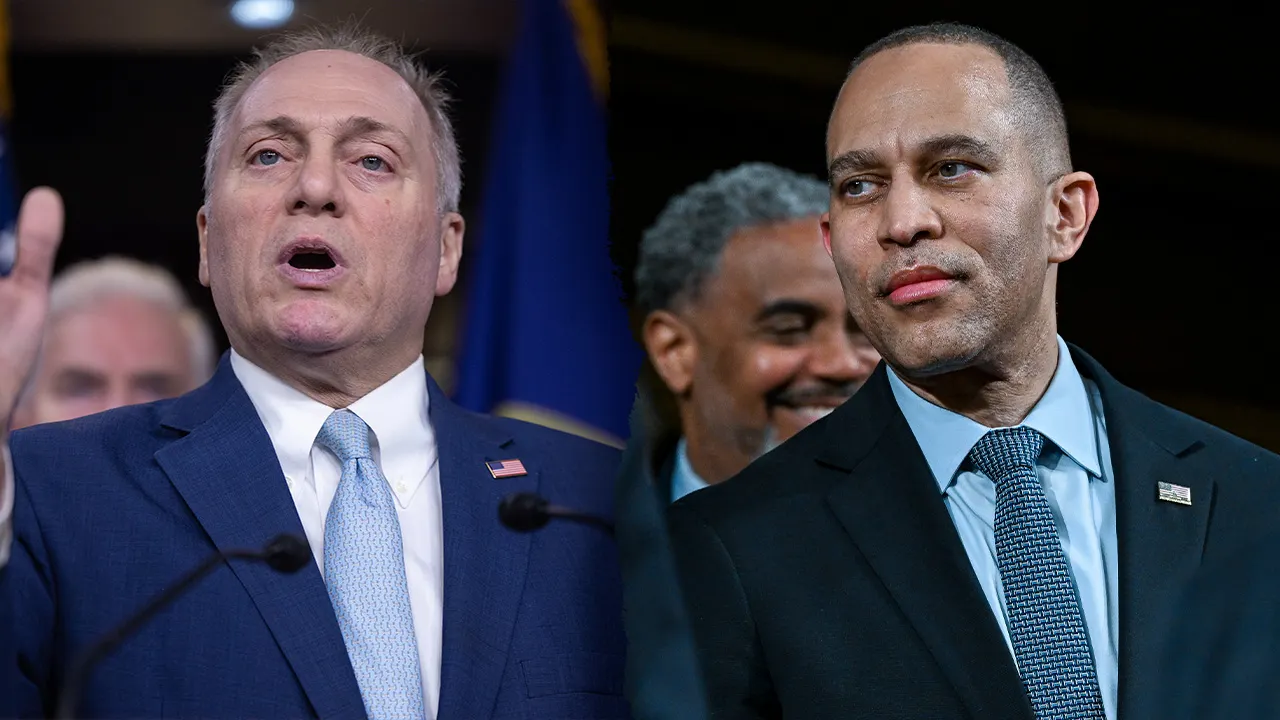
In a mounting political showdown over national security funding, House Majority Leader Steve Scalise is urging Democrats to set aside partisan differences and approve Department of Homeland Security funding, particularly as the United States faces heightened security concerns following recent military actions against Iran.
“Put the safety and security of the American people first and stop playing political games to appease the far-left base, especially at a time like this,” Scalise said in an exclusive interview, emphasizing the increased urgency of resolving the DHS funding impasse.
The partial government shutdown affecting DHS has now stretched into its 18th day, taking on heightened significance in the wake of U.S.-Israeli strikes on Iran. While bipartisan agreements have successfully funded 97% of the federal government through the end of the fiscal year on September 30, disagreements over immigration enforcement policies have prevented a similar compromise on DHS funding.
House Republican leadership announced plans to vote this Thursday on a bipartisan DHS funding bill that initially passed in January. The move is designed to pressure Democrats to end the shutdown affecting critical security operations.
“We are on a higher level of alert, and this is not the time for Democrats to be playing games and shutting down the department that is focused on keeping Americans safe here at home,” Scalise said. “So we’re bringing this bill back up again to try to get them to come to their senses and open the Department of Homeland Security.”
The January bill passed with a 220-207 vote, receiving support from just seven Democrats while drawing near-unanimous Republican backing, with only Representative Thomas Massie of Kentucky opposing it. The legislation subsequently stalled in the Senate after Democrats demanded additional constraints on immigration enforcement that Republicans have rejected.
Scalise expressed hope for broader support this time, stating, “any responsible member of Congress” should vote for the bill given the current security climate. “The country is watching and expects members of Congress to take the safety of the American people at heart. And so I hope we get a much larger vote this time,” he added.
The Department of Homeland Security’s scope extends far beyond the immigration functions that have dominated recent political debate. Created in the aftermath of the September 11, 2001 terrorist attacks, DHS encompasses numerous critical security agencies including Immigration and Customs Enforcement (ICE) and Customs and Border Protection (CBP), but also the Cybersecurity and Infrastructure Security Agency (CISA), Transportation Security Administration (TSA), Federal Emergency Management Agency (FEMA), U.S. Coast Guard, and the Secret Service.
The funding lapse has forced TSA officers, Coast Guard members, and FEMA personnel to work without pay, creating growing operational challenges as the shutdown continues. Security experts have warned about degraded capabilities at a time of heightened international tensions.
Scalise also highlighted concerns about security for upcoming major events on U.S. soil. “We had a hearing last week on the World Cup, the people in charge of security for the World Cup were saying that they may have to start canceling some events,” he said, noting that these warnings came even before the recent escalation with Iran.
The funding dispute centers largely on immigration enforcement policies, with Democrats seeking limitations on certain ICE and CBP operations while Republicans insist on maintaining robust enforcement capabilities. This ideological divide has proven difficult to bridge despite the critical nature of DHS’s broader security mission.
As Thursday’s vote approaches, both parties face increasing pressure to resolve the impasse, with national security experts warning that prolonged funding uncertainty for DHS could compromise America’s ability to detect and respond to emerging threats, both domestic and international.
Fact Checker
Verify the accuracy of this article using The Disinformation Commission analysis and real-time sources.

8 Comments
While I understand the political motivations, I’m concerned that using national security as a bargaining chip could undermine public trust. Securing DHS funding should be a top priority regardless of party affiliation. Hopefully cooler heads will prevail and they can reach an agreement soon.
While I understand the policy disagreements, using homeland security as a bargaining chip seems irresponsible. The American people deserve leaders who can put partisan differences aside and fulfill their basic duty to protect the country.
With rising tensions in the Middle East, it’s critical that the government addresses DHS funding without delay. I hope the parties can find common ground to ensure our national security is not compromised by political brinkmanship.
This seems like a complex political situation with valid concerns on both sides. Ensuring national security while avoiding partisan gridlock is an ongoing challenge. I hope the lawmakers can find a bipartisan compromise to fund DHS and address the underlying immigration issues constructively.
This debate seems to highlight the growing divide in US politics. I wish both parties would focus more on finding practical solutions rather than scoring political points. Keeping the country secure should be a unifying goal, not a divisive issue.
I agree, it’s disappointing to see political posturing on such an important issue. Hopefully the representatives can put the public interest first and reach a bipartisan compromise.
As a voter, I’m frustrated to see this issue become so politicized. Homeland security funding shouldn’t be used as a political football. I hope the representatives can put aside partisan differences and work together to keep Americans safe, especially in uncertain times like these.
This standoff is concerning. DHS funding shouldn’t be held hostage to political maneuvering. I hope the representatives can put the national interest first and quickly resolve this impasse for the sake of public safety.