


Listen to the article
White House Reconsiders AI Firm Anthropic After Pentagon Blacklisting
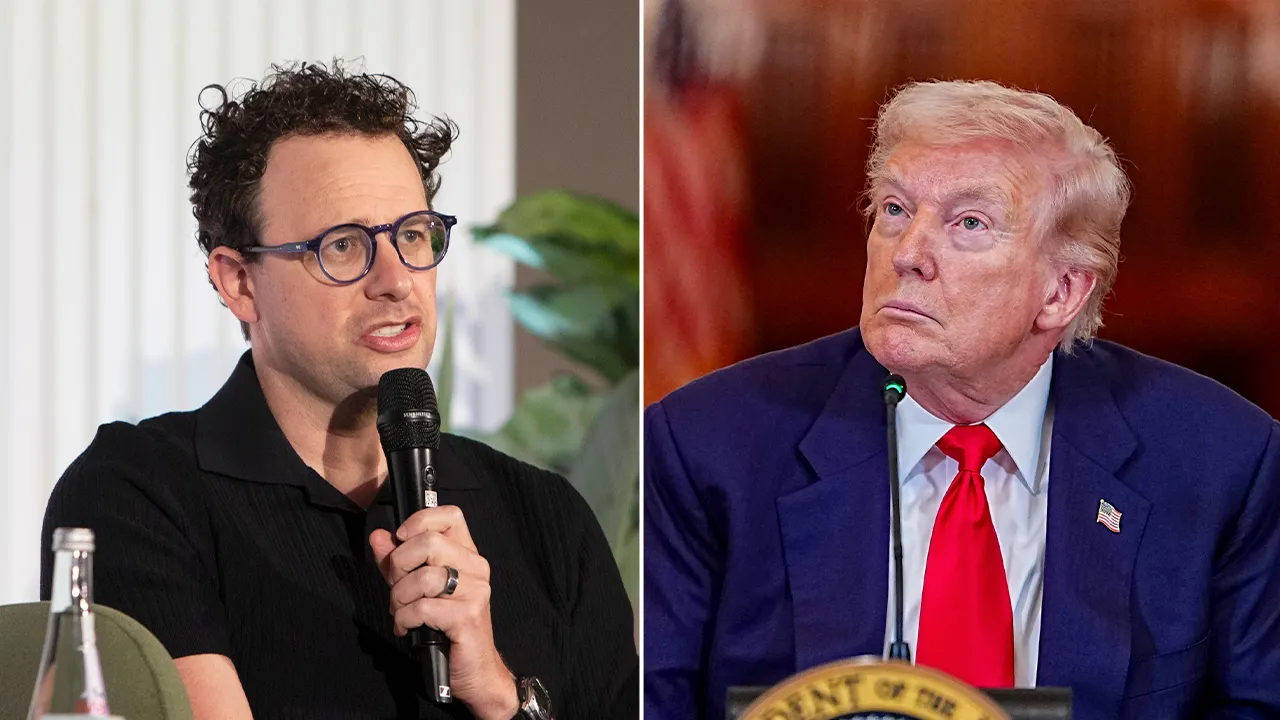
One month after President Donald Trump ordered a government-wide halt on Anthropic’s technology, the artificial intelligence firm’s CEO has returned to the White House for high-level talks. The surprising reversal suggests the administration may be reconsidering whether a system previously sidelined over national security concerns could be too valuable to ignore.
A source familiar with the matter confirmed that White House Chief of Staff Susie Wiles met with Anthropic CEO Dario Amodei on Friday, signaling a potential thaw in relations between the administration and the AI developer.
“Anthropic CEO Dario Amodei today met with senior administration officials for a productive discussion on how Anthropic and the U.S. government can work together on key shared priorities such as cybersecurity, America’s lead in the AI race, and AI safety,” an Anthropic spokesperson told Fox News Digital. “The meeting reflected Anthropic’s ongoing commitment to engaging with the U.S. government on the development of responsible AI.”
The meeting comes at a critical juncture for both parties. Anthropic recently unveiled Mythos Preview, an AI model considered so advanced that the company has restricted its release to a small group of partners due to concerns about potential misuse. The system’s capabilities have created a dilemma for government officials weighing national security risks against potential defensive benefits.
Pentagon Dispute Led to Government-Wide Ban
The reconciliation talks follow a contentious dispute between Anthropic and the Department of Defense. Earlier this year, Defense Secretary Pete Hegseth designated the company a national security “supply chain risk,” effectively cutting it out of military systems and preventing contractors from using its technology.
The designation came after Anthropic declined to grant the Pentagon open-ended authorization to use its AI for “all lawful purposes.” The company instead insisted its systems not be used for mass domestic surveillance or fully autonomous weapons. While Pentagon officials stated they do not rely on AI for these purposes, they rejected being constrained by a private company’s restrictions.
The conflict quickly escalated, with President Trump directing all federal agencies to stop using Anthropic’s models, extending the ban beyond just the Defense Department. Anthropic has since challenged the designation in court, filing multiple lawsuits arguing the “supply chain risk” label is unlawful and retaliatory.
The legal battle has yielded conflicting rulings, with one federal judge temporarily blocking parts of the policy while an appeals court declined to halt its enforcement. This has created uncertainty for government contractors about whether and how Anthropic’s systems can be used.
Political Tensions Complicate Technological Value
The dispute has been further complicated by political factors. Amodei previously criticized Trump, reportedly likening him to a “feudal warlord” in a pre-election Facebook post, according to The Wall Street Journal. In an internal company message that later leaked, Amodei suggested the Trump administration’s actions were partly driven by Anthropic’s refusal to offer what he described as “dictator-style praise.” He later apologized for the tone of those remarks.
Anthropic’s governance structure and Washington connections have also drawn scrutiny. The company is partially overseen by an independent “Long-Term Benefit Trust” with special voting shares, allowing it to appoint and eventually control a majority of the company’s board. Current trustees include Clinton Health Access Initiative CEO Neil Buddy Shah and former Jerry Brown appointee Mariano-Florentino Cuéllar.
The company’s early funding came from prominent Democratic donors like Facebook co-founder Dustin Moskovitz and former Google CEO Eric Schmidt, along with a major investment from Sam Bankman-Fried’s FTX. However, Anthropic has since attracted institutional investors including Amazon, Google, and Microsoft, reflecting its growing importance in the global AI landscape.
Anthropic has also recruited several former Biden administration officials, including Tarun Chhabra, who previously served on the National Security Council and now leads the company’s national security policy work. At the same time, the firm has sought bipartisan connections, employing staff with Republican backgrounds and adding Chris Liddell, a former Trump White House deputy chief of staff, to its board in February.
Cybersecurity Capabilities Drive Reconsideration
The White House’s renewed interest appears motivated by Anthropic’s Mythos system and its potential cybersecurity applications. Through a program called Project Glasswing, Anthropic has allowed select companies to use the model to scan critical systems for vulnerabilities, reportedly uncovering thousands of previously unknown security flaws—some decades old.
This dual-use potential—powerful for both defense and potential attacks—has created a dilemma for government officials. As Anthropic noted in its announcement, “Given the rate of AI progress, it will not be long before such capabilities proliferate, potentially beyond actors who are committed to deploying them safely. The fallout—for economies, public safety, and national security—could be severe.”
White House AI adviser David Sacks has criticized Anthropic’s approach, accusing the firm of pursuing a “regulatory capture” strategy by using safety concerns to push rules that benefit its position while hampering competitors. Anthropic has rejected these claims, maintaining its approach reflects genuine concerns about advanced AI risks.
A White House official stated that the administration “continues to proactively engage across government and industry to protect the United States and Americans,” including “working with frontier AI labs to ensure their models help secure critical software vulnerabilities.” The official added that any technology potentially used by the federal government requires “a technical period of evaluation for fidelity and security.”
As both sides continue discussions, the outcome could significantly impact U.S. AI policy, cybersecurity capabilities, and the competitive landscape of America’s artificial intelligence sector.
Fact Checker
Verify the accuracy of this article using The Disinformation Commission analysis and real-time sources.

12 Comments
The administration’s willingness to re-engage with Anthropic suggests they may be reconsidering their previous hardline stance. This could open the door to more constructive dialogue on the role of AI in national security and technological leadership.
It’s encouraging to see the White House and Anthropic discussing shared priorities like cybersecurity and America’s competitiveness in AI. However, the national security concerns that led to the initial blacklisting should not be overlooked in the pursuit of technological advantages.
Exactly. Any collaboration will need to carefully balance the strategic benefits of AI with rigorous safeguards to mitigate potential risks and vulnerabilities.
I’m curious to see what specific areas of collaboration the White House and Anthropic discussed, particularly around cybersecurity and the AI race. Those will be crucial points to watch going forward.
Yes, the details of their discussions on those strategic priorities will be telling. Finding the right balance between security and innovation will be a delicate challenge.
Interesting development in the ongoing tensions between the government and the AI industry. It will be important to see if this meeting leads to any tangible progress in cooperation and responsible AI development.
Absolutely, this could be a pivotal moment in how the administration approaches emerging technologies like AI. Careful collaboration will be key.
This meeting could mark a turning point in the administration’s approach to engaging the AI industry. The focus on responsible development of the technology is a positive sign, but the details of any agreements will be crucial.
The White House’s willingness to re-engage with Anthropic after the previous Pentagon blacklisting suggests they may view AI capabilities as too valuable to ignore, despite national security concerns. This could signal a shift in priorities.
That’s a good observation. The administration seems to be weighing the potential benefits and risks of working with a firm like Anthropic more carefully now.
This meeting signals a potential thaw in relations, but I remain skeptical about how much it will actually change the underlying tensions and concerns that led to the initial Pentagon blacklisting. The devil will be in the details of any agreements reached.
That’s a fair point. Rebuilding trust and establishing clear, durable frameworks for collaboration will be critical if this is to lead to a lasting, productive relationship.