


Listen to the article
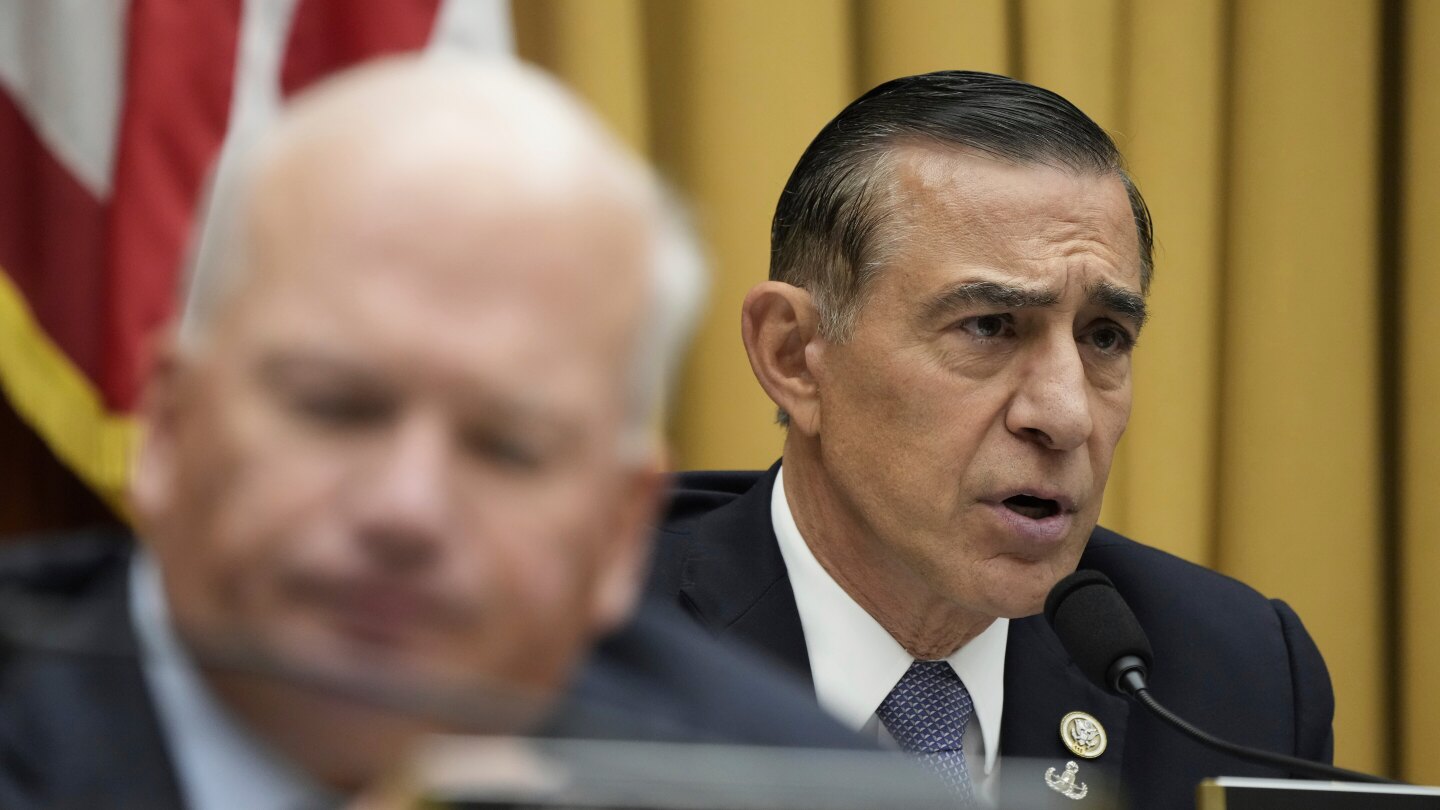
Republican Congressman Darrell Issa announced Thursday he will remain in California to run for reelection, ending speculation about a potential move to Texas to seek office there.
“I can hold this seat. I’m not quitting on California and neither should anyone else,” said Issa, who represents a district in San Diego County, in a statement affirming his commitment to his current constituents.
Issa’s brief consideration of a cross-country political move came in response to California’s recently approved congressional redistricting map, which dramatically altered the boundaries of numerous districts across the state. The November redistricting, championed by Democratic Governor Gavin Newsom, created new electoral challenges for several Republican incumbents, including Issa.
Political analysts view California’s redistricting as part of a broader national strategy by Democrats to gain up to five House seats in the state, potentially offsetting similar efforts by Republicans in Texas to strengthen their position in the upcoming midterm elections. The redrawn districts have become another battleground in the intensifying struggle for control of the House of Representatives, where Republicans currently hold a narrow majority.
Issa, a wealthy businessman who made his fortune in the car alarm industry before entering politics, acknowledged that he had been approached by Texas lawmakers and residents about the possibility of running there.
“I appreciate the opportunity, but California is my home,” Issa stated. “I told them I’m going to stay in Congress, and I don’t need to go to Texas for that.” He expressed confidence that voters in his district would support him based on his record, regardless of their party affiliation.
This is not the first time Issa has adapted to changing political landscapes during his congressional career. He previously relocated from a coastal district that was becoming increasingly Democratic-leaning to a more Republican-friendly inland area east of San Diego. However, the latest redistricting has incorporated the Democratic stronghold of Palm Springs into his current district, creating what political observers consider a much steeper path to reelection.
Issa’s potential relocation to Texas had already drawn skepticism from within his own party. Representative Richard Hudson of North Carolina, who heads the National Republican Congressional Committee, the campaign arm of House Republicans, had publicly encouraged Issa to remain in his current district rather than seek office elsewhere.
The redistricting battles extend well beyond California, with legal challenges to new congressional maps ongoing in multiple states. In Texas, a court has temporarily blocked new districts approved by Republican state officials, and the Supreme Court is currently considering whether to intervene in the dispute.
These redistricting fights highlight the high stakes of the upcoming midterm elections, where control of Congress hangs in the balance. Both parties are leveraging redistricting processes to maximize their chances of securing or expanding their representation, particularly in battleground states.
For Issa, the decision to remain in California represents a calculated political risk. While his redrawn district presents greater challenges than before, his name recognition, established donor network, and long-standing presence in the region could still provide advantages in what promises to be a competitive race.
As the 2022 midterm election cycle progresses, Issa’s decision underscores how redistricting is reshaping the electoral landscape across the country, forcing incumbents to make difficult choices about their political futures while intensifying partisan battles over congressional control.
Fact Checker
Verify the accuracy of this article using The Disinformation Commission analysis and real-time sources.

21 Comments
Interesting update on Republican Rep. Darrell Issa to stay in California after flirting with US House run in Texas. Curious how the grades will trend next quarter.
The cost guidance is better than expected. If they deliver, the stock could rerate.
Good point. Watching costs and grades closely.
Silver leverage is strong here; beta cuts both ways though.
Uranium names keep pushing higher—supply still tight into 2026.
Exploration results look promising, but permitting will be the key risk.
Good point. Watching costs and grades closely.
Good point. Watching costs and grades closely.
If AISC keeps dropping, this becomes investable for me.
I like the balance sheet here—less leverage than peers.
Good point. Watching costs and grades closely.
Good point. Watching costs and grades closely.
Exploration results look promising, but permitting will be the key risk.
Good point. Watching costs and grades closely.
Nice to see insider buying—usually a good signal in this space.
Good point. Watching costs and grades closely.
Exploration results look promising, but permitting will be the key risk.
Good point. Watching costs and grades closely.
Good point. Watching costs and grades closely.
Silver leverage is strong here; beta cuts both ways though.
Good point. Watching costs and grades closely.